

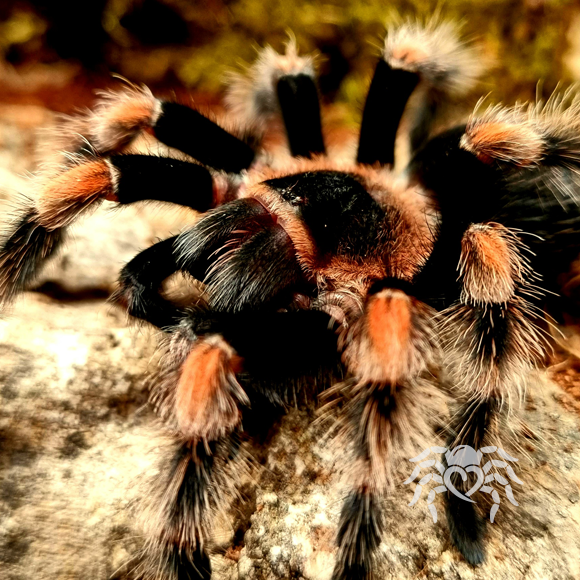
Brachypelma Smithi
Price range: £15.00 through £120.00
Spends days lounging like it’s got nowhere to be, only stirring when it fancies a snack or a dramatic moult. Refuses food with the air of a spider above such things.
Tell me when it is available
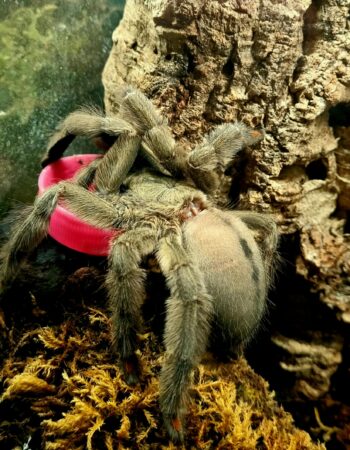
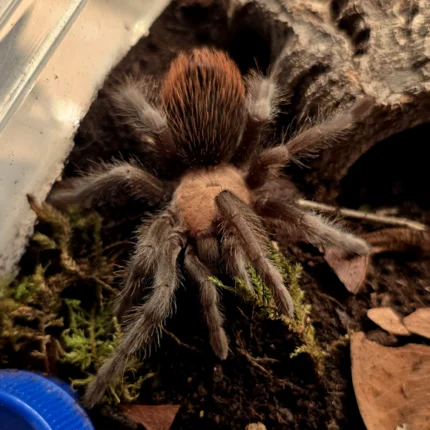
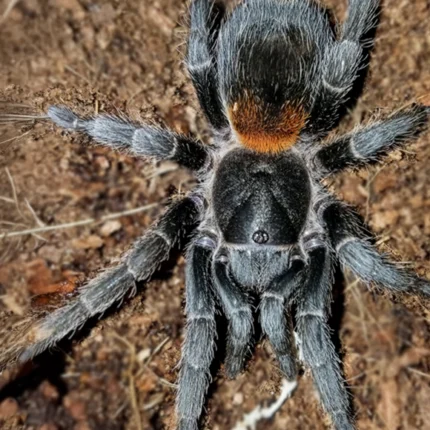
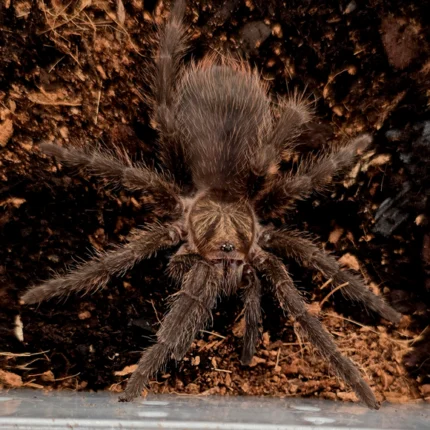
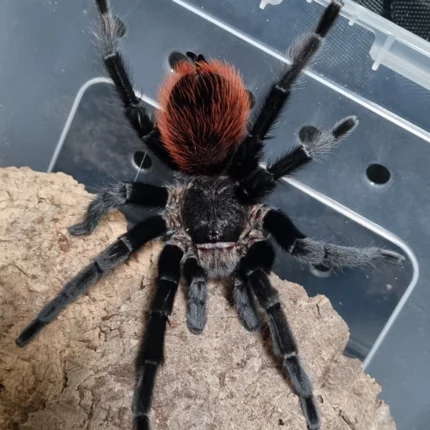
Brachypelma smithi, widely known as the Mexican Red Knee, has rightly earned its place as a mainstay of the hobby. Native to the dry scrublands of Mexico, these terrestrial tarantulas dig down at the base of shrubs or rocks, constructing simple burrows in the sandy soils of Guerrero and Michoacán. Their natural minimalist approach to home décor makes them remarkably undemanding in captivity—just provide a deep, quiet substrate, a hide and they’re content to mind their own business.
This species is a firm favourite for good reason: calm temperament, cheerful visibility, and a resistance to the sort of antics that keepers dread. Adults reach a respectable 13–15 cm diagonal leg span—some females even manage 16 cm, given licence and calories. The growth rate is, in true Brachypelma fashion, on the leisurely side—don’t expect overnight transformations. A female B. smithi can easily outlive any family pet, with lifespans often exceeding 20 years, while males do what males do and bow out after a comparatively short finale.
Care requirements are straightforward: 21–26°C suits them nicely, and 50–65% humidity is spot on. Good ventilation and dry top layers of substrate prevent more drama than you’ll ever have from the spider itself. Handles the odd missed misting far better than a heatwave. Visibility is one of their main perks—once settled, most will perch out in the open, seemingly unbothered by your presence or the existential oddness of being a prized pet. Defensive behaviour is rare, but you’ll learn to give gentle respect to their urticating hairs—nobody enjoys that itch. Handling is best kept to a minimum, as ever.
Feeding is a doddle: offer appropriately sized insects and don’t rush. Webbing is restrained but does appear as a polite dusting around hides. Enclosure needs are plain—no risky heights, a sturdy hide, reliably secure lid, and no unnecessary acrobatics. Simple, dependable, and oddly charismatic, Brachypelma smithi continues to outlast trends for a reason. If you’re after a show spider without the showboating, you’ll not be disappointed.
Only logged in customers who have purchased this product may leave a review.
Species breeding reference
Breeding Notes
Brachypelma smithi breeding is a bit more achievable than with some fussier species, but it still requires patience and careful prep. Success rates are decent with healthy, freshly moulted females and confident, mature males. Don’t expect instant results, and be prepared for the odd curveball. If you’re after easy wins, you might want to try a more straightforward species first.
Wild Breeding Season
Wild breeding for Brachypelma smithi seems to centre around the end of the local dry season, often following the summer rains, but reports vary and precise months aren’t pinned down.
Wild Environmental Triggers
Seasonal changes, particularly the transition from rain to drier, cooler weather, appear to prompt breeding readiness. Males are seen roaming after seasonal rains, seeking females in their burrows.
Native Climate Context
Native to the Pacific coast of Mexico, this species does best with a warm, slightly arid set-up. Natural habitat swings between dry and a bit damp after rains, with steady temperatures and reasonable night-time drops, never getting truly cold.
Captive Breeding Window
Pairing attempts tend to go best when staged soon after a female has moulted and been well fed, typically synchronised with the season in their native land—late summer into early autumn if you're mirroring their wild cycle, but this can flex in captivity.
Pre-pairing Conditioning
Make sure both spiders are well fed and unstressed, with the female in particular given a good meal or two in the week before introductions. A gentle misting of one part of the enclosure a few days before pairing can mimic a post-rain boost.
Male Introduction Guidance
Introduce the male in the evening and keep a close eye—these two are generally calm, but the male should always have an escape route. Remove him if either shows signs of aggression or if they lose interest after a few attempts.
Female Readiness Signs
A receptive female usually stays calm and doesn’t chase or threaten the male. If she stands tall and allows his approach, it’s a positive sign. Freshly moulted, well-fed females are your best bet for success.
Post-pairing Conditions
Return the female to her quiet, undisturbed routine. Reduce disturbance, keep humidity steady (not soggy), and avoid moving her around. Feed sparingly and gently mist a corner, but don’t let things get too damp or stuffy.
Sac Timeline
If successful, egg sacs are most often produced within 4–12 weeks of pairing, but this is variable. Don’t panic if she takes her time—some females sit on the decision like it’s a mortgage application.
Incubation Notes
Incubate at a steady 24–26°C with slight humidity, similar to their preferred living range. Leave the sac with the female if she isn’t disturbed or stressed. If pulling early, keep it gently rolled and ventilated to avoid mould and overheating.
Expected Sling Count
Clutches are highly variable but often range from 200–400 spiderlings in captive reports, with some sacs producing more or fewer, depending on female condition and age.
Risks and Cautions
Cannibalism isn’t especially rampant in this species, but don't take risks—never leave the pair unattended for long stretches. False sacs, eating the eggsac, or failed pairings do happen, especially with older or poorly conditioned females. Overly damp conditions can be disastrous—think gentle mist, not swamp.
Evidence confidence: Medium
UK Market Insight
Neutral UK availability and pricing context for this exact Species record.
Species care guide
Brachypelma smithi
Adult Size
13–15 cm diagonal leg span
Temperature
21–26°C
Humidity
50–65% RH
Temperament
If tarantulas were pets at Hogwarts, Brachypelma smithi would be the Hufflepuff—generally calm, slow-moving, and more inclined to flee than fight. That said, every spider is an individual, so don’t expect a cuddle bunny every day—some can be skittish or a tad grumpy, especially during pre-moult. In most cases, they’ll freeze or retreat rather than bolt or throw a tantrum. Overall, they’re a pleasure for those who like to watch rather than wrestle.
Defence
B. smithi's default defence is to flick urticating hairs from its abdomen if annoyed, and they can deliver quite the itchy reminder that personal bubbles matter. Genuine threat poses or attempts to bite are rare, but still not unheard of if persistently pestered. Keep handling to a minimum (in other words, don’t do it), and remember that the greatest risk is usually to your own itchy skin. Good husbandry and calm, deliberate movements keep everyone friends.
Visibility
This is a display species par excellence. While they enjoy a nice hide, B. smithi frequently sits out in the open, basking in their own colourful glory. Daytimes and evenings are when you’ll most likely spot them posing regally—or just sitting there stubbornly ignoring you. Burrowing is rare once they’re comfortable, so prepared to be treated to plenty of fuzzy-legged photo ops (just don’t expect a dance routine). Overall, they’re one of the least shy tarantulas available.
Experience Level
Absolutely beginner-friendly, Brachypelma smithi is a dream come true for new keepers and still charms veterans. They’re forgiving of small errors, slow-growing so you can learn as you go, and unlikely to do anything alarming if you accidentally knock the enclosure. That said, proper care is always required—these guys still have basic needs, and you’ll want to avoid complacency. A perfect tarantula to cut your fangs on!
Webbing
While not architectural geniuses like some species, B. smithi does produce silk. Expect a light dusting around the hide entrance or water dish, rather than wild jungle vines. They use webbing as an alarm system, to anchor themselves for moults, and as the occasional trip hazard for crickets. Don’t be alarmed by the relatively tidy appearance—the subtle silk is still there, quietly doing its spiderly job.
Feeding
B. smithi isn’t what you’d call a voracious eater, but it’s not fussy, either. Typical prey includes crickets, mealworms, locusts, and the occasional roach. Slinglings (spiderlings) can be fed pinhead crickets or chopped mealworms twice a week, juveniles once every 7–10 days, and adults every 10–14 days. They often refuse food before moulting, so don’t panic if dinner is snubbed—just remove uneaten prey after 24 hours. Overfeeding is a common rookie error, so keep an eye on that plump abdomen; a chunky B. smithi is a happy spider, but too much of a good thing isn’t ideal! Aim for small, manageable meals and enjoy the occasionally dramatic feeding responses.
Enclosure Recommendations
Keep things simple and functional! Adult B. smithi thrive in a secure, well-ventilated terrestrial enclosure of around 30 x 30 x 30 cm. Slings and juveniles can be housed in smaller tubs or critter keepers. Substrate should be 5–10 cm deep (deeper for slings) to allow for the odd burrow attempt. Add a sturdy hide (cork bark is a favourite), a shallow water dish, and some artificial plants or leaf litter for aesthetics (and a touch of privacy). Check that all décor is spider-safe—no sharp edges or unstable rocks. Ventilation is key: proper cross-flow keeps humidity at the Goldilocks level. No need for climbing décor, as falls are risky. Low drama, low stress—the way B. smithi likes it.
Final Thoughts
Brachypelma smithi is the tarantula equivalent of a classic car—timeless, reliable, and universally admired. They combine stunning colouration with a gentle disposition, making them a favourite among beginners and old hands alike. The slow growth and long lifespan (for females) means you’ll get years of enjoyment, and their willingness to display means you’ll actually see your pet more than its water dish. If you want a pet that’s beautiful, low-maintenance, and unlikely to cause a fright in the middle of the night, you really can’t go wrong. Just don’t expect them to help with the dusting, no matter how many legs they have!
Species-specific guidance
Frequently Asked Questions
Is Brachypelma smithi suitable for beginners?
Absolutely! The Mexican Red Knee is a dream for new keepers, thanks to its calm temperament, forgiving care requirements, and slow growth. It’s hardy and unlikely to bolt or display aggression, making it one of the best choices for those starting out in the hobby.
How big does an adult Brachypelma smithi get?
Adult B. smithi typically reach a diagonal leg span of 13–15 cm, with some robust females occasionally stretching to 16 cm. Males tend to be slimmer and longer-legged, while females are more robust and chunky. It’s a large, impressive species that matures slowly.
What is the temperament and defensive behaviour of Brachypelma smithi?
B. smithi is famously calm and slow-moving, more likely to freeze or retreat than show aggression. If annoyed, it may flick urticating hairs which can irritate your skin—a gentle reminder to respect boundaries. The Spoodoire does not endorse handling of any tarantula.
How quickly does Brachypelma smithi grow and how long does it live?
This species grows at a slow and steady pace, taking several years to reach maturity. Females are particularly long-lived, often reaching 20–25 years with proper care, while males usually live 5–6 years. Expect a leisurely, rewarding journey as your spider matures.
What is the recommended enclosure setup for a Brachypelma smithi?
Keep it simple: an adult needs a secure, well-ventilated 30 x 30 x 30 cm terrestrial enclosure. Provide 5–10 cm of substrate for occasional burrowing, a sturdy hide, a shallow water dish, and maybe some artificial plants or leaf litter. Good ventilation is key—avoid stuffiness and unstable décor.
How should I manage humidity and moisture for Brachypelma smithi?
Aim for 50–65% humidity. Achieve this with a substrate like coco fibre or topsoil, kept just barely damp on one side, and a water dish. Avoid over-wetting and maintain good airflow to prevent mould—let the top layer dry between light moistening sessions.
How visible is Brachypelma smithi in its enclosure?
B. smithi is a brilliant display tarantula, often sitting out in the open during the day and evening. While it enjoys a nice hide, it’s far more likely to show itself than to spend long periods concealed—perfect for those who enjoy actually seeing their pet.
What is the feeding response and diet of Brachypelma smithi?
B. smithi isn’t a voracious predator but is happy with a range of prey like crickets, mealworms, or locusts. Adults eat every 10–14 days, juveniles a bit more often, and spiderlings twice a week. They may refuse food before moulting—simply remove uneaten prey after 24 hours to keep things tidy.


Reviews
There are no reviews yet.