

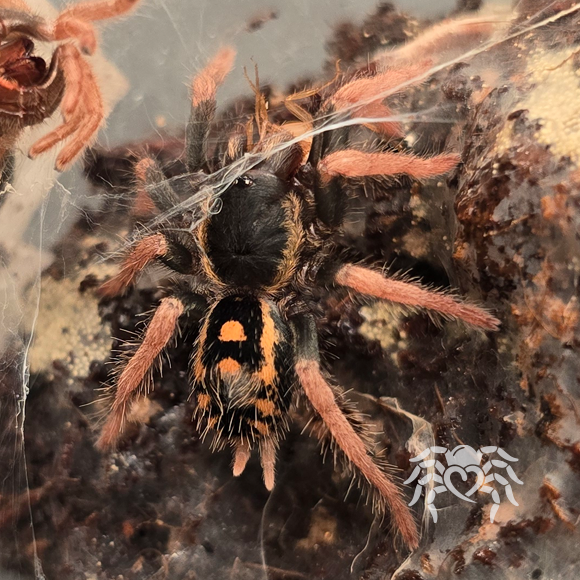
Origin
Hapalopus vangoghi, affectionately dubbed the 'Van Gogh tarantula', hails from Colombia, South America. In the wild, these small spiders are native to the warm and humid lowland regions, often making their homes in leafy undergrowth and under decaying logs. The climate in their homeland is consistently mild, with temperatures sitting comfortably around the low-to-mid twenties Celsius, and fairly regular rainfall throughout the year. Their natural haunts are semi-open forest floors with plenty of cover—there’s always a handy nook to hide in or a juicy leaf litter pile to burrow under. If you want your Van Gogh to feel at home, think damp, dark, and not too drafty!
Adult Size
Hapalopus vangoghi is small but mighty, with adult females typically reaching 6–7 cm diagonal leg span (DLS), while males can be a tad slenderer and sometimes slightly smaller. Don’t expect a dinner plate-sized beast: these are perfect palm-dwellers when you’re admiring them through the glass (or plastic)! That said, their compact size means they’re great for folk tight on space. Males mature a bit earlier and may look leggier, while girls are usually stockier.
Lifestyle
The Hapalopus vangoghi is mainly terrestrial, meaning it spends its life on or just below the surface. In captivity, you’ll often find them bustling about the ground or tunnelling into their substrate, occasionally redecorating with their own unique blend of webbing and excavated dirt. They’re not as obsessed with digging as full-on fossorial species, but young ones especially will construct modest burrows. Adults tend to appreciate a sturdy hide and a patch of open ground for late-night wanderings. They’ll web things up a bit, but don’t expect a silk palace – it’s more tinsel than taffeta.
Lifespan
If you’re hoping for a lifelong companion, female Van Gogh tarantulas might oblige for around 8–10 years given good care. Males, as is often the cruel law in spiderland, are usually with us for just 3–4 years, sometimes even less after reaching maturity. It’s the girls that stick around through thick and thin, making them a reliable, if diminutive, centrepiece in one’s spider collection. Their longevity might not rival the real Van Gogh’s artwork, but it’s more than respectable for a tarantula this size.
Growth Rate
Growth for Hapalopus vangoghi is fairly brisk, especially compared to the famously slowpoke giants. You can expect slings to reach juvenile sizes within the first year or so with regular feeding and good conditions; expect maturation in females around 2–3 years. Males may be speedier to adulthood (and retirement, sadly). Warmth and a steady food supply seem to put the pedal to the metal, while cool or lean conditions slow things right down. All told, it’s a species that won’t leave you twiddling your thumbs for long.
Temperament
Hapalopus vangoghi sports a lively but approachable temperament. Generally, they’re shy and don’t go looking for trouble—if startled, expect a rapid retreat rather than an eight-legged showdown. They’re skittish and will bolt rather than stand their (tiny) ground, so open the enclosure with care and avoid sudden movements. Very rarely defensive, their main priority is a speedy dash to safety. Perfect for those who fancy watching the spider Olympics at midnight, less ideal if you want a hand-tamed cuddle-buddy (which, spoiler alert: isn’t recommended anyway).
Temperature
Your Van Gogh isn’t demanding when it comes to temperatures—a typical cosy British sitting room will do! Aim to keep the enclosure at 21–24°C, which fits right into the comfort zone for most homes. If your spider room gets a bit chill in winter, a gentle heat mat on the side (never underneath!) can help, but avoid cooking your spood in the process—no tarantula soufflés, please. Seasonal dips and small nightly drops in temperature are tolerated well, so don’t panic over every cold snap. Check those temps with a digital thermometer and you’ll have a content little artist.
Humidity
Aim for a cosy 60–75% relative humidity—think damp enough to keep a sarnie fresh, but not soggy! Achieve this with slightly moist substrate (coco fibre is popular) and a small, shallow water dish. Don’t drown them in humidity; good airflow is key, so make sure the enclosure has adequate ventilation. A weekly substrate misting or spill works well, particularly around the hide, but let the top layer dry out a bit between waterings to keep mould away. Slings appreciate more moisture; adults tend to be a bit more forgiving.
Visibility
You’re in for a treat with Hapalopus vangoghi—they’re among the more visible ‘dwarf’ tarantulas! While slings and smaller juveniles may lurk in burrows for long spells, adults are often found out and about at dusk or during feeding time. They’ll web up the odd corner but rarely conceal themselves entirely. Their diurnal (and sometimes nocturnal) scampering makes them fun to watch—you can actually expect to see your spider fairly often, making them a positive feast for the eyes. Keep that enclosure nicely decorated for maximum viewing pleasure.
Webbing
While Hapalopus vangoghi isn’t quite the Banksy of the tarantula world, they do enjoy adding a bit of web-based décor to their homes. Expect modest sheets of webbing mixed with substrate, especially around their chosen hide or burrow entrance. They use it to reinforce tunnels, anchor feeding platforms, and generally keep things tidy. Webbing ramps up around moulting, turning their home into a private studio. Not the heaviest webbers in the hobby, but they definitely put their own artistic stamp on things.
Feeding
With Hapalopus vangoghi, mealtimes can be a highlight! Slings relish fruit flies, tiny roaches, or pre-killed pinhead crickets, offered every 4–5 days. As juveniles, they take small crickets or roaches once a week, and adults do well on appropriately sized crickets, dubia, or locusts every 7–10 days. These spiders often refuse food before moulting, so don’t panic if your Van Gogh goes on a hunger strike—just remove uneaten prey. Overfeeding can lead to unsightly blobby abdomens, so don’t ply them with endless buffets. Regularly check for moults and adjust prey size accordingly. Feeding response is robust and enthusiastic—they’ll pounce on prey, but will rarely scuffle with fingers. Avoid feeding immediately after a moult—give those fresh fangs time to harden. And as ever, a water dish makes a nice digestif after dinner.
Enclosure Recommendations
Enclosure wise, think small but not poky: a well-ventilated plastic box or acrylic enclosure works wonders, with a secure lid to prevent artistic escapes. A footprint of about 20x20 cm for adults is ample—remember, these are not marathon runners! Provide 5–10 cm of slightly moist substrate (coco fibre, soil or a mix) to let those legs scratch their burrowing itch. Add a snug bark or cork hide, and scatter a bit of moss or silk plant for décor (and humidity retention). A shallow water dish is essential, even for slings (tiny bottle caps work). Good cross ventilation keeps things fresh, while a handful of leafy detritus or a bit of clutter encourages natural behaviours. Keep tools on hand—these little speedsters can make maintenance day… exciting.
Experience Level
This is a fantastic choice for anyone from confident beginners to seasoned pros. Hapalopus vangoghi are forgiving of minor husbandry blips, don’t demand fussy care, and usually behave themselves at maintenance time. The main concern lies with their dainty size and speedy nature—youngsters especially can bolt faster than your mate given the bill at the pub! That said, with a bit of caution and respect, most hobbyists will find them a genuinely rewarding addition.
Final Thoughts
Hapalopus vangoghi is a delightful reminder that good things come in small packages. Their charming colouration (complete with Van Gogh’s signature orange brush-strokes) and lively antics make them a joy for keepers who appreciate an active, visible spood. They’re ideal for hobbyists with limited space or those seeking an easier starter species, while their zippy excavations and busybody energy entertain keepers of all stripes. Challenges are minimal: just mind their speed, their modest humidity needs, and their penchant for dramatic midnight jogs. All told, they’re a quirky, artistic addition to any spood collection—more Starry Night than Scream, as it were!
Community Species Gallery
Approved photos submitted by registered Spoodoire users.
No community images have been approved for this species yet.
Submit Your Photo
Log in to submit a photo for this species.
Available at The Spoodoire
Products linked to this species care guide.