

Species Care Guide
Tliltocatl vagans
Mexican red rump tarantula
Also known as: Mexican red-rump, red rump tarantula
Last updated: June 27, 2026
Buy this species
Origin
Tliltocatl vagans, charmingly known as the Mexican Red Rump, is a native of Mexico’s more tropical corners, including Belize, Guatemala, and El Salvador. In the wild, they thrive among leaf litter on warm, humid forest floors and savannah edges. These spiders are often found under logs and stones or deep in self-made burrows, finding both shade and moisture in the process. The climate is mostly balmy with lovely spikes of humidity during rainy spells and the odd dry patch. Their surroundings feature plenty of diggable soil, the odd bit of undergrowth, and those famous Central American summer rains. All this gives them a certain flexible attitude toward life, which translates rather nicely to captive care.
Adult Size
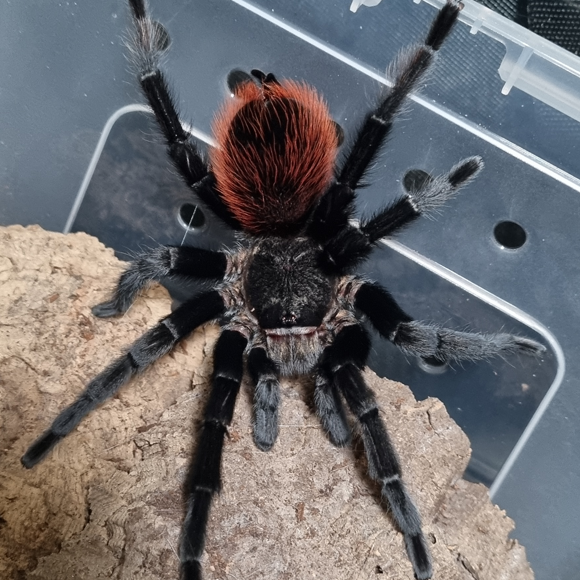
Tliltocatl vagans matures into a moderately large tarantula, with adults typically reaching 12–15 cm diagonal leg span. Females are the real heavyweights here, being bulkier and generally outliving their male counterparts by a country mile. Males reach similar leg spans but are much leggier and lighter, so you’ll notice a difference when they hit maturity. Growth isn’t lightning fast, but it’s steady—a sling can take several years to achieve the impressive girth and those trademark red hairs that make them a display favourite. All in all, they’re a good size for keepers who want a substantial spider without going full-on giant.
Lifestyle
The Mexican Red Rump is a textbook terrestrial tarantula with fossorial tendencies—meaning it thoroughly enjoys a bit of digging about. In captivity, they’ll often create a burrow or claim a cosy hide, disappearing for days if the mood strikes. Don’t be surprised if your Tliltocatl vanishes for a while—burrowing and barricading themselves inside is standard behaviour, not cause for alarm. They aren’t known for climbing, so heights are not their thing. Instead, you’ll find them rearranging substrate like interior decorators determined to outdo last night’s work. If you like a tarantula that genuinely uses its enclosure, this one’s a treat.
Lifespan
Females are the marathon runners of the tarantula world, often living 15–20 years in captivity when cared for well. Males, unfortunately, pull the short straw with lifespans typically around 4–6 years—most passing away within a year or so after their ultimate moult. The disparity is huge, so if longevity is your thing, cross your fingers for a female! Both sexes benefit from stable, stress-free conditions, and while males mature faster, their run is brief. Be prepared for a long-term commitment if you get a girl—she’ll be around when your houseplants have come and gone.
Growth Rate
Tliltocatl vagans ticks along at a slow to medium pace. Slings grow gradually, with slightly faster progress in those kept a touch warmer and fed appropriately sized meals. You won’t see dramatic size leaps between moults like some speedy New Worlders; patience is definitely required. Younger spiders will moult more frequently—several times a year—slowing down as they near adulthood. Good, consistent feeding and suitable temperatures can encourage steady growth, but rushing them never ends well. If slow and steady wins your race, this tarantula is right up your street.
Temperament
Red Rumps have a reputation for being easy-going, but they’re not total pushovers. Most are content to mind their own business, only showing off their defensive side if seriously bothered. They can be a bit skittish and will retreat to their hide or burrow at the first sign of trouble. Occasionally, you’ll find a more feisty individual that may kick hairs—so best not to poke and prod. Speed is moderate—they’ll bolt rather than confront, making them predictable companions for the most part. Handle with respect and you’ll get along fine, just don’t expect cuddles.
Temperature
Aim for a toasty 21–24°C for a happy Red Rump. They’re well-adapted to typical British room temperatures, so most will thrive without any additional heating as long as you don’t let things get frosty in the winter. Anything between 18°C at night and a gentle 26°C on the warmest days is quite acceptable. If your home tends toward the nippy, a small heat mat attached to the side (never underneath) of the enclosure helps maintain warmth—just monitor with a thermostat to prevent overheating. Avoid drastic swings or direct heat sources. Consistent, comfortable warmth is the order of the day.
Humidity
Tliltocatl vagans appreciates humidity in the 60–70% range, but don’t stress if things drop a little—it’s a hardy soul. The key is to keep the substrate lightly moist, especially for slings and juveniles, without turning the enclosure into a swampy mess. A weekly mist around one side usually does the trick. Adult Red Rumps are tolerant of slightly drier spells, provided there’s always a clean, shallow water dish. Good cross-ventilation helps prevent mould and keeps the air fresh—stale, stuffy conditions are a no-no. Too much humidity is worse than a bit too little, so err on the side of caution.
Visibility
This species is occasionally a master of hide-and-seek, especially as juveniles when burrowing instincts reign supreme. Adults tend to become bolder, often lounging at the entrance of their burrow or stalking about after a feed. Expect periods where your spider is ‘moving the furniture’ unseen, followed by weeks of front-and-centre display, particularly after a good meal or before moulting. They’re not as secretive as some fossorial species, and with the right enclosure, you’ll catch plenty of glimpses—just don’t expect constant action. Half the fun is seeing who blinks first on feeding day.
Webbing
While they’re not exactly the master weavers of the spider world, Tliltocatl vagans uses silk in clever ways. Most webbing ends up around the entrance to their burrow or hide, creating trip lines and a snug door, sometimes even sealing themselves in before a moult. You’ll spot delicate silk mats where they rest or eat, but don’t expect aerial showpieces. Webbing is sparse but purposeful—think minimalism, not maximalism! Watching them remodel is a treat, and when you see them laying silk, a moult or other grand event might be on the horizon.
Feeding
Slings will happily take pre-killed or chopped up prey like micro crickets, fruit flies, or small mealworms every 3–5 days. Juveniles step it up to live micro or small crickets, locust hoppers, or suitably sized roaches every 5–7 days. Adults appreciate a sizeable meal once a week or so—a locust, adult cricket, or roach will do nicely. Feeding response is typically enthusiastic; Red Rumps are rarely fussy and are known to pounce on any unfortunate intruder. Avoid overfeeding adults (nobody needs a spider with a muffin top!) and always remove uneaten prey within 24 hours, especially before a moult. Overzealous feeding can lead to fasting or stress. Variety in the diet keeps your spider healthy and interested.
Enclosure Recommendations
A roomy, escape-proof plastic or glass enclosure with secure lid is essential. Aim for about three to four times the spider’s leg span in floor space—30×30 cm is great for adults, as height isn’t hugely important. At least 10–15 cm of loose, diggable substrate (coco fibre, topsoil, or a mix) lets them satisfy their burrowing urges. Add a sturdy cork bark hide and scatter some leaf litter for a natural look. A shallow water dish should be present at all times—keep it clean and topped up. Good cross-ventilation prevents stagnant air. Avoid overly moist setups; a slight dampness is ideal. For slings, a deli cup with plenty of substrate, tiny air holes, and a small hide works perfectly.
Experience Level
Tliltocatl vagans is fantastic for beginners with a dash of curiosity, patient intermediates, and any keeper who enjoys an interactive digger. Their forgiving nature—temperature, humidity, and feeding—offers plenty of leeway for new keepers. They tolerate the odd husbandry wobble and don’t require finicky maintenance, though they do reward thoughtful, natural setups. Absolute beginners should read up on burrowing species, as a sudden disappearance can give newbies a fright. All in all, they’re a robust, rewarding choice that helps new hobbyists gain confidence.
Final Thoughts
Tliltocatl vagans is a genuine crowd-pleaser: easy to care for, good-looking, and just active enough to keep things interesting. Their adaptability means they forgive the odd husbandry hiccup, making them a fine choice for beginners and seasoned hobbyists alike. The combination of burrowing antics, vibrant red rump, and classic tarantula looks puts them near the top of everyone’s wish list. They aren’t as flashy as some, but make up for it with sturdy personalities and reliable behaviour. A forgiving, rewarding spider—just keep your tweezers handy for those hair-flick moments, and you’re in for years of eight-legged enjoyment.
Community Species Gallery
Approved photos submitted by registered Spoodoire users.
No community images have been approved for this species yet.
Submit Your Photo
Log in to submit a photo for this species.
Available at The Spoodoire
Products linked to this species care guide.