

Brachypelma Hamorii
Price range: £10.00 through £70.00
Frequently spotted perched in plain view, occasionally rearranging their décor with the sort of mild enthusiasm reserved for Sunday gardeners.
Tell me when it is available
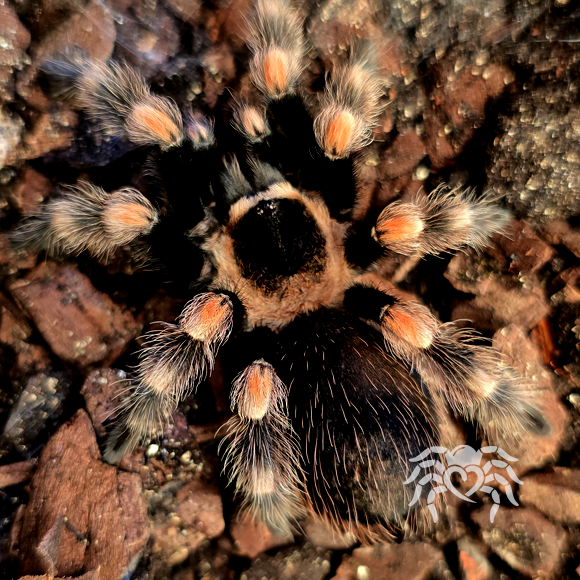
Brachypelma hamorii (Mexican Red-Knee Tarantula)
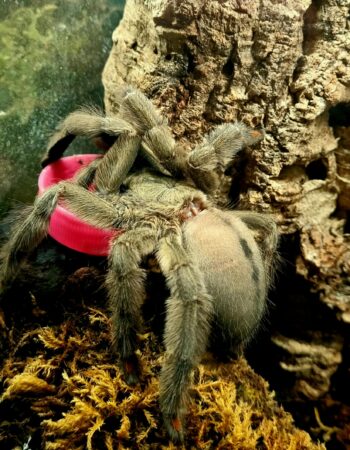
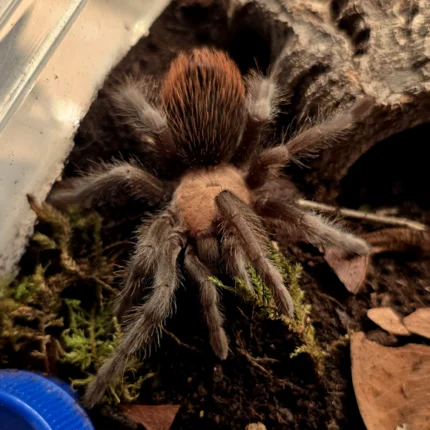
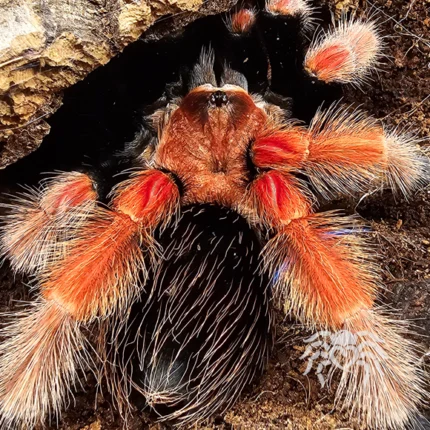
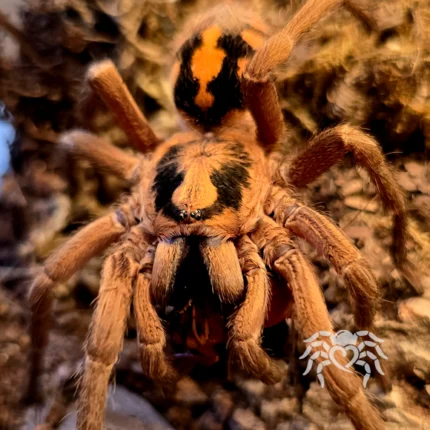
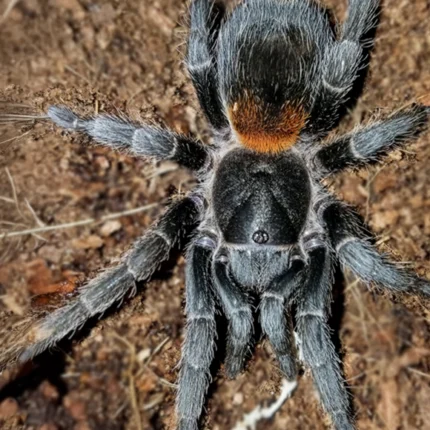
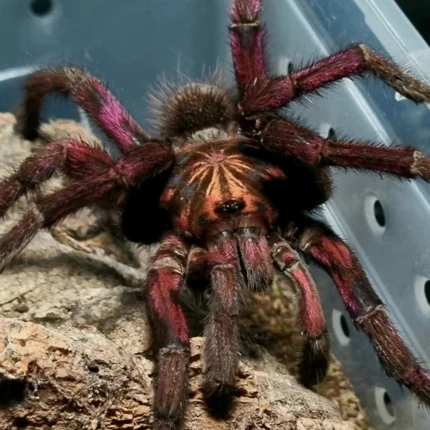
If there’s a tarantula that’s earned its stripes in the hobby, it’s Brachypelma hamorii. Instantly recognisable with its pumpkin-orange knees and glossy black legs, this classic species hails from the dry scrublands and forests of western Mexico. Nowadays, you’re far more likely to spot one on a keeper’s shelf than under a log in Jalisco, thanks to habitat pressures in the wild.
Entirely terrestrial, B. hamorii prefers a sensible bungalow to a penthouse—expect burrow lounging, occasional earthworks, and the odd bit of webbing rather than gravity-defying antics. If you fancy an active acrobat, you’ll be disappointed. If you appreciate a display spider that sits out in the open without vanishing for weeks, there’s much to be said for their relaxed attitude.
Size-wise, adults typically reach 12–15 cm diagonal leg span, with the usual sexual dimorphism—dolled up females significantly outliving their long-legged, short-lived male counterparts. With proper care, females will stick around for a polite 15–25 years; males tend to bow out after 5–7, and rarely linger long after maturity. Growth is best described as ‘unhurried’—these are the tortoises of the tarantula world, not hares.
B. hamorii are neither fond of drama nor inclined to bite, preferring a warning bum-wiggle and a mild flick of urticating hairs if bothered. Threat postures are uncommon and bites rarer still, but respect their boundaries—especially during a moult or home renovations. Tools, not fingers, remain the cleaning implement of choice.
Care is reassuringly straightforward. Room temperature (21–24°C) keeps them content, and 60–70% humidity is ideal—achieved with a slightly damp patch on the substrate and good cross-ventilation. Plump for a simple terrestrial set-up: deep enough substrate for token burrowing, a cork bark hide, and a shallow water dish. Decoration is best kept practical rather than over-ambitious; they’re not interior designers at heart.
Feeding is a dignified affair. Juveniles appreciate 2–3 meals a week; adults are quite happy with one feed every fortnight. Overfeeding is more of a hazard than underfeeding, so resist the urge to plump them up. Growth can appear glacial, but eventually you’ll be rewarded with a handsome adult, given patience.
Visibility is a strength—these spiders are content to be on show, making them ideal for those who’d rather look at their spider than at an empty enclosure. For new and experienced hobbyists alike, B. hamorii remains a steady, endearing presence—no fuss, just reliable tarantula keeping. As a warning, having one rarely proves sufficient.
Only logged in customers who have purchased this product may leave a review.
Species breeding reference
Breeding Notes
Breeding Brachypelma hamorii means working with a spider that’s broadly forgiving but far from a guaranteed win, even for experienced keepers. The trick’s in nailing those shifts from wet to dry and reading your female’s moods. If you’re tuned in to her cycles and patient with timing, you’ll stand the best chance of seeing a sac—but don’t be surprised if things take a little longer or the female needs a second go. It’s a satisfying challenge for those who’ve bred a few easier species first.
Wild Breeding Season
Wild Brachypelma hamorii seem to pair up and get busy not long after the local rainy season wraps up, when conditions are just right for egg sacs and the safe emergence of young. This usually falls somewhere after the summer rains, but don’t hang your hat on an exact calendar date.
Wild Environmental Triggers
Heavier rains followed by a gradual drying seem to set off breeding behaviour in the wild. Stable warmth with a dip in precipitation is nature’s cue for the females to get busy, making simulated wet-to-dry cycles in captivity worth considering for priming.
Native Climate Context
The Mexican west coast, where these spiders are from, swings between a hot, humid summer rainy season and a drier, milder winter. Temperatures are generally warm year-round, but it’s the rhythm of rain and dryness that matters most for triggering reproductive cycles.
Captive Breeding Window
Pairings in captivity tend to work best if timed to follow a surge in humidity mimicking the end of the wet season—so late autumn to early spring is the common choice, but no need to be exact. Aim for a period of stable, warm temperatures with slightly reduced humidity after a good wetting.
Pre-pairing Conditioning
Let the female get fully settled and well-fed, ideally after a period of increased misting, then let things dry out for a few weeks before introducing the male. Mimicking natural cycles gives her body a nudge that the time’s right, especially if you time things after a moult when she’s at her peak.
Male Introduction Guidance
Start with a well-rested, mature male and introduce him to the female’s enclosure in the late evening when both are most relaxed. Supervise the meeting—females are often tolerant but can be unpredictable if disturbed or if she’s not ready. Have a long tool handy to separate them quickly if she turns feisty.
Female Readiness Signs
A receptive female will often drum lightly, stay out in the open more often, and isn’t prone to charge the male. If she appears restless or barricades herself away, she might not be ready or is coming up to a moult—never risk pairing close to her moult cycle.
Post-pairing Conditions
After a successful pairing, keep her well-fed and stress-free. Many keepers give her a brief increase in humidity followed by a gradual drying, staying mindful not to soak the enclosure. She’ll often start webbing up more as she prepares for a sac.
Sac Timeline
Reports vary, but expect anything from six to twelve weeks after mating before the female produces a sac. Patience is key, and she may take longer if conditions aren’t just right. Don’t disturb her enclosure during this period unless absolutely necessary.
Incubation Notes
Leave the sac with her unless she’s proven to be a chronic eater. If you need to pull the sac, aim for day 30–35 as a cautious middle ground. Avoid major temperature swings and keep the egg sac in a humid but well-ventilated environment if removed.
Expected Sling Count
Expect anywhere from 300 to 600 spiderlings in a healthy sac, though figures either side of this aren’t rare; big, well-conditioned females might surprise you.
Risks and Cautions
Females can be unpredictable post-moult, and refusing males isn’t uncommon. Overly dry or damp conditions at the wrong time can spoil pairings or sac viability. Males don’t usually last long past maturity, so don’t delay. Wild-caught stock should not be paired, and beginner keepers might struggle to read female signals here.
Evidence confidence: Medium
UK Market Insight
Neutral UK availability and pricing context for this exact Species record.
Species care guide
Brachypelma hamorii
Adult Size
12–15 cm diagonal leg span
Temperature
21–24°C
Humidity
60–70% RH
Temperament
Renowned for being relaxed, B. hamorii isn’t one to bolt around or posture wildly. Although usually docile and slow-moving, every spider is an individual and might occasionally choose drama, especially when disturbed during a moult or a home redecoration. Don’t expect wild dashes—unless you’ve really surprised them—but equally, don’t mistake them for garden statues! They’ll often sit out in the open, perfect for admiring, and make a splendid ambassador for those new to tarantulas.
Defence
When feeling insecure, Brachypelma hamorii’s main line of defence is the classic bum-wiggle and a flick of urticating hairs. These hairs can irritate skin or eyes, so always avoid getting too close with your face, no matter how much your spider begs for a selfie. Threat poses and bites are exceptionally rare in this species, but it pays to show respect and let them keep their personal space. Tools, not fingers, are the key when cleaning out.
Visibility
If you prefer a spider that isn’t invisible, B. hamorii delivers. Often seen lounging at the front of their hides or boldly posing on top of décor, they make for excellent display spiders—with all that orange and black, why hide? Nighttime brings a little more action, but they’re not shy about making daytime appearances when they feel safe. There’s a good balance of ‘spot the tarantula’ without needing a magnifying glass every evening.
Experience Level
Arguably the quintessential beginner tarantula, B. hamorii is ideal for new and seasoned hobbyists alike. Their forgiving nature, dislike of drama, slow speed and gorgeous appearance make them especially suitable for those learning the ropes. They’re also a long-term commitment, so you can watch your spider mature into an impressive display bulb with minimal risk of surprises. Advanced keepers love them for their classic look and bright personality.
Webbing
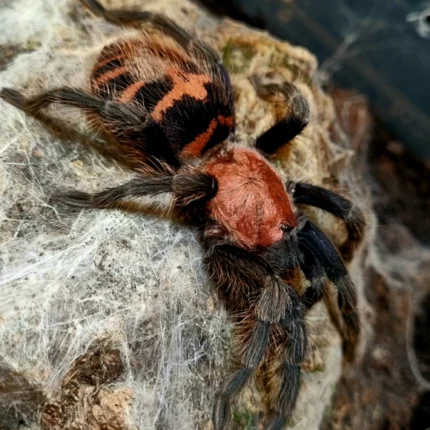
While you won’t be wading through layers of silk, B. hamorii does use webbing to line its burrow entrance or mark a favourite chill-out spot. Think of it as scatter cushions rather than wall-to-wall carpeting. They’ll also lay a thick carpet of web when ready to moult, so spotting that tell-tale white mat is a good clue to leave them be. Don’t expect dramatic hammock constructions, but what webbing they do is always practical.
Feeding
Juveniles and slings appreciate 2–3 appropriately sized meals per week—think pre-killed or small live crickets or roaches (let’s face it, a locust is a Sunday roast for adults). Once mature, adults are happy with a meal every 10–14 days. Avoid overfeeding—watching a spider balloon isn’t as fun as it sounds! Remove uneaten food after 24 hours to discourage pests. Feeding response is usually slow and methodical; don’t expect leaping pounces, but relish the delicate, dignified approach to dinner. Growth is slow, so don’t panic if it feels like nothing’s happening for months. Consistent, varied prey items and patience are the recipe for a thriving B. hamorii.
Enclosure Recommendations
A terrestrial set-up with secure lid and good ventilation is ideal. Aim for an enclosure at least three times the leg span in floor space, with height no greater than twice the spider’s span to prevent climbing wounds. Substrate should be 5–10 cm deep for burrowing (coco fibre, topsoil, or a mix), and a cork bark hide or half-flowerpot offers a welcome retreat. Add a shallow water dish and keep décor simple to avoid unnecessary drama. Cross-ventilation helps keep humidity in check, and a dry-to-damp gradient is just the thing. B. hamorii doesn’t redecorate much, but they do appreciate a choice of hidey-holes and a predictable environment.
Final Thoughts
With their stunning looks, laidback lifestyle and classic pumpkin-y glow, the Brachypelma hamorii has won hearts for decades—and rightly so. Their tolerance makes them fantastic first tarantulas or a classy addition for experienced keepers wanting a reliable display specimen. While they won’t astonish you with acrobatics, their charm is in their steady, visible nature and their status as living legends in the hobby. The only real challenge is resisting the urge to collect more, as one is rarely enough. Get ready for years (and years) of quiet, spiderly companionship.
Species-specific guidance
Frequently Asked Questions
Is Brachypelma hamorii a good tarantula for beginners?
Yes, Brachypelma hamorii is widely regarded as the quintessential beginner tarantula. Its calm temperament, slow growth, manageable size, and striking orange-black appearance make it ideal for both newcomers and seasoned hobbyists. They’re forgiving of minor husbandry errors and usually visible, making them a rewarding long-term companion for your spider journey.
What size does an adult Brachypelma hamorii reach?
Adult Brachypelma hamorii typically achieve a diagonal leg span of 12–15 cm. Females are generally larger and bulkier, while males are leggier and less robust. Both make excellent display spiders, but if you’re after longevity, females are the real heavyweights, often living much longer than their male counterparts.
How fast does Brachypelma hamorii grow?
Brachypelma hamorii has a slow growth rate, akin to the tortoise of the spider world. Females can take 5–8 years to mature, while males usually reach adulthood a bit quicker, though they live shorter lives. Patience is key, as visible changes can be slow, especially in juveniles and slings.
What is the temperament of Brachypelma hamorii?
Brachypelma hamorii is renowned for its calm and relaxed temperament. They’re usually docile, slow-moving, and rarely show defensive behaviour. However, each spider is an individual, so occasional startles or displays aren’t unheard of, particularly during moulting or enclosure cleaning. The Spoodoire does not endorse handling of any tarantula.
How does Brachypelma hamorii defend itself?
If threatened, Brachypelma hamorii prefers to flick urticating hairs from its abdomen as its main defence. These hairs can irritate skin or eyes, so always use tools when cleaning and avoid close facial contact. Threat poses and biting are rare for this species, but respecting their space keeps everyone happy.
How often should I feed my Brachypelma hamorii, and what does it eat?
Juvenile Brachypelma hamorii benefit from 2–3 small crickets or roaches per week. Adults are content with one larger meal every 10–14 days. Overfeeding should be avoided to prevent obesity. Remove uneaten prey after 24 hours to avoid pests, and be patient; feeding responses are deliberate rather than dramatic.
What kind of enclosure does Brachypelma hamorii need?
A terrestrial enclosure with secure lid, good cross-ventilation, and ample floor space suits Brachypelma hamorii best. Provide 5–10 cm of substrate for burrowing, a hide (like cork bark), and a shallow water dish. Keep décor simple and ensure the enclosure is not too tall to prevent falls. A dry-to-damp gradient helps maintain correct humidity.
Is Brachypelma hamorii a visible species or does it spend most of its time hiding?
Brachypelma hamorii is known for being a visible display tarantula. They’re often found lounging at the entrance of their hides or boldly sitting in the open, especially when they feel secure. While more active at night, they offer a good mix of visibility and day-time appearances for keepers to enjoy.

Reviews
There are no reviews yet.