

Lasiocyano sazimai
Price range: £7.00 through £45.00
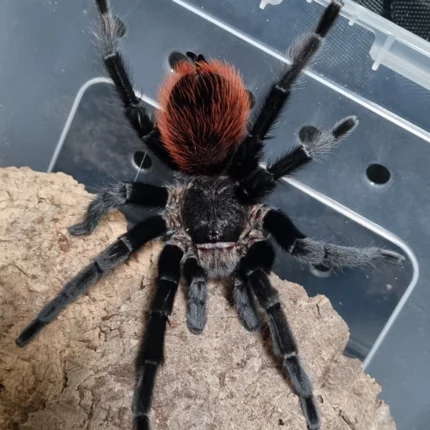
Vivid blue, rarely seen—unless it’s vanished dinner or you’re cleaning, in which case, brace yourself for a sudden lesson in eight-legged sprinting.
| Weight | 100 g |
|---|---|
| Dimensions | 16 × 16 × 16 cm |
Tell me when it is available
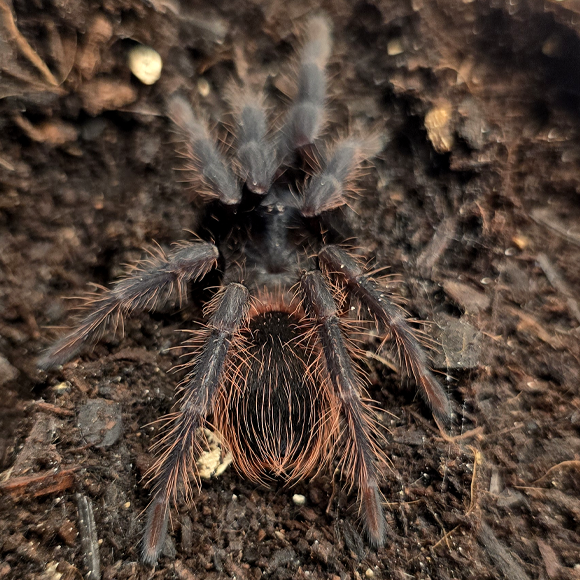
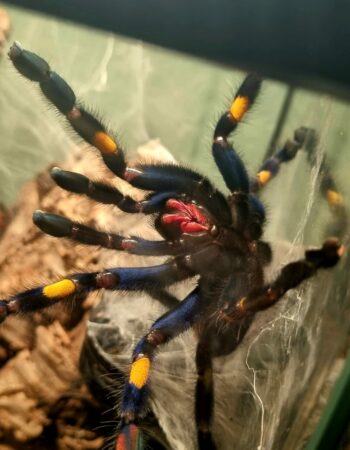
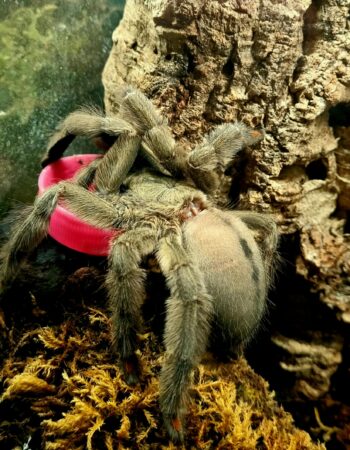
Lasiocyano sazimai—often known as the Brazilian Blue—is one for those who like their spiders colourful but not especially sociable. Native to the Brazilian Atlantic forest, this species sports cobalt blue legs and a tendency towards the subterranean. Slings and juveniles behave like classic reclusive earthmovers, burrowing readily and webbing up a hide for privacy, with only the dregs of yesterday’s cricket letting you know they’re still home. Adults may show a little more bravado, sometimes perching in the open once acclimatised, though still largely operating on a strict “no visitors” policy outside feeding time.
Expect a medium growth rate: you get moult progress every few months as a juvenile, slowing right down with age. Males are typically leggier and less robust than the staying-power females, who’ll see you through well over a decade if cared for properly. For those who enjoy good husbandry, you won’t find their humidity or temperature demands unreasonable—nothing tropical, just mid-20s Celsius and a substrate that’s kept slightly moist but not soggy. Cross-ventilation helps keep fungal outbreaks at bay.
Temperament is definitely ‘shy artist’—this is a species that heads for the hills (or hide) at the first hint of disturbance. Flicking urticating hairs is possible but rare; more likely you’ll simply watch them vanish and wait patiently for the curtain call. They’re not keen on handling, so a mix of tongs, patience, and the occasional glimpse of electric blue is the order of the day.
In terms of enclosure, give them at least 10–15 cm of substrate for digging and a bark hide for good measure. Adults are happy in something around the 30 x 30 x 30 cm mark; a water dish is a must, even if it’s treated as a substrate dumping ground.
Feeding is straightforward—they’re enthusiastic eaters when in the mood and will often fast for a bit before a moult. Remove leftovers swiftly, avoid overfeeding, and you’ll rarely go wrong. Watching them engineer silk barricades is as entertaining as seeing them actually eat.
Only logged in customers who have purchased this product may leave a review.
UK Market Insight
Neutral UK availability and pricing context for this exact Species record.
Species care guide
Lasiocyano sazimai
Adult Size
12–14 cm leg span
Temperature
22–26°C
Humidity
65–75% RH
Temperament
These dazzling blue beauties are famously shy and can be skittish. Given the choice between fight and flight, they’ll almost always bolt for their hide (faster than you can say ‘where’d it go?!’). Defensive displays are rare but possible if persistently annoyed. Sudden movements or invasions are likely to send them sprinting or, on occasion, flicking urticating hairs. Overall, they're more ‘reclusive artist’ than ‘public performer’ and make perfect pets to observe, rather than handle—which, let’s be honest, is best for all involved.
Defence
The main defence mechanism of Lasiocyano sazimai is their speed, coupled with urticating hair flicking from their abdomen when seriously agitated. Their hairs can cause mild irritation to skin and eyes, so always work gently around them and avoid breathing clouds of dust or web while cleaning. Biting is rare—generally reserved for moments of extreme provocation. Keep your fingers busy with tongs and leave the spider undisturbed during rehousing or enclosure maintenance.
Visibility
You won’t see Lasiocyano sazimai strutting about in broad daylight like a common garden spider. They spend a good chunk of their time hidden in burrows or behind web curtains, emerging more at night or after a satisfying dinner. As the spider matures and gets comfortable, expect more sightings—especially after dark, when you might catch your blue friend perusing the premises. Their stunning colour makes every glimpse worthwhile, so patience is definitely rewarded.
Experience Level
This species is best suited for hobbyists with at least a bit of tarantula-keeping experience—let’s say intermediate. Newcomers could manage with care, but the spider’s speed, skittishness, and humidity requirements make it less forgiving than classic starter species. If you’ve kept sturdy terrestrials before, you’ll be set. If Lasiocyano sazimai is your absolute first, do your research and consider consulting a seasoned keeper.
Webbing
Expect Lasiocyano sazimai to be creative with webbing! While not on the level of a ‘cotton wool’ Chilobrachys, these spiders use silk to reinforce burrow walls, cover entrances, and create handy trip lines for prey detection. Some individuals web heavily over their hide and the surrounding substrate, especially as slings or juveniles. Observing them engineer their own protective silk haven is half the fun—well, that, and seeing crumbs of blue poking out from a webby fortress.
Feeding
Start slings on pre-killed or small live prey—think fruit flies or pre-squished mini-crickets. As your spider grows, graduate to appropriately sized live crickets, roaches, or mealworms. Juveniles can handle larger meals (one or two prey items per week), and adults do just fine with a juicy cricket or roach every 10–14 days. Feeding response varies, but Lasiocyano sazimai are generally keen eaters—especially after a moult (after a safe hardening period). Avoid overfeeding—you want a healthy, not ballooning, abdomen. Remove uneaten prey within 24 hours, especially during premoult. Lastly, don’t be alarmed by fasting; like all good artists, they’re prone to mysterious whims, refusing meals for weeks before surprising you with a fresh moult and a renewed appetite.
Enclosure Recommendations
A medium terrestrial enclosure (think 30x30x30 cm or similar for adults) suits Lasiocyano sazimai perfectly. The enclosure should provide at least 10–15 cm of slightly moist substrate for burrowing—coco fibre, peat, or a safe mix is ideal. Include a sturdy, cork bark hide and scatter some leaf litter or moss for added security (and nice scenery). A good-sized water dish should be present at all times—don’t be surprised to find substrate or moults floating in it. Ensure plenty of cross ventilation to balance humidity and airflow, especially with a moisture-retentive substrate. Heavy or locked lids prevent escape attempts from unexpected climbs. Illumination isn’t required—your spider would rather avoid bright lights. Finally, avoid handling and only perform spot cleaning when your blue friend is safely tucked away in their hide.
Final Thoughts
The Lasiocyano sazimai offers a head-turning mix of manageable size, hypnotic blue colouration, and relatively straightforward husbandry for intermediate keepers. They’re perfect for those after something a little more exotic (and a lot more blue) than your average brown tarantula. The main challenges are their speed and ability to vanish into their own burrows at the first sign of disturbance—but who doesn’t love a bit of suspense in their invertebrate keeping? Their hardiness, inquisitive webbing, and occasional ‘grand reveal’ moments make them a unique centrepiece in any tarantula collection. Just remember: stick to observing, not handling, and you’ll be enchanted for years.
Species-specific FAQs are not available yet.
Related products


Reviews
There are no reviews yet.