
Species Care Guide
Brachypelma boehmei
Mexican fireleg tarantula
Also known as: Mexican fire leg tarantula, Mexican rustleg
Last updated: July 3, 2026
Buy this species
Origin
Brachypelma boehmei, or the Mexican Fireleg, hails from the dry, scrubby forests and thorny woodlands of western Mexico, mainly in Guerrero state. The natural climate is typically warm and gets a bit toasty, with seasonal rains but mainly arid conditions. These clever spiders dig out burrows or pinch ready-made hideaways under rocks and logs, sheltering from direct sun and predators alike. The regional habitat is frankly a bit tough—think cacti, dry leaf litter, and the odd scurrying lizard for company—but these tarantulas thrive in it, showing off their adaptability. When it’s not raining, the ground stays on the drier side, so think of them as fans of the “dusty but charming” look rather than “jungle lush.”
Adult Size
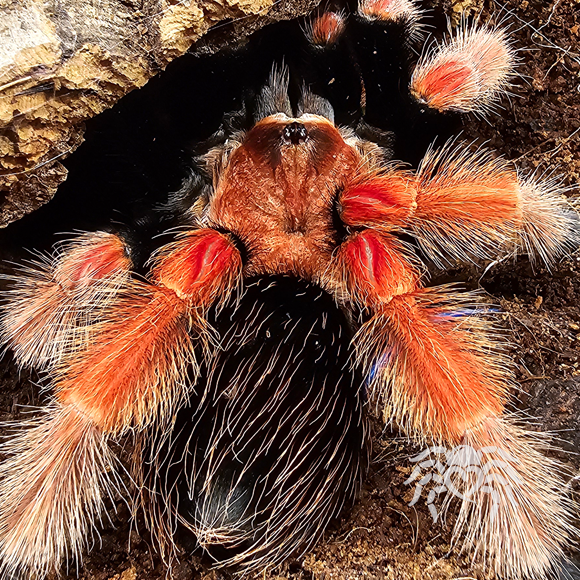
As adults, B. boehmei usually reach around 13–15 cm diagonal leg span, making them a lovely, display-worthy size but not quite big enough to scare your nan (unless she really, really hates spiders). Females tend to be a bit heftier and bulkier than males, who are leggier and, as is traditional, destined for a much shorter stint in the hobby. Growth can take several years, especially for females who, with good care, develop into robust, handsomely marked adults. The striking orange and black colouring is present from a young age, but turns from “cute” to “absolutely stunning” with each successive moult.
Lifestyle
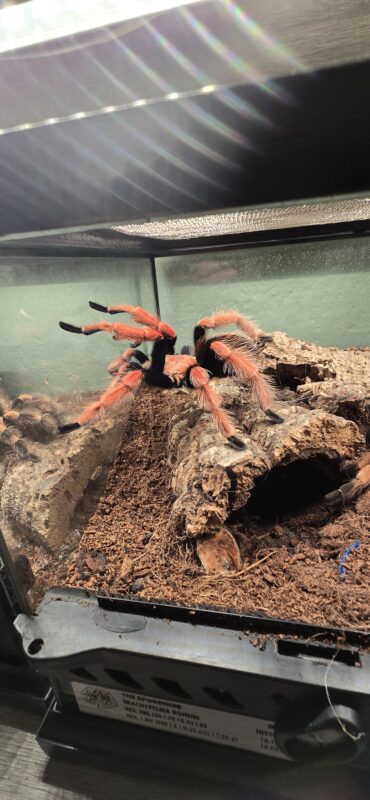
B. boehmei is most definitely a terrestrial species—no tree-swinging antics here! They spend plenty of time on the ground, digging shallow burrows or claiming a hide as their own like a proper hermit. In captivity, you’ll spot your Fireleg building entrances, rearranging moss (interior design aspirations, perhaps?), or occasionally sitting majestically out in the open, showing off those fiery orange limbs. Not big on climbing, they appreciate a sturdy substrate for excavation. They’re usually not marathon runners, but will scuttle with surprising speed if spooked. Think of them as ground-dwelling homebodies with a knack for home improvements.
Lifespan
Females of this species are the Methuselahs of the tarantula hobby and can stick around for 15–20 years in good care. Males, alas, rarely make it much past their first mature moult, usually clocking out after 4–6 years. Provided you’re patient and don’t mind a few years of growth, your Fireleg could become that grumpy long-term roommate you never knew you needed, outliving the family goldfish, hamster, and that questionable houseplant on your windowsill.
Growth Rate
B. boehmei is notorious for its slow to medium growth rate. Don’t expect this species to rocket from spiderling to behemoth overnight—patience is very much the name of the game. Regular, appropriate feeding and slightly warmer temps can nudge things along a bit, but rushing is neither possible nor recommended. Instead, enjoy each little moult and colour change as a sign that your spider is taking its sweet time (and who can blame it, really?).
Temperament
B. boehmei has a reputation for being, let’s say, a bit melodramatic. While generally slow-moving and docile, they’re notorious for flicking urticating hairs at the slightest provocation—think ‘diva at a bad hair day.’ They very rarely bite and would much prefer to stand their ground, raise a threat posture, or start a hair-flicking extravaganza. Sudden movement or loud disturbances may get them agitated, but most of the time they’re content to mind their own business if left alone. Don’t take it personally—Firelegs just like their space (and their privacy).
Temperature
Aim to keep B. boehmei around 21–24°C—a range that lines up with most British home temperatures. They’ll tolerate short dips to 18°C or rare peaks up to 26°C, but sudden big swings are a no-go. No need for anything fancy like heat mats under the tank (these can dry your substrate and risk cooking your spider’s toes). If your house is chilly, consider a gentle heat source near the enclosure (not on or under it), monitored with a thermostat. Stability matters more than chasing a tropical climate, so resist the urge to turn your spider room into the Sahara.
Humidity
Keeping things at 55–65% relative humidity suits this dry-country dweller just fine. A patch of slightly damp substrate at one end of the enclosure (not the whole thing) works best; let the rest dry out. This prevents mould, deters mites, and spares the spider from soggy feet. Always provide a shallow, sturdy water dish (which will inevitably end up filled with substrate—tarantula tradition). Good cross-ventilation is a must, so don’t treat your enclosure like a Tupperware box; air movement keeps things healthy and fresh, reducing the risk of mould outbreaks. Remember: it’s easier to add moisture than to fix problems caused by over-humidity.
Visibility
If you like seeing your spider, B. boehmei is a top pick! They’re often found out and about, especially once they’ve settled in and claimed a nice hidey hole. You’ll spot them lounging in the open, looking resplendent under the light, and occasionally rearranging the furniture (aka substrate). However, just before and after a moult, expect them to vanish into their hide like a magician’s rabbit. Most active at dawn and dusk, but they’re not too shy—making them an ideal show spider for your collection.
Webbing
While B. boehmei will never win ‘World’s Webbiest Spider,’ they do use silk to reinforce their burrow entrances, line their hides, and create moulting mats. Don’t expect elaborate tunnels or ghostly web curtains hanging everywhere; their webbing habits are more about comfort and function than flash. Watching them slowly line their home with just the right amount of silk is strangely satisfying—think minimalist interior decorating, but with eight legs and a lot more attitude.
Feeding
For the gourmet B. boehmei, a menu of well-sized crickets, dubia roaches, and locusts will do the trick. Spiderlings need feeding twice a week with pinhead crickets or pre-killed prey, juveniles once a week, and mature adults every 10–14 days. Don’t overfeed—these tarantulas have a knack for turning into orange-bottomed blimps if you’re not careful. Remove uneaten prey within 24 hours to avoid stress, especially around moulting; wriggling bugs and vulnerable spiders don’t mix. Their feeding response can range from cautious to enthusiastic, and moulting triggers fasting—if your Fireleg turns down its dinner, check for signs of an upcoming moult before panicking. Variety in food helps with health, and don’t forget to gut-load live insects for extra nutrition.
Enclosure Recommendations
A simple terrestrial setup suits B. boehmei perfectly. Choose an escape-proof, well-ventilated enclosure with more floor space than height (30 x 30 x 25 cm is ideal for adults). Provide 8–12 cm of cocofibre or topsoil so they can dig to their heart’s content. Furnish with at least one sturdy hide (cork bark is a classic), and add leaf litter or moss if you’re feeling creative. A shallow water dish should live in a corner—expect it to be filled with dirt frequently; they enjoy a bit of home renovation. Avoid climbing decor—falls can injure these chunky ladies and lads. Regular spot cleaning and good airflow are musts, but save the deep cleans for after moults or big messes. Ambient light is fine; no special lighting needed.
Experience Level
Thanks to their hardy nature, forgiving requirements, and steady temperament, B. boehmei is often recommended for beginners with a splash of patience or for intermediate keepers looking to level up their collection with something showy. Just be prepared for the hair-flicking—gentle, respectful maintenance is a must. Their slow growth means you’ll have plenty of time to hone your care skills before facing any major husbandry challenges.
Final Thoughts
B. boehmei is a firm favourite in the tarantula world: eye-catching, reliable, hardy, and just that right blend of diva and homebody. Their longevity gives you years of enjoyment, and they handle British home conditions with ease. The main challenge is their sensitivity to disturbance and love of a good hair-flicking session, but nothing that can’t be managed with a spot of respectful husbandry. The Fireleg’s vivid look and tendency to sit out make them a living ornament you’ll never tire of. If you’re after a display tarantula that’s packed with character, looks, and longevity—with just a hint of teenage angst—this species will fit right in.
Community Species Gallery
Approved photos submitted by registered Spoodoire users.
No community images have been approved for this species yet.
Submit Your Photo
Log in to submit a photo for this species.
Available at The Spoodoire
Products linked to this species care guide.