

Species Care Guide
Davus pentaloris
Guatemalan tiger rump tarantula
Also known as: tiger rump tarantula, Guatemalan tiger-rump
Last updated: July 4, 2026
Buy this species
Origin
Davus pentaloris hails from the lush forests and mountainous regions of Guatemala and parts of southern Mexico. In the wild, these charming tarantulas are found nestled amongst leaf litter and hiding under logs where the climate is warm and moderately humid for most of the year. They experience seasonal rains, but thanks to high ground cover, things rarely get too soggy. Temperatures generally range from 20°C at night, up to 26°C during the day. Their habitat offers plenty of hiding places, and being opportunistic, they make the most of whatever nook or cranny is available. It's a world of vibrant greenery and the occasional nosy forest critter—a perfect playground for a spood of this calibre.
Adult Size
Davus pentaloris reaches a very manageable adult size, with leg spans of 8–11 cm being typical. Females grow slightly larger and bulkier than the more slender males, which helps when it comes to longevity and egg-carrying. This isn't one of the tarantula world’s giants, which means a modest enclosure will do just fine. Slings start out small (a couple of centimetres, tops), but mature over a few years into colourful, striking adults—a size perfect for anyone with limited shelf space or a penchant for compact species.
Lifestyle
Davus pentaloris is unmistakably terrestrial, with a penchant for scurrying along the jungle floor rather than swinging from tree to tree. In captivity, you'll find them making good use of any hide or burrow you provide, often digging shallow scrapes beneath cork bark or leaf litter. While they’re not obsessed diggers, they do appreciate a bit of redecorating every now and then—your enclosure may occasionally look like an episode of Tarantula DIY. They’re quite adaptable, thriving as long as they have a secure hide and some substrate to shuffle about. While they’re on display a fair bit, expect them to scuttle out of view if startled.
Lifespan
Females of Davus pentaloris are solid long-term companions, often living 10–15 years with good care—just enough time to become a family heirloom or at least outlast a few mobile phones. Males, on the other hand, tend to party hard and fast, maturing in about 2–3 years and rarely living more than 4 years in total. It’s the classic tarantula gender difference: ladies rule the years, gents race for the finish line. Either way, it’s a commitment you can enjoy for years rather than decades—unless you accidentally end up with a dozen slings, in which case, best start knitting tiny jumpers now.
Growth Rate
Slings and juveniles tend to grow at a steady medium pace—no racehorses here, but you won’t be waiting ten years for an adult either. With regular, appropriate feeding and warmth, you might see moults every 6–8 weeks in the early days, slowing down as they mature. If you’re used to snails for tarantulas, this species feels refreshingly cooperative. Cooler temperatures or inconsistent feeding will slow things, but healthy individuals reward patience with their vibrant adult colours. All in all, a nice balance between instant gratification and a test of long-term commitment!
Temperament
Davus pentaloris is admired for its generally calm disposition—no drama queens here, just a hint of nervous energy. When disturbed, they’re more likely to bolt for cover than stand their ground, so keep in mind that speed is their main defence. They rarely show defensiveness unless pushed, making them a popular choice for keepers who like their spiders sociable but not sassy. This species is more likely to moonwalk into their hide, leaving you to wonder if you imagined the whole encounter. Handled gently (in maintenance, not by hand!) they’ll reward you with beautiful colours and few surprises. Still, respect their space—nobody likes being startled, especially not a spood.
Temperature
Davus pentaloris prefers things on the comfortably warm side, ideally 21–24°C during the day. They’re not overly fussy and can thrive in a typical British home so long as there are no dramatic draughts or thermometer-busting radiator episodes. Short dips at night aren’t an issue (down to about 18°C), but anything below 16°C or above 28°C for long periods should be avoided—tarantulas aren’t built for wild temperature swings or experimenting with sauna settings! In winter, a low-wattage heat mat attached to the side of the enclosure (never the bottom) can be used, but always monitor temperatures with a trusted thermometer. Give them stability, and you’ll be repaid with moult after glorious moult.
Humidity
Aim to keep humidity at a pleasant 60–70% RH. This is easily achieved with a slightly moistened substrate (think lightly misted, not replicating the Amazon in your living room!) and a small, clean water dish. Let the top layer dry out between light mistings—stale, muggy air is a one-way ticket to mould and unhappy pets. Brilliant airflow is key, so make sure your enclosure has ample cross ventilation. Open up the vents and embrace a gentle breeze, but avoid full-on gales—tarantulas prefer not to star in a weather documentary. A humidity gauge helps, but your best guide is healthy substrate and a plump, active spider.
Visibility
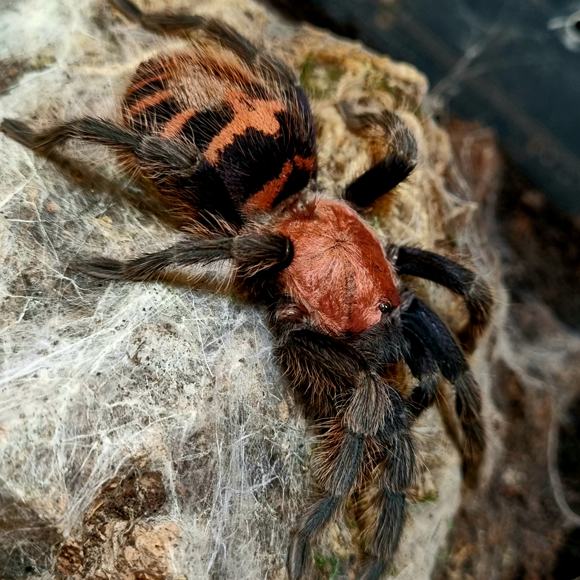
Visibility is quite good with Davus pentaloris, especially if they’re provided with a secure hide and feel safe. You’ll often spot them out and about in the evening or early morning, showing off their handsome chevron pattern. While juveniles may vanish for days during moult cycles, adults are actually a good display species compared to their shy cousins. They tend to perch at hide entrances, doing their best impression of a woodland guardian. Give them a quiet spot and minimal disturbance and you’ll be rewarded with regular sightings—just don’t expect marathon dance recitals when the lights are on.
Webbing
Expect a moderate amount of webbing, with Davus pentaloris setting up neat silk retreats in and around their hide. Juveniles are particularly enthusiastic, often decorating the enclosure like it’s Halloween all year round. The webbing is used mainly for anchor points and lines to alert them to approaching snacks (or nosey humans). As adults, they’re a bit less extravagant, but will still maintain a silk mattress under their favourite log. Their web-work isn’t quite Avicularia-level, but it’s enough to keep things interesting—think functional, not full Gothic mansion.
Feeding
Davus pentaloris enjoys a varied diet, and feeding time is often a highlight—if you like seeing a food sprint, you’re in the right place! Slings will tackle appropriately sized pre-killed or very small live crickets, fruit flies or tiny roaches 2–3 times a week. As they grow, graduate to larger prey items (small crickets, mealworms, dubia roach nymphs) every 5–7 days for juveniles, and weekly for adults. Their feeding response is usually enthusiastic, though fasting before a moult is normal—don’t panic if they suddenly go on a diet. Remove uneaten prey after 24 hours to keep things tidy and prevent any moult-night tragedies. Avoid power-feeding (offering too much too often), as pudgy spiders are no happier than hungry ones. The best approach: regular, sensible feedings and an eye for plump abdomens and natural behaviours.
Enclosure Recommendations
For slings, small ventilated acrylic boxes with at least 5 cm of slightly moist coco fibre work wonders—just add a bit of leafy décor and a starter hide. As they grow, adults are best housed in enclosures roughly 30 x 20 x 20 cm, with 8–10 cm of substrate for occasional digging shenanigans. Provide a sturdy cork bark hide, a shallow water dish, and anchor points for webbing. Ventilation is all-important: cross-vented enclosures keep the habitat fresh, with condensation left for the kitchen, not your spider’s home. Decorate with fake plants or leaf litter (optional, but your spood will appreciate the privacy). No need for climbing structures—these aren't acrobats. Lastly, always secure the lid: these are fast movers when the mood strikes, and you don’t want a surprise game of ‘Find the Spood’!
Experience Level
Davus pentaloris makes an excellent choice for both beginners and experienced hobbyists—easy to care for, attractive, and unlikely to raise your blood pressure. Their manageable size, forgiving temperament, and hardy nature mean you don’t need a PhD in spoodery to keep them happy. If you’re new to New World species and want more pizzazz than a brown box, this is an ideal starter. Conversely, seasoned keepers will appreciate their charm and colouration. Just remember: no handling, minimal fussing, plenty of observation—everyone wins!
Final Thoughts
If you crave a tarantula with personality, easy care requirements, and delightful colouration, Davus pentaloris is an absolute gem. They offer beginner-friendly management for new keepers, but their behaviour and looks make them a staple for seasoned hobbyists, too. Fast enough to keep you on your toes but not likely to cause panic, they quickly become a keeper’s favourite. While they might never star in a docile-handling video, their visibility and moderate webbing make up for it in spades. Like all tarantulas, respect their space, provide simple husbandry, and you’ll be treated to years of fascinating behaviour, subtle artistry, and maybe a little bit of ‘bedroom redecorating’. A fantastic all-rounder with bags of charm—Davus pentaloris is a spoodoir classic.
Gallery
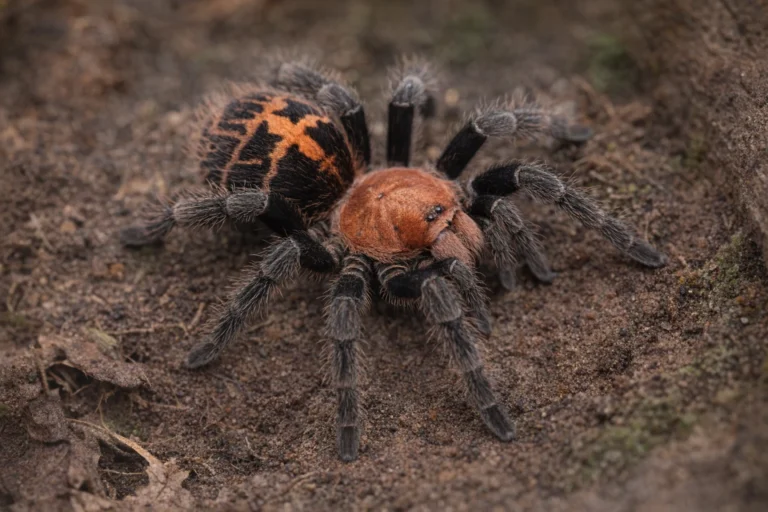 This image was created using artificial intelligence and reviewed by The Spoodoire before publication. It is intended as a representative image, is not a photograph of current stock, and may not show every natural variation found within the species.
Community Species Gallery
Approved photos submitted by registered Spoodoire users.
No community images have been approved for this species yet.
Submit Your Photo
Log in to submit a photo for this species.
Available at The Spoodoire
Products linked to this species care guide.