


Brachypelma boehmei
Price range: £12.00 through £80.00
Sits out like royalty until disturbed, then promptly treats you to a dramatic hair-flicking routine—grounded, decorative, and not above redecorating the moss without warning.
Tell me when it is available
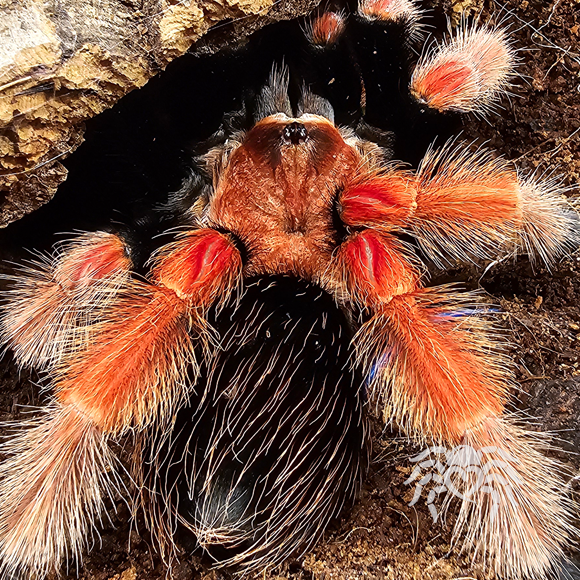
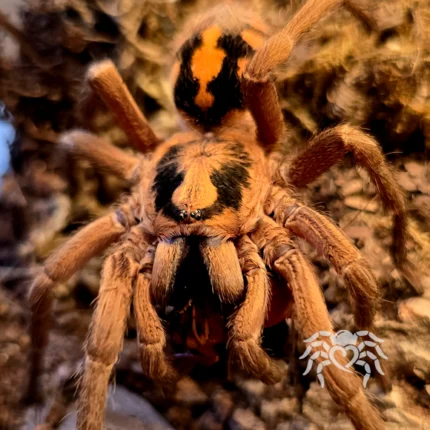
Brachypelma boehmei, also known as the Mexican Fireleg, is about as colourful as tarantulas get—without any need for showmanship. Native to the dry scrublands and thorny outcrops of western Mexico, these spiders prefer their solitude under a good bit of cork bark or the classic flowerpot. Give them a chunk of substrate to excavate, a sturdy hide, and you’ll be treated to a homebody with a minor talent for redecorating and an impressive repertoire of hair-flicking when annoyed.
The Fireleg is a terrestrial species—definitely not built for climbing, so keep the enclosure practical and the décor unbreakable. Expect a diagonal leg span of 13–15 cm at adult size; enough to be genuinely interesting, but not so vast that visitors will demand hazard pay. Growth is deliberate, not frantic, and if you get a female, she’ll outlive most small pets and quite possibly some bad houseplants. Males, in true tarantula style, are less long-lived and leggier.
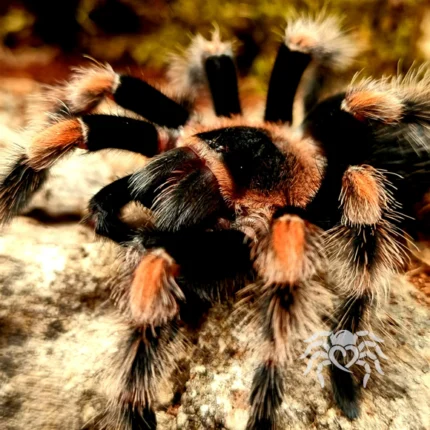
Keepers appreciate B. boehmei for its visibility—these spiders aren’t chronic hiders once settled. They show off their sharp orange and black, pause for the odd photoshoot, and retire responsibly when a moult is imminent. Day-to-day, they’re low-effort: happy at typical British room temperatures (21–24°C) and not too picky about humidity, as long as there’s a water dish and no sauna-level conditions. Good ventilation trumps excess moisture every time.
The Fireleg’s temperament is, arguably, more diva than danger. Rarely aggressive, they keep their fangs to themselves but will happily flick urticating hairs if you bother them. Rehousing and spot cleaning benefit from gentle tools and a respectful distance from those expressive back legs. Feeding is simple: crickets, roaches, and locusts on a reasonable schedule, with care around moulting periods.
Brachypelma boehmei is often suggested for new or intermediate keepers who don’t expect instant gratification—there’s satisfaction in watching them grow and tidy their homes, one slow moult at a time. Not a web artist, but a minimalist: expect functional silk, not Halloween décor. A classic show spider with real longevity and just enough quirkiness to keep things interesting, especially if you enjoy a mix of colour, character, and never knowing quite what you’ll find in the water bowl.
Only logged in customers who have purchased this product may leave a review.
Species breeding reference
Breeding Notes
Pairing B. boehmei can be a test of patience and timing, rather than nerves of steel. Mimic the end of their wet season with a touch more humidity and solid meals before pairing up, and keep a close eye during introductions. Females aren’t always the most welcoming, so be prepared for retries and don’t rush post-pair care. With the right approach, you might be rewarded with hundreds of cute little fiery-kneed spiderlings, but it’s no guarantee—treat each attempt as an experiment.
Wild Breeding Season
Wild breeding tends to follow the seasonal rains in western Mexico, so your best bet is that most action happens after the wet season, as the ground softens and temperature shifts a touch lower. This likely means pairings in late summer to autumn in their home range.
Wild Environmental Triggers
Seasonal rains after a dry spell seem to be the big nudge for B. boehmei to get in the mood, with a temperature drop and increased ambient humidity acting as natural signals. Subtle changes rather than dramatic swings are probably the cue.
Native Climate Context
This species is used to warm, arid habitats with a noticeable wet season that breaks up months of dry, sunny weather. Even during the rains, the ground doesn't turn swampy; think more of a brief refresh, not constant damp.
Captive Breeding Window
Pairings generally go best towards the end of summer into early autumn, mirroring the post-rain conditions of their native range. Some keepers in the UK have seen success by lightly increasing humidity for a few weeks before introducing the pair.
Pre-pairing Conditioning
Offering both spiders a slight bump in humidity and a solid feed leading up to introductions can help them reach optimal condition—nothing drastic, just enough to hint at the passing of the dry season. Give them a comfortable hide each and keep disturbance to a minimum.
Male Introduction Guidance
Let the male settle in his own tub first, then introduce him to the female’s enclosure late in the day when she’s settled herself. It’s important to supervise closely—Brachypelma can be moody, and the male should have a clear escape route. Some gentle courtship drumming is a good sign things are going to plan.
Female Readiness Signs
A female that's recently moulted, fed well, and is showing a bit of wanderlust rather than hunkering down is likely ready. An open, alert posture and not immediately striking at the male are positive signs too.
Post-pairing Conditions
After the pairing, pop her back on slightly increased humidity and resume her routine, keeping it as stress-free as possible. Good feeding will help her build up reserves for a potential egg sac. Keep the male separate; repeat pairings can help but aren’t always possible.
Sac Timeline
Reports vary, but it’s usually several weeks to a couple of months before an egg sac appears after a successful pairing. She may hide away and become less interested in food once she’s preparing the sac.
Incubation Notes
Leave the sac with the female undisturbed for three to four weeks, then consider pulling it to finish incubating artificially at moderate humidity and stable temperature. Patience is key—don’t rush this stage.
Expected Sling Count
Clutch sizes are reported to range from around 200 to 600 spiderlings, but wild-to-wild variability and female condition can make the numbers swing a fair bit. Don’t count your spiderlings before they hatch!
Risks and Cautions
B. boehmei pairings aren’t the most dangerous in the genus, but cannibalism can happen if the mood isn’t right. Females can be picky, and failed pairings aren’t rare. It’s not beginner territory—plan ahead for a lot of spiderlings if you’re lucky, and don’t breed unless you have rehoming options.
Evidence confidence: Medium
UK Market Insight
Neutral UK availability and pricing context for this exact Species record.
Species care guide
Brachypelma boehmei
Adult Size
13–15 cm diagonal leg span
Temperature
21–24°C
Humidity
55–65% RH
Temperament
B. boehmei has a reputation for being, let’s say, a bit melodramatic. While generally slow-moving and docile, they’re notorious for flicking urticating hairs at the slightest provocation—think ‘diva at a bad hair day.’ They very rarely bite and would much prefer to stand their ground, raise a threat posture, or start a hair-flicking extravaganza. Sudden movement or loud disturbances may get them agitated, but most of the time they’re content to mind their own business if left alone. Don’t take it personally—Firelegs just like their space (and their privacy).
Defence
When upset, B. boehmei’s go-to move is to launch those infamous urticating hairs from its abdomen. These tiny barbed hairs are the tarantula’s version of pepper spray—annoying to predators (and humans who rub their eyes). Bites are exceptionally rare and reserved as a last resort. When cleaning or rehousing, keepers should use gentle tools and avoid direct contact—gloves or forceps help, especially if your Fireleg starts breakdancing with its back legs. Respecting their boundaries will keep both of you happier (and itch-free).
Visibility
If you like seeing your spider, B. boehmei is a top pick! They’re often found out and about, especially once they’ve settled in and claimed a nice hidey hole. You’ll spot them lounging in the open, looking resplendent under the light, and occasionally rearranging the furniture (aka substrate). However, just before and after a moult, expect them to vanish into their hide like a magician’s rabbit. Most active at dawn and dusk, but they’re not too shy—making them an ideal show spider for your collection.
Experience Level
Thanks to their hardy nature, forgiving requirements, and steady temperament, B. boehmei is often recommended for beginners with a splash of patience or for intermediate keepers looking to level up their collection with something showy. Just be prepared for the hair-flicking—gentle, respectful maintenance is a must. Their slow growth means you’ll have plenty of time to hone your care skills before facing any major husbandry challenges.
Webbing
While B. boehmei will never win ‘World’s Webbiest Spider,’ they do use silk to reinforce their burrow entrances, line their hides, and create moulting mats. Don’t expect elaborate tunnels or ghostly web curtains hanging everywhere; their webbing habits are more about comfort and function than flash. Watching them slowly line their home with just the right amount of silk is strangely satisfying—think minimalist interior decorating, but with eight legs and a lot more attitude.
Feeding
For the gourmet B. boehmei, a menu of well-sized crickets, dubia roaches, and locusts will do the trick. Spiderlings need feeding twice a week with pinhead crickets or pre-killed prey, juveniles once a week, and mature adults every 10–14 days. Don’t overfeed—these tarantulas have a knack for turning into orange-bottomed blimps if you’re not careful. Remove uneaten prey within 24 hours to avoid stress, especially around moulting; wriggling bugs and vulnerable spiders don’t mix. Their feeding response can range from cautious to enthusiastic, and moulting triggers fasting—if your Fireleg turns down its dinner, check for signs of an upcoming moult before panicking. Variety in food helps with health, and don’t forget to gut-load live insects for extra nutrition.
Enclosure Recommendations
A simple terrestrial setup suits B. boehmei perfectly. Choose an escape-proof, well-ventilated enclosure with more floor space than height (30 x 30 x 25 cm is ideal for adults). Provide 8–12 cm of cocofibre or topsoil so they can dig to their heart’s content. Furnish with at least one sturdy hide (cork bark is a classic), and add leaf litter or moss if you’re feeling creative. A shallow water dish should live in a corner—expect it to be filled with dirt frequently; they enjoy a bit of home renovation. Avoid climbing decor—falls can injure these chunky ladies and lads. Regular spot cleaning and good airflow are musts, but save the deep cleans for after moults or big messes. Ambient light is fine; no special lighting needed.
Final Thoughts
B. boehmei is a firm favourite in the tarantula world: eye-catching, reliable, hardy, and just that right blend of diva and homebody. Their longevity gives you years of enjoyment, and they handle British home conditions with ease. The main challenge is their sensitivity to disturbance and love of a good hair-flicking session, but nothing that can’t be managed with a spot of respectful husbandry. The Fireleg’s vivid look and tendency to sit out make them a living ornament you’ll never tire of. If you’re after a display tarantula that’s packed with character, looks, and longevity—with just a hint of teenage angst—this species will fit right in.
Species-specific guidance
Frequently Asked Questions
Is Brachypelma boehmei suitable for beginners?
Brachypelma boehmei, also known as the Mexican Fireleg, is an excellent choice for beginners with a bit of patience. Their hardy nature, forgiving care needs, and striking looks make them a solid pick for those new to the hobby or moving up from starter species. Just be prepared for the occasional hair-flicking!
How big does a Brachypelma boehmei get as an adult?
Adult Brachypelma boehmei typically reach a diagonal leg span of about 13–15 cm. Females are bulkier and males leggier, but both are noticeable display spiders. Their vivid orange and black colouring becomes more impressive with each moult.
What kind of temperament does Brachypelma boehmei have?
The Mexican Fireleg is famous for its melodramatic temperament. Usually calm, they can be defensive and will flick urticating hairs at slight provocation. Bites are very, very rare, as they prefer to stand their ground or show a threat posture. Handling is not recommended; respect their space for a happier spider and keeper.
How fast does Brachypelma boehmei grow?
Brachypelma boehmei is known for its slow to medium growth rate. Don’t expect rapid changes—patience is essential. Regular feeding and slightly warmer temperatures can support steady development, but it takes several years, especially for females, to reach full adult size.
What’s the best enclosure setup for Brachypelma boehmei?
A simple, terrestrial enclosure with secure ventilation and plenty of floor space is ideal. Aim for dimensions around 30 x 30 x 25 cm for adults. Use 8–12 cm of diggable substrate, add a sturdy hide, and include a shallow water dish. Avoid climbing decor—these ground-loving spiders can be injured by falls.
How should humidity be managed for a Brachypelma boehmei?
Keep humidity at 55–65%. Moistening a patch of substrate at one end, not the whole enclosure, works best. Good cross-ventilation is vital to prevent mould. Always provide a shallow water dish, even if it ends up full of substrate—their favourite enclosure upgrade!
How visible is Brachypelma boehmei?
Brachypelma boehmei is a brilliant display species, often lounging out in the open once settled. They like a well-designed hide, but you’ll frequently see them, especially dawn and dusk. Expect them to disappear before and after moulting, but for much of the time, they’re a delight to watch.
How does Brachypelma boehmei behave in terms of webbing and lifestyle?
B. boehmei is a terrestrial homebody. While they don't create extravagant webs, they do use silk to line their burrows, hides, and moulting spots. They love rearranging substrate and making themselves comfortable, but you won’t find extensive tunnelling or curtain-style webbing like with arboreal or more webby species.
Related products


Reviews
There are no reviews yet.