

Species Care Guide
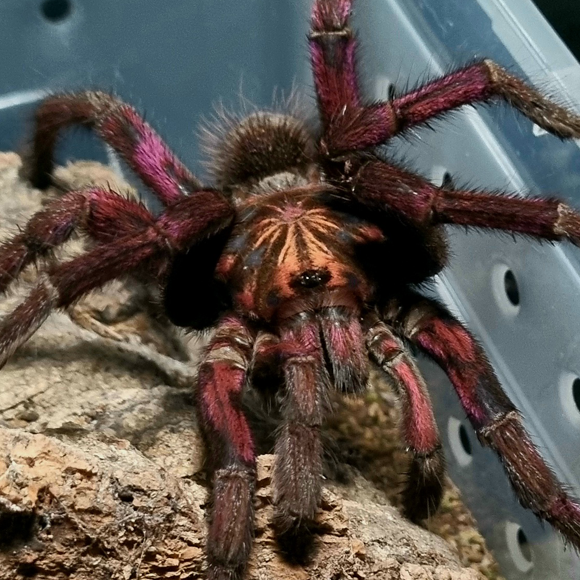
Pamphobeteus sp. “machala”
Machala Purple Bloom Tarantula
Also known as: Machala tarantula, Purple Bloom tarantula
Last updated: June 28, 2026
Buy this species
Origin
Pamphobeteus sp. “machala” hails from the lush rainforests of Ecuador and Peru in South America. This region is well known for its warm, humid climate and dense undergrowth. These tarantulas typically reside on the forest floor, frequently taking advantage of natural hides such as fallen logs, leaf litter, and burrows. The environment is seasonally wet with steady tropical temperatures, offering high humidity and a soft substrate—perfect for a spider that likes to dig in and stay low to the ground. All in all, they come out of some real jungle real estate!
Adult Size
When fully grown, Pamphobeteus sp. “machala” is a proper handful! Females can reach a rather impressive 18–20 cm diagonal leg span (sometimes more!), making them one of the beefier terrestrials on offer. Males tend to be a bit leggier and less robust, but still a good size. It’s worth noting (and showing off) that these spiders can look like absolute tanks in the enclosure, commanding attention whenever they emerge.
Lifestyle
True to their hefty terrestrial nature, Pamphobeteus sp. “machala” is right at home scrambling across the forest floor. In captivity, you’ll find them constructing scrapes beneath hides or even burrowing, especially as juveniles. While not strictly fossorial, they certainly appreciate some substrate to dig about in, if the mood strikes. Most of their day is spent lurking under cover, with occasional forays to the surface (especially around dinner time). Not climbers, not web-tapestry artists, but ground dwellers through and through.
Lifespan
Females are the long-haulers here, typically living 15–18 years with good care—so prepare for a lengthy, eight-legged friendship. Males, as is tradition in the tarantula world, have shorter innings, rarely making it past 4–6 years. If longevity in your pets is your thing, females are where it’s at. Males will mature more quickly, often spurring that last moult sooner—and then, well, it’s a brief bachelorhood after that.
Growth Rate
Pamphobeteus sp. “machala” is famed for its relatively fast growth rate, especially for such a large spider. Slings can put on size with gusto if offered regular meals and kept slightly warmer. You’ll notice those moult cycles stacking up faster than you might expect, which is always thrilling to watch. Keepers often remark on how quickly these spiders go from tiny to titan. Factors like feeding frequency and temperature will nudge things along—so you do have some say in your spider’s gym routine.
Temperament
Pamphobeteus “machala” are classic gentle giants with a side of nervous drama. They’re typically not aggressive and would much prefer to stomp away or flick a bit of hair than stand their ground. That said, they can throw a bit of a sulk if seriously bothered. Quick on their feet when spooked—so lid on, reflexes ready! Not the best fit if you’re after a lap spider (not that we recommend it anyway), but truly endearing with regular ‘peek-a-boo’ appearances.
Temperature
Ideally, you’ll want to keep this species at 22–26°C, which just so happens to fall into ‘typical British living room in summer when the sun’s actually out’ territory. They’ll tolerate brief dips down to 20°C at night, but keep an eye if winter turns your home into a chilly cave. Use a thermostat-controlled heat mat or low-wattage ceramic heater if needed—but stick it to the side of the enclosure, not underneath, or you’ll get a roast tarantula, not a comfy one! Always monitor with a reliable thermometer to avoid accidental tropical heat waves indoors.
Humidity
Aim for 70–80% humidity for this jungle wanderer. That sounds high, but basically, keep a large water dish filled at all times and moisten part of the substrate every week or so (let the other bit dry out—no one likes soggy feet). Good cross-ventilation is crucial. You want the air fresh and the enclosure not mouldy. If in doubt, err on the slightly drier side—these spiders can handle short dry spells far better than being permanently bogged down.
Visibility
Notorious for being on display more than you might expect from a burrowing tarantula, Pamphobeteus “machala” win points for ‘show factor’. Juveniles are shyer, but adults will happily lounge out in the open, occasionally moving substrate around or sitting stubbornly in the water dish. Expect to see them most at dusk or after dark, but surprise cameos are always possible—especially if you’re hoping to impress spider-sceptical visitors.
Webbing
Not the most ambitious of engineers, Pamphobeteus “machala” produce modest silk for lining burrows and occasionally decorating their hides. Don’t expect arboreal-level web buildings here. You’ll mostly see a light matting or a silk ‘doorbell’ at the entrance to a favourite hide, perfect for letting them know when dinner’s arriving. Enough web for interest, not enough to obscure your view—and the perfect excuse for buying a camera with macro mode.
Feeding
Slings will make a meal of pre-killed or small live prey twice a week: fruit flies, hatchling crickets, tiny roaches—whatever won’t turn the tables and nibble them first. As juveniles and adults, size up to larger crickets, dubia roaches or locusts once a week. Pamphobeteus are famous for their ‘gusto’—don’t be shocked if they leap on food like the world’s gone missing a meal. Avoid overfeeding; those lovely thick spiders can get chunky (and then go on hunger strike just to make you panic). Always remove uneaten prey after 24 hours, especially if a moult is due—nobody wants an opportunistic cricket ruining your spider’s big reveal.
Enclosure Recommendations
For adults, go for a sturdy terrestrial enclosure (minimum 45x30x30cm) with escape-proof ventilation. Provide at least 10–15cm of slightly moist coco fibre or peat-free soil for burrowing. A generous hide is essential—think cork bark or a flower pot on its side if you’re feeling retro. Add a shallow water dish that can’t be tipped, you’ll thank yourself when cleaning. Good cross ventilation prevents stuffiness and keeps pests at bay. Avoid cluttering the enclosure; this species likes its personal space. For slings and juveniles, deli cups or small faunariums work fine—just scale everything down. Don’t go minimalist on the substrate for any age—the bigger they get, the more they dig… or at least shuffle things about artistically.
Experience Level
While not a true ‘beginner’s species’ due to size, defensive hairs and humidity needs, Pamphobeteus “machala” are an excellent next step for the keen keeper with a bit of experience. If you’ve kept a couple of terrestrials and want something flashier and just a bit more demanding (but not bonkers), these are ideal.
Final Thoughts
Pamphobeteus sp. “machala” brings drama, colour and true personality to any collection. They’re robust, quick-growing and often more visible than your average terrestrial, making them a perennial favourite among budding and seasoned keepers alike. As long as you respect their need for humidity, a bit of personal space, and don’t expect cuddles, you’ll get years of enjoyment. Remember: those urticating hairs are no joke, so hands off and tongs out for maintenance. Treat them well, and you’ll be treated to flashy displays, epic feeding response and impressive size—arguably the showstopper of any spider shelf.
Community Species Gallery
Approved photos submitted by registered Spoodoire users.
No community images have been approved for this species yet.
Submit Your Photo
Log in to submit a photo for this species.
Available at The Spoodoire
Products linked to this species care guide.