

Breeding Notes
Brachypelma hamorii
Mexican red-knee tarantula
Also known as: Mexican red knee, Mexican redknee
Species-specific breeding guidance, seasonal context and practical caveats for experienced keepers.
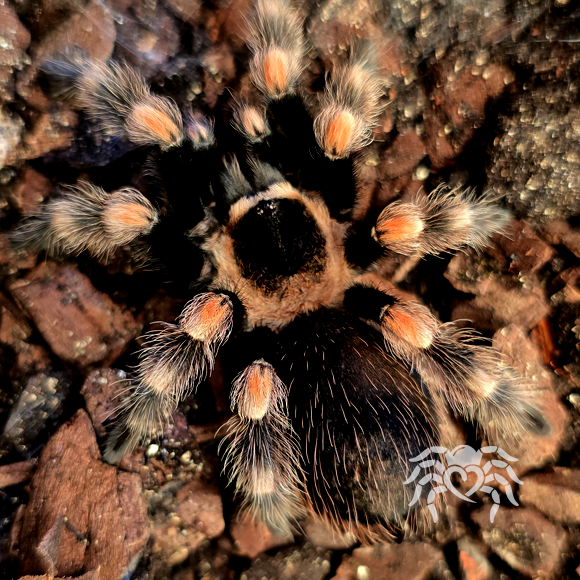
Species breeding reference
Breeding Notes
Breeding Brachypelma hamorii means working with a spider that’s broadly forgiving but far from a guaranteed win, even for experienced keepers. The trick’s in nailing those shifts from wet to dry and reading your female’s moods. If you’re tuned in to her cycles and patient with timing, you’ll stand the best chance of seeing a sac—but don’t be surprised if things take a little longer or the female needs a second go. It’s a satisfying challenge for those who’ve bred a few easier species first.
Wild Breeding Season
Wild Brachypelma hamorii seem to pair up and get busy not long after the local rainy season wraps up, when conditions are just right for egg sacs and the safe emergence of young. This usually falls somewhere after the summer rains, but don’t hang your hat on an exact calendar date.
Wild Environmental Triggers
Heavier rains followed by a gradual drying seem to set off breeding behaviour in the wild. Stable warmth with a dip in precipitation is nature’s cue for the females to get busy, making simulated wet-to-dry cycles in captivity worth considering for priming.
Native Climate Context
The Mexican west coast, where these spiders are from, swings between a hot, humid summer rainy season and a drier, milder winter. Temperatures are generally warm year-round, but it’s the rhythm of rain and dryness that matters most for triggering reproductive cycles.
Captive Breeding Window
Pairings in captivity tend to work best if timed to follow a surge in humidity mimicking the end of the wet season—so late autumn to early spring is the common choice, but no need to be exact. Aim for a period of stable, warm temperatures with slightly reduced humidity after a good wetting.
Pre-pairing Conditioning
Let the female get fully settled and well-fed, ideally after a period of increased misting, then let things dry out for a few weeks before introducing the male. Mimicking natural cycles gives her body a nudge that the time’s right, especially if you time things after a moult when she’s at her peak.
Male Introduction Guidance
Start with a well-rested, mature male and introduce him to the female’s enclosure in the late evening when both are most relaxed. Supervise the meeting—females are often tolerant but can be unpredictable if disturbed or if she’s not ready. Have a long tool handy to separate them quickly if she turns feisty.
Female Readiness Signs
A receptive female will often drum lightly, stay out in the open more often, and isn’t prone to charge the male. If she appears restless or barricades herself away, she might not be ready or is coming up to a moult—never risk pairing close to her moult cycle.
Post-pairing Conditions
After a successful pairing, keep her well-fed and stress-free. Many keepers give her a brief increase in humidity followed by a gradual drying, staying mindful not to soak the enclosure. She’ll often start webbing up more as she prepares for a sac.
Sac Timeline
Reports vary, but expect anything from six to twelve weeks after mating before the female produces a sac. Patience is key, and she may take longer if conditions aren’t just right. Don’t disturb her enclosure during this period unless absolutely necessary.
Incubation Notes
Leave the sac with her unless she’s proven to be a chronic eater. If you need to pull the sac, aim for day 30–35 as a cautious middle ground. Avoid major temperature swings and keep the egg sac in a humid but well-ventilated environment if removed.
Expected Sling Count
Expect anywhere from 300 to 600 spiderlings in a healthy sac, though figures either side of this aren’t rare; big, well-conditioned females might surprise you.
Risks and Cautions
Females can be unpredictable post-moult, and refusing males isn’t uncommon. Overly dry or damp conditions at the wrong time can spoil pairings or sac viability. Males don’t usually last long past maturity, so don’t delay. Wild-caught stock should not be paired, and beginner keepers might struggle to read female signals here.
Evidence confidence: Medium