

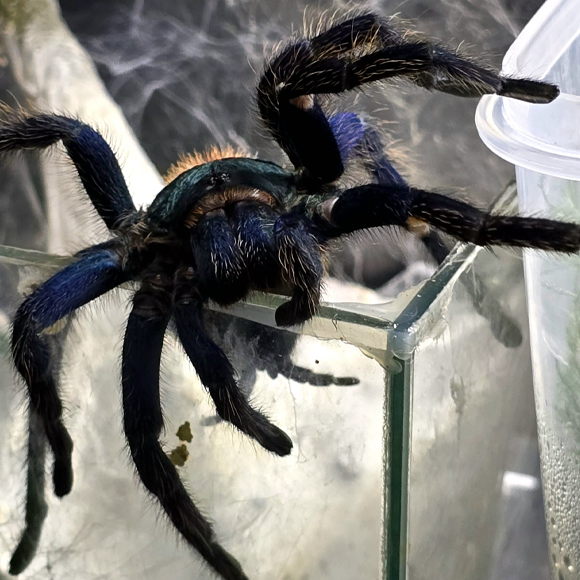

Chromatopelma cyaneopubescens
Price range: £20.00 through £130.00
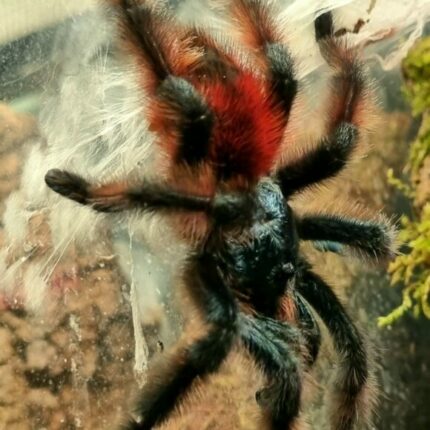
A web architect of the tarantula world, Chromatopelma cyaneopubescens dazzles with its colours and visibility, thriving in dry, well-ventilated setups.
| Weight | 60 g |
|---|---|
| Dimensions | 13 × 13 × 9 cm |
Tell me when it is available
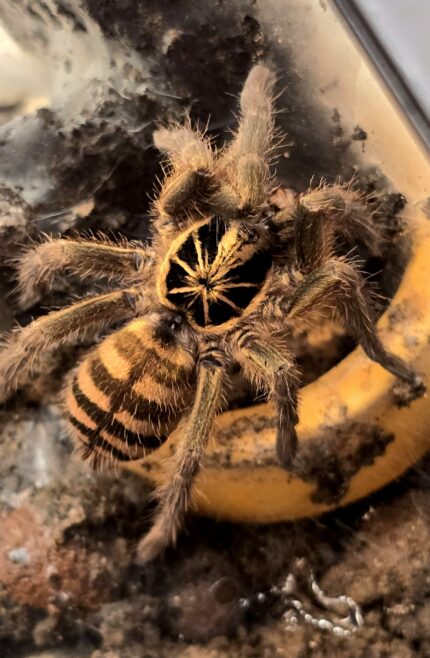
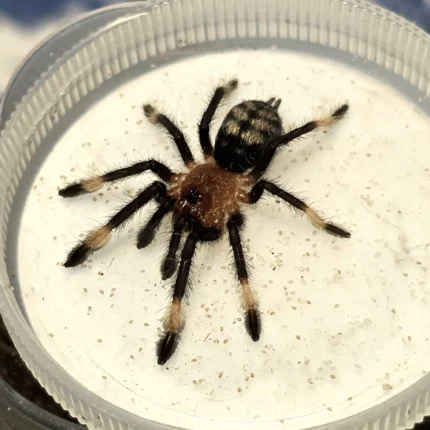
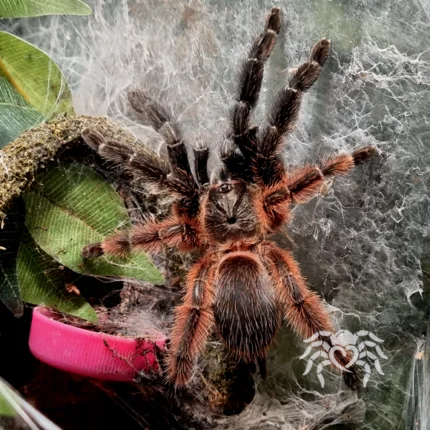
If you’ve kept a few tarantulas and fancy something a bit showier without upping the humidity routine, Chromatopelma cyaneopubescens (Greenbottle Blue) is difficult to top. Hailing from the dry scrub of northern Venezuela, they’re built for arid conditions and seldom out of sight. Expect sprawling webs rather than burrows—these spiders seem determined to redecorate their whole setup with silk, often in the most inconvenient places.
Behaviourally, they’re straightforward—skittish if prodded, but generally content to sit in full view atop their creations. They don’t do drama (unless you count a cricket ambush as theatre) and only resort to urticating hairs when pushed. Adults are typically visible, day or night, and their appetite is healthy without being excessive. Maintenance is sensible: dry substrate, good cross ventilation, and a water dish they’ll likely ignore.
In terms of care, they’re forgiving—just keep it dry, ventilated, and provide enough décor for webbing. Don’t expect a handleable pet; they’re best observed, not touched. Feed sensibly, avoid overdoing treats, and you’ll be rewarded with a vibrant, visible resident that actually earns its keep as a display species rather than a disappearing act.
Only logged in customers who have purchased this product may leave a review.
Species breeding reference
Breeding Notes
Breeding Greenbottle Blues isn’t the hardest challenge out there, but it’s not exactly a walk in the park either. Mimicking seasonal shifts—especially a short rise in humidity—seems to help tip the odds in your favour. Stick with healthy, fully mature spiders, give them plenty of web space and privacy to do their thing, and don’t be surprised if you end up with a healthy batch of playful little slings (and a fair bit more webbing to clean up). Pairings don’t always take on the first try, so patience and close observation are key.
Wild Breeding Season
The wild breeding season for this species isn’t nailed down, but with their native range in northern Venezuela’s dry, warm scrublands, most egg sacs are likely produced sometime after brief rainy spells or towards the end of their wet season, when conditions are just right for the next generation to thrive.
Wild Environmental Triggers
A slight uptick in humidity after the local wet or transitional season likely nudges these spiders into breeding mode, with increased food supply and just enough moisture to signal it’s time to start thinking about egg sacs.
Native Climate Context
Native to the sun-baked Paraguana Peninsula, these spiders spend most of the year in dry, warm conditions, only rarely seeing a rainy day. Average temps hover in the mid-20s Celsius, and rainfall stays light except for a couple wetter months in autumn.
Captive Breeding Window
There’s no strict window for breeding in captivity, but success seems better if you mimic a short moist period followed by a return to dryer, stable conditions—think of it as simulating the end of their brief wet season.
Pre-pairing Conditioning
Feed both adults generously leading up to pairing, and keep the enclosure mostly dry but offer a slight increase in humidity for a week or two before introduction. Make sure both spiders are freshly moulted and healthy—females especially shouldn’t be anywhere near a moult cycle.
Male Introduction Guidance
Introduce the male into the female’s web-heavy enclosure late in the day to reduce stress. These spiders are typically web-happy, so let the male explore, and keep a close watch for aggression. Remove him if things get feisty or if he appears overwhelmed by the amount of webbing.
Female Readiness Signs
A receptive female will linger near the surface and show curiosity rather than bolting or aggressively lunging at the male. She may drum or stay in the open instead of hiding away deep in her web tunnel.
Post-pairing Conditions
After a successful pairing, keep her well fed and gradually return humidity to normal (dryer), keeping an eye out for any signs of moulting. Steady temps and minimal disturbance from this point onwards help promote a successful sac.
Sac Timeline
Reports suggest that if everything goes to plan, an egg sac may appear six to twelve weeks after mating, but this can vary. Let her tend the sac for about three to four weeks before considering removal, as slings generally appear after about 30–45 days of incubation.
Incubation Notes
Keep the sac in stable, dry-ish conditions, just as you would for the adults. Good ventilation is key, and there’s no need to crank up the humidity. Aim for a reliable room temperature environment—no damp incubators needed for these desert originals.
Expected Sling Count
Clutch sizes can be fairly generous, often between 80 and 150 spiderlings per sac, though numbers can swing higher or lower depending on female size and condition.
Risks and Cautions
Females can be moody and unpredictable; successful pairings sometimes result in the male being eaten (or ignored entirely). Egg sacs may fail if the female is disturbed or if humidity swings too much. Don’t breed small or underfed females, as they may eat the sac or abandon it. Beginners are best off cutting their teeth elsewhere unless they’re ready for the challenge.
Evidence confidence: Medium
UK Market Insight
Neutral UK availability and pricing context for this exact Species record.
Species care guide
Chromatopelma cyaneopubescens
Adult Size
12–15 cm diagonal leg span
Temperature
22–26°C
Humidity
55–65% RH
Temperament
Despite those vibrant colours, C. cyaneopubescens is generally a chill customer. They’re not prone to attacking shadows or plotting revenge if you rearrange their décor, but they can be skittish, and youngsters especially can dash about at surprising speeds. They’d rather sprint for cover or barricade themselves in with webbing than go on the offensive. Handling isn’t recommended for this species—less for your safety, more so you don’t ruffle their hair or stress them out. Best enjoyed behind (or on top of) glass.
Defence
Like most New World spiders, the Greenbottle Blue’s main defence isn’t fangs but urticating hairs. If bothered, they may flick these tiny bristles with impressive enthusiasm. These hairs can cause mild irritation to skin or eyes, so don’t go poking about with bare hands unless you want a case of the itchies. Instead of standing their ground, they usually prefer a tactical retreat, retreating to their fortress of silk and waiting for you to go away. Practise good hygiene and don’t snort their webbing, and you’ll enjoy a trouble-free spider.
Visibility
Visibility is one of the Greenbottle Blue’s top perks. They’re notorious for being out in the open, especially as adults—posing on top of their intricate web works like they know you bought them for their looks. Day or night, they make regular appearances, often sitting proudly in full view. Their habit of plonking down right in the centre of their web means you’ll enjoy their dazzling colours and see plenty of activity, especially during feeding or evening hours. For a tarantula, they’ve got a real flair for drama.
Experience Level
Greenbottle Blues are a superb choice for beginners with a bit of research under their belt and make seasoned keepers smile too. They have simple requirements compared to more moisture-loving or secretive species, with none of the stubborn humidity battles, and their skittishness is manageable if you respect their space. Absolute first-timers may find their speed a challenge, but for anyone with basic tarantula know-how, they’re one of the hobby’s most rewarding and forgiving species.
Webbing
Get ready for a masterpiece! Greenbottle Blues are world-class web architects. Given any hard surface (and sometimes just the air), they’ll spin tunnels, hammocks, and curtains of silk until hardly an inch of enclosure is bare. Their webbing habits make each setup unique—no two spiders spin the same home décor. This web palace isn't just for show: it gives your spider safety, hunting platforms, and a spot to moult in peace. Their web display is truly part of the appeal and a proud badge of a happy tarantula.
Feeding
These spiders have a healthy appetite to match their zippy lifestyle. Spiderlings thrive on pre-killed or tiny live prey like pinhead crickets or fruit flies, offered 2–3 times a week. Juveniles and adults do well on a larger selection—small-to-medium crickets, dubia roaches, locusts, and an occasional waxworm or mealworm for a treat (but don’t let them go on a junk food binge). Feed juveniles 1–2 times a week, and adults once weekly. Adjust the size of prey to about the spider’s abdomen size—no need to offer it a banquet larger than itself. Their feeding response is usually enthusiastic: expect lunging and dramatic takedowns! Remove uneaten prey after a day or so to prevent stressed moults or a pest problem. Overfeeding can lead to overly chunky spiders and fussy moults, so aim for steady, healthy growth—not a tarantula sumo champion.
Enclosure Recommendations
A faunarium or clear acrylic enclosure with generous cross ventilation is perfect for both juveniles and adults. Size-wise, think ample floor space—something like 30x30x30 cm for adults, but not so vast that your spider gets lost in all that real estate. Use a couple of inches (5–7 cm) of dry coco fibre or similar substrate; moisture isn’t the aim here, just somewhere for web anchors. Add some cork bark pieces, dry twigs, or silk plants to entice serious webbing and provide hiding spots. A shallow water dish is a must for hydration, though they may web right over it. Don’t forget plenty of anchor points—more twigs or décor equals more intricate webs and happy spiders! Avoid deep substrate or heavy lid weights, as they’re not burrowers and don’t need excessive security.
Final Thoughts
If you’re searching for a vibrant centrepiece, the Greenbottle Blue can’t be beat. Their traffic-stopping colours, relentless webbing, and active personalities make them one of the hobby’s all-time favourites, whether you’re a newly-minted keeper or a weathered arachnophile. They’re forgiving when it comes to husbandry, as long as you avoid making things too damp or cold. Their main challenges? Respecting their speed and giving them loads of webbing opportunities. Their web displays add a living work of art to any collection and ensure you actually see your pet—novel for a tarantula! Treat them right and you’ll have a truly spectacular little showoff that makes even the most spider-averse visitor say, 'Blimey, what a beauty!'
Species-specific guidance
Frequently Asked Questions
Is Chromatopelma cyaneopubescens a good choice for beginner tarantula keepers?
The Greenbottle Blue is a popular pick for beginners who’ve done some homework. Their care is quite straightforward, with no tricky humidity or delicate setups needed. They’re not aggressive, but they are quick, so best suited for keepers comfortable with a little speed. Their bold colours and active webbing habits make them rewarding and visible, even for those newer to the hobby.
What is the temperament of Chromatopelma cyaneopubescens?
Chromatopelma cyaneopubescens is generally calm but can be skittish—especially as juveniles—often opting to dash for cover if disturbed. They don’t usually act defensively unless truly provoked and prefer retreat to confrontation. While striking to observe, handling is not recommended: The Spoodoire does not endorse handling of any tarantula, both for your sake and the spider’s wellbeing.
How large do adult Chromatopelma cyaneopubescens get?
Adult Greenbottle Blues typically reach a leg span of 12–15 cm, with females being slightly bulkier than males. Males are leggier and reach maturity faster, but females tend to be the real showstoppers—living longer and displaying their full spectrum of vibrant colours as they mature.
How fast do Chromatopelma cyaneopubescens grow?
Chromatopelma cyaneopubescens is known for a moderate to fast growth rate. With proper feeding and warmth, spiderlings can reach their dazzling adult colours within 2–4 years. Regular moulting is common in youngsters, so you’ll notice visible growth and development as they mature. Growth slows a bit in adults, but you won’t have to wait ages for a showy specimen.
What sort of feeding response can I expect from Chromatopelma cyaneopubescens?
The Greenbottle Blue has a robust appetite and an enthusiastic feeding response, often lunging energetically for prey. Spiderlings thrive with small offerings 2–3 times a week, while adults are happy with weekly meals. They’ll take common feeders like crickets and roaches. Remove any uneaten prey promptly, and don’t overfeed to avoid health issues or tricky moults.
What are the humidity and moisture requirements for Chromatopelma cyaneopubescens?
C. cyaneopubescens originates from arid regions and prefers things on the dry side. Aim for 55–65% relative humidity using a dry substrate and excellent ventilation. Always provide a water dish, and moisten a small area lightly for spiderlings during moults. Avoid damp conditions, as adults dislike humidity and it can encourage mould or stress.
What style of enclosure is best for Chromatopelma cyaneopubescens?
A faunarium or clear acrylic enclosure with lots of cross ventilation is ideal. Adults do well in a setup around 30x30x30 cm with a few inches of dry substrate. Add cork bark, dry twigs, or silk plants for webbing anchors—these spiders love to decorate. Deep substrate isn’t necessary, and a shallow water dish should always be present.
How visible is Chromatopelma cyaneopubescens in its enclosure?
One of the joys of keeping the Greenbottle Blue is their high visibility. Unlike many tarantulas, adults often perch in full view on top of their elaborate webs both day and night. Their webbing habits ensure you’ll regularly see and enjoy their striking colours and engaging behaviour, especially around feeding time or in the evenings.
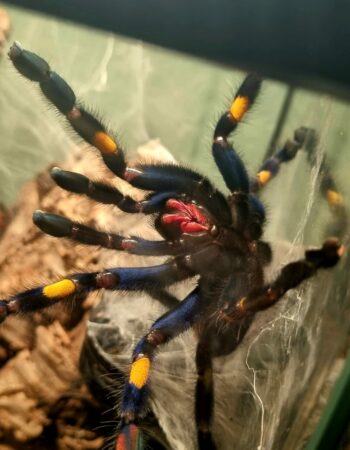
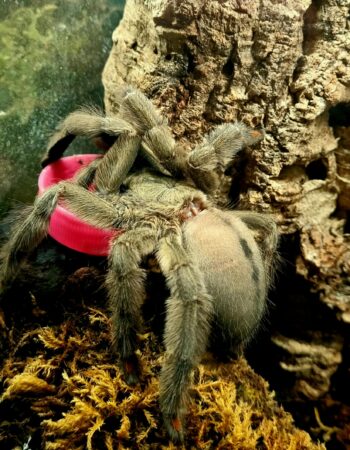

Reviews
There are no reviews yet.