

Breeding Notes
Chromatopelma cyaneopubescens
Greenbottle blue tarantula
Also known as: green bottle blue, GBB
Species-specific breeding guidance, seasonal context and practical caveats for experienced keepers.
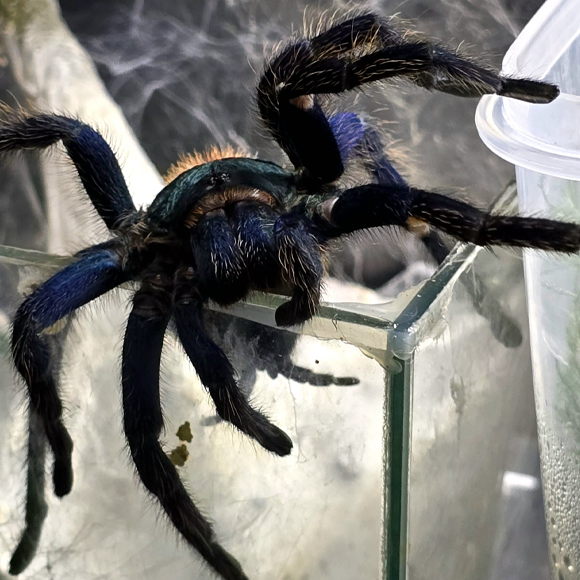
Species breeding reference
Breeding Notes
Breeding Greenbottle Blues isn’t the hardest challenge out there, but it’s not exactly a walk in the park either. Mimicking seasonal shifts—especially a short rise in humidity—seems to help tip the odds in your favour. Stick with healthy, fully mature spiders, give them plenty of web space and privacy to do their thing, and don’t be surprised if you end up with a healthy batch of playful little slings (and a fair bit more webbing to clean up). Pairings don’t always take on the first try, so patience and close observation are key.
Wild Breeding Season
The wild breeding season for this species isn’t nailed down, but with their native range in northern Venezuela’s dry, warm scrublands, most egg sacs are likely produced sometime after brief rainy spells or towards the end of their wet season, when conditions are just right for the next generation to thrive.
Wild Environmental Triggers
A slight uptick in humidity after the local wet or transitional season likely nudges these spiders into breeding mode, with increased food supply and just enough moisture to signal it’s time to start thinking about egg sacs.
Native Climate Context
Native to the sun-baked Paraguana Peninsula, these spiders spend most of the year in dry, warm conditions, only rarely seeing a rainy day. Average temps hover in the mid-20s Celsius, and rainfall stays light except for a couple wetter months in autumn.
Captive Breeding Window
There’s no strict window for breeding in captivity, but success seems better if you mimic a short moist period followed by a return to dryer, stable conditions—think of it as simulating the end of their brief wet season.
Pre-pairing Conditioning
Feed both adults generously leading up to pairing, and keep the enclosure mostly dry but offer a slight increase in humidity for a week or two before introduction. Make sure both spiders are freshly moulted and healthy—females especially shouldn’t be anywhere near a moult cycle.
Male Introduction Guidance
Introduce the male into the female’s web-heavy enclosure late in the day to reduce stress. These spiders are typically web-happy, so let the male explore, and keep a close watch for aggression. Remove him if things get feisty or if he appears overwhelmed by the amount of webbing.
Female Readiness Signs
A receptive female will linger near the surface and show curiosity rather than bolting or aggressively lunging at the male. She may drum or stay in the open instead of hiding away deep in her web tunnel.
Post-pairing Conditions
After a successful pairing, keep her well fed and gradually return humidity to normal (dryer), keeping an eye out for any signs of moulting. Steady temps and minimal disturbance from this point onwards help promote a successful sac.
Sac Timeline
Reports suggest that if everything goes to plan, an egg sac may appear six to twelve weeks after mating, but this can vary. Let her tend the sac for about three to four weeks before considering removal, as slings generally appear after about 30–45 days of incubation.
Incubation Notes
Keep the sac in stable, dry-ish conditions, just as you would for the adults. Good ventilation is key, and there’s no need to crank up the humidity. Aim for a reliable room temperature environment—no damp incubators needed for these desert originals.
Expected Sling Count
Clutch sizes can be fairly generous, often between 80 and 150 spiderlings per sac, though numbers can swing higher or lower depending on female size and condition.
Risks and Cautions
Females can be moody and unpredictable; successful pairings sometimes result in the male being eaten (or ignored entirely). Egg sacs may fail if the female is disturbed or if humidity swings too much. Don’t breed small or underfed females, as they may eat the sac or abandon it. Beginners are best off cutting their teeth elsewhere unless they’re ready for the challenge.
Evidence confidence: Medium