

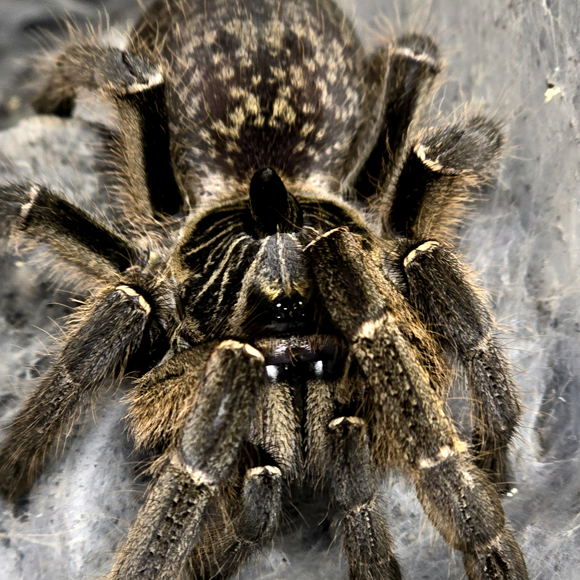
Ceratogyrus darlingi
Price range: £6.00 through £25.00
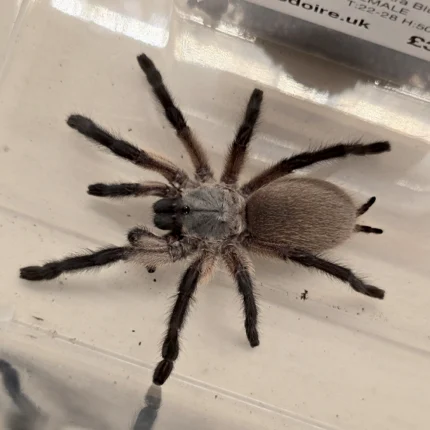
African fossorial with a penchant for deep burrows, webbed entrances and the odd defensive display. Not for beginners, but a rewarding challenge for experienced hands.
| Weight | 10 g |
|---|---|
| Dimensions | 3 × 3 × 5 cm |
Tell me when it is available
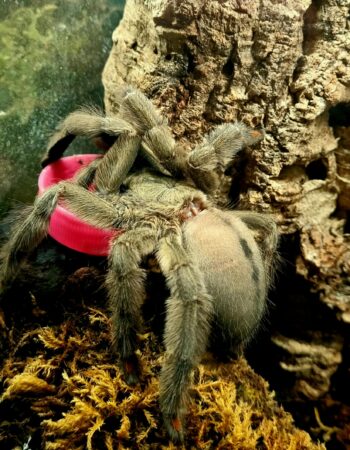
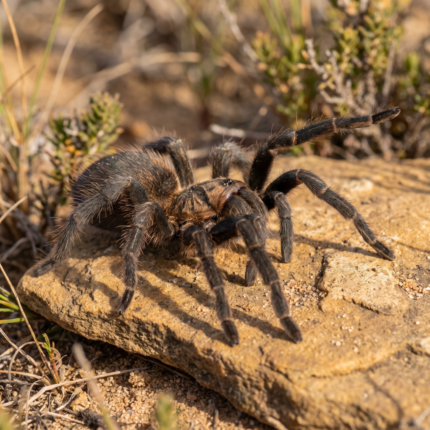
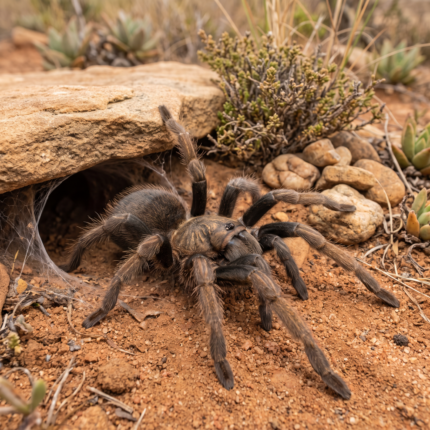
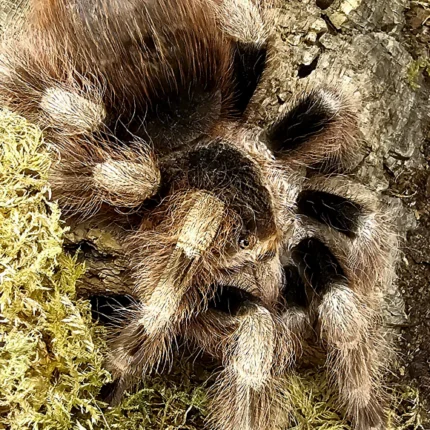
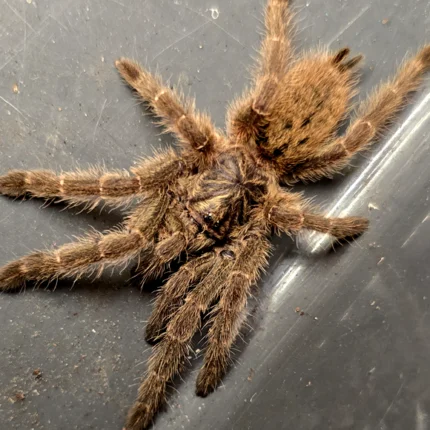
Ceratogyrus darlingi—commonly called the Rear-Horned Baboon—has all the peculiar charm you’d expect from Southern African tarantulas. If you’ve ever wanted a fossorial species that’s dead set on redecorating below the surface, this one’s a solid choice. These spiders hail from the dry grasslands of Zimbabwe, Botswana, and South Africa, and have a healthy distrust of stagnant air and sodden ground. Give them ample substrate—at least 15–20 cm of something diggable—and you’ll see the odd flash of impressive burrow construction.
Let’s not blur the lines: you’re unlikely to see much of C. darlingi most days. They’re notorious for vanishing underground, only surfacing briefly at night or for a snack. That said, seeing their webbing and burrow defences take shape is genuinely rewarding if you’ve the patience. They grow at a decent rate, especially as slings—expect some hefty moults early on if you keep things warm (22–26°C is grand). Humidity can stay on the dry side—think 50–60%—but do provide a sip of water. Overwatering does them no favours.
Temperament? Let’s say these aren’t the best candidates if you want something to display at family gatherings. Quick, defensive, and skittish, they rely on speed and threat postures rather than the flicks and puffs seen with New Worlds. Use tongs, give them their due respect, and you’ll both avoid unnecessary drama. In terms of feeding, juveniles are enthusiastic eaters, while adults settle for sensible intervals—nothing extravagant. Females are long-lived (sometimes over a decade), while males get their moment in the limelight before heading off far too soon.
Overall, C. darlingi is oddly absorbing—partly for what you don’t see. Not a beginner’s tarantula, but a reliable favourite for those who appreciate fossorial behaviour, efficient engineering, and the occasional reminder of what a defensive display really looks like. A practical, interesting addition for the thoughtful keeper.
Only logged in customers who have purchased this product may leave a review.
Species breeding reference
Breeding Notes
Ceratogyrus darlingi is an advanced-level breeding project. Wild breeding likely aligns with the wet summer months in southern Africa. In captivity, after a careful introduction and timely removal of the male, a female often produces an egg sac in about 4–6 weeks under warm, slightly humid but well-ventilated conditions. Spiderling counts can be high, but overall reports are sparse—so treat this as cautious guidance based on limited species-specific and related-data.
Wild Breeding Season
Reports vary, but it is thought that breeding in the wild tends to coincide with the rainy season in its southern African range—typically the wet months from around November to March—though exact timing for Ceratogyrus darlingi is poorly documented.
Wild Environmental Triggers
Rainfall appears to be the key seasonal trigger, with breeding activity aligned with the wet season when conditions are more favourable for egg development and spiderling survival.
Native Climate Context
This species inhabits dry grassland and savannah regions of southern Africa (e.g. Zimbabwe, Botswana, South Africa), with a distinct wet season in summer months (roughly November through March) and long dry season; climates are warm, with mean temperatures ranging from around 22 °C in transitional seasons to over 25 °C in summer, and humidity peaking in wet months but generally remaining moderate.
Captive Breeding Window
In captivity, females often produce an egg sac about 4–6 weeks after mating, provided the temperature is kept around 24–28 °C and humidity is moderate, around 60 % (tweaked with ventilation to avoid stagnant moisture).
Pre-pairing Conditioning
Both male and female should be well-fed and in good body condition; females that are well-fed may accept a male more readily and are less aggressive during pairing.
Male Introduction Guidance
Introduce the male when the female appears receptive; once mating appears complete (drumming or allowing emboli insertion), remove the male immediately to reduce the risk of the female attacking.
Female Readiness Signs
A well-fed, settled female who is no longer excessively defensive, and who exhibits drumming or stillness during courtship, likely indicates readiness.
Post-pairing Conditions
Maintain temperatures of about 24–28 °C and moderately elevated humidity (around 60 %) with good ventilation; provide a shallow water dish and keep the female undisturbed to encourage egg sac development.
Sac Timeline
An egg sac typically appears around 4–6 weeks post-mating.
Incubation Notes
If left with the mother, spiderlings usually emerge in about 6–8 weeks; some breeders choose to remove the egg sac at 30–40 days for artificial incubation, which can also be successful.
Expected Sling Count
Reported counts vary but range from approximately 100 to 300 spiderlings per sac.
Risks and Cautions
Females are highly defensive and fast—males must be removed promptly post-mating. High humidity or poor ventilation can be harmful—avoid swampy conditions. Data are limited, and some figures (e.g. sling count, incubation) are derived from comparable reports or genus-level inference rather than abundant species-specific studies.
Evidence confidence: Medium
UK Market Insight
Neutral UK availability and pricing context for this exact Species record.
Species care guide
Ceratogyrus darlingi
Adult Size
10–13 cm diagonal leg span
Temperature
22–26°C
Humidity
50–60% RH
Temperament
Rear-Horned Baboons have a bit of a reputation for spice, and, while they’re not the moodiest tarantulas you’ll find, they’re certainly no cuddly pets (besides, who wants a cuddle from a spider?). Expect a spider that’s skittish, quick on its toes and prone to defensive displays if it feels bothered. Most prefer to disappear down their burrow rather than attack, but a cornered C. darlingi isn’t shy about showing fang. Handle with respect…and preferably with a set of tongs.
Defence
Ceratogyrus darlingi skip the urticating hairs business – they rely on good old-fashioned threat postures and the occasional lightning-fast dash. If particularly annoyed, they may rear up impressively or even strike. Thankfully, they prefer fleeing to fighting. Use long tools for maintenance, disturb their burrow as little as possible, and leave the hands-on heroism for the movies. Their venom is medically significant for prey, but human bites are rare and avoidable with sensible precautions.
Visibility
If you’re hoping for a tarantula that spends its days striking poses out in the open, you may be disappointed – C. darlingi is a classic hide-and-seek champion. Expect to see flashes of activity at night or when food’s on the move. Occasionally, you’ll witness their architectural genius as they redecorate the entrance to their burrow. Still, with patience, you’ll be rewarded with the odd encore when you least expect it. Their rare appearances make them all the more exciting to spot!
Experience Level
While not the most difficult baboon on the block, C. darlingi isn’t recommended for absolute beginners. Their defensive tendencies and speed mean a basic grounding in tarantula care is advisable before taking one home. Ideal for keepers who’ve worked with a few fast or skittish species and want something a bit different. Their care isn’t rocket science, but respect and experience go a long way to ensuring both you and your spider keep your nerves intact.
Webbing
Not content with just digging, C. darlingi is also a creative webber. They’ll weave silken curtains around their burrow entrance, sometimes creating intricate little doorways or tripwires for passing prey. While not on a par with the web-canvas masterpieces of arboreal species, their webbing is still impressive and very functional. Their tunnels are often reinforced with silk and sometimes capped off completely when they’re feeling shy or preparing to moult. Watch for webbing changes as a clue to their mood and upcoming moults.
Feeding
C. darlingi has a robust appetite, especially when young. Slings will happily take on pre-killed or small live prey like pinhead crickets or pre-killed roaches every 5–7 days. Juveniles graduate to medium crickets, mini mealworms, or small locusts offered weekly. Adults are less greedy, typically feeding once every 7–14 days on larger prey like adult crickets or small dubia roaches. Always remove uneaten food after 24 hours to prevent the spider from feeling harassed, especially prior to moulting. Avoid overfeeding – while they’ll rarely say no to an extra snack, obesity is a real (and avoidable) concern. As always, make sure prey isn’t larger than the spider’s abdomen, and keep water topped up for a healthy, hydrated tarantula.
Enclosure Recommendations
For a fossorial digger like C. darlingi, a deep, well-ventilated enclosure is a must. Go for something roughly 30 x 20 x 25 cm for adults, with a secure lid and plenty of cross ventilation. Substrate is key: provide at least 15–20 cm of slightly compacted topsoil, coco fibre or a sandy loam to allow proper burrowing. Add a cork bark or half-pot hide as a starter burrowing point, though your spider will probably redefine 'interior design' to its own liking. Water dish? Absolutely – shallow, stable and changed regularly. Decorations are optional, but avoid sharp or heavy décor that could crush them in a collapse. Keep things on the dry side and watch for mould. Resist the urge to dig up their burrow – privacy is sacred.
Final Thoughts
Ceratogyrus darlingi is a stand-out species thanks to its dramatic horn, earthy colours and burrowing antics. While seldom seen compared to some terrestrial beauties, the anticipation of a rare appearance is half the fun, and observing their engineering skills is genuinely rewarding. Not for absolute beginners, but perfect for keepers with a bit of experience looking to delve into the fascinating world of African baboons. Their feisty attitude, coupled with relatively easy husbandry, makes them a well-loved staple for enthusiasts who appreciate a challenge and a bit of mystery. Just don’t expect too many selfies together!
Species-specific guidance
Frequently Asked Questions
Is Ceratogyrus darlingi suitable for beginners?
Ceratogyrus darlingi, the Rear-Horned Baboon, is best suited to hobbyists with some prior tarantula experience. Their defensive nature and swift movements can make husbandry tricky for absolute beginners. If you appreciate fossorial behaviours and understand how to manage more spirited species, they’re a fascinating – but challenging – choice.
What temperament can I expect from a Ceratogyrus darlingi?
Ceratogyrus darlingi is known for being defensive and can be quick to display threat postures when disturbed. These spiders are skittish and lightning-fast, generally preferring to retreat rather than confront. Handling is not recommended, as stressed individuals may strike if they feel cornered. At The Spoodoire, we do not endorse handling of any tarantula.
How large does an adult Ceratogyrus darlingi get?
Adult Rear-Horned Baboons typically reach a diagonal leg span of 10–13 cm. Females are usually a bit larger and more robust than males. Their signature horn and sturdy build make them quite the display, even if they spend much of their time hidden away in their burrow.
What is the growth rate like for Ceratogyrus darlingi?
Ceratogyrus darlingi are considered medium to fast growers. Slings and juveniles moult quickly, especially when kept warm and well-fed, showing visible size increases with each shed. Growth slows as they mature, but you’ll still see notable changes, particularly in their striking features after each moult.
How should I feed my Ceratogyrus darlingi?
Young C. darlingi appreciate frequent meals of pre-killed or small live prey every 5–7 days, while juveniles and adults take medium to larger prey offered less frequently—adults typically feed every 7–14 days. Remove uneaten food after 24 hours, and always ensure prey is appropriately sized. Overfeeding can lead to obesity, so moderation is key.
What humidity and moisture levels does Ceratogyrus darlingi need?
Ceratogyrus darlingi prefers a dry setup with humidity in the 50–60% range. Most of the substrate should remain dry, but you can lightly moisten a corner, especially after moulting or in hot months. Provide a shallow water dish and maintain good ventilation to avoid mould and excess dampness. Think arid, not swampy.
What kind of enclosure does Ceratogyrus darlingi require?
Rear-Horned Baboons need a deep, well-ventilated enclosure—30 x 20 x 25 cm for adults is ideal. Offer at least 15–20 cm of compactable substrate for burrowing. A starter hide helps them settle, but expect some redecorating! Include a stable, shallow water dish and avoid heavy décor. Keep the enclosure mostly dry and disturbance to a minimum.
How visible is Ceratogyrus darlingi in captivity?
Ceratogyrus darlingi is a classic ‘hide-and-seek’ artist, spending most of its time in deep burrows. You may glimpse them during feeding or at night, but don’t expect frequent appearances. Their rare surface ventures and creative burrow entrances add to their mystique—spotting them is a hobbyist’s reward for patience.


Reviews
There are no reviews yet.