
Species Care Guide
Caribena versicolor
Antilles pinktoe tarantula
Also known as: Martinique pinktoe, Martinique pink toe, Antilles tree spider
Last updated: June 25, 2026
Buy this species
Origin
Caribena versicolor, sometimes still called 'Avicularia versicolor' in older texts, hails from the balmy Caribbean Islands, with Martinique taking special credit for this beautiful species. Picture lush tropical forests dripping with humidity, occasional rainfall and balmy breezes—this is home for our vibrant eight-legged friend. The natural climate is warm and humid year-round, with occasional dry periods but rarely anything resembling a true chill. In the wild, these tarantulas are right at home up in the trees, weaving elaborate silken retreats between leaves and branches, far from the feet of wandering tourists. The constantly warm temperatures and consistent moisture create ideal conditions for their survival, and it's our job as keepers to do our best to replicate this tropical paradise.
Adult Size
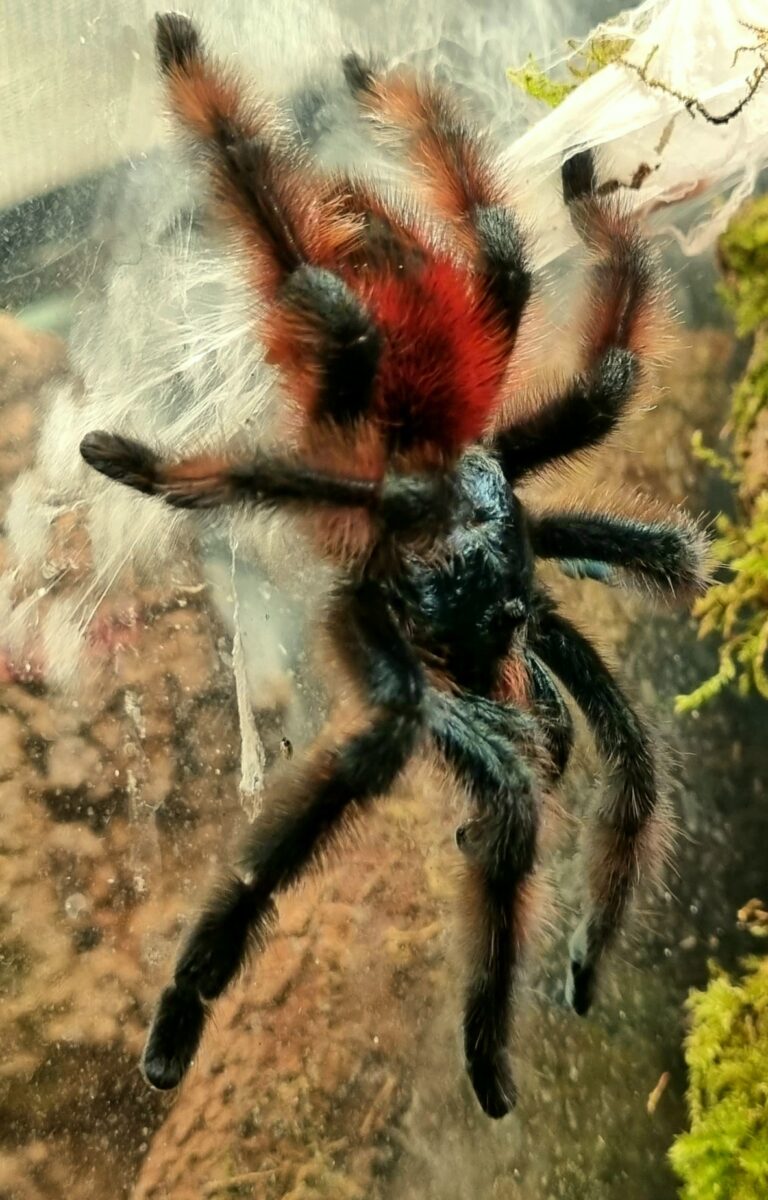
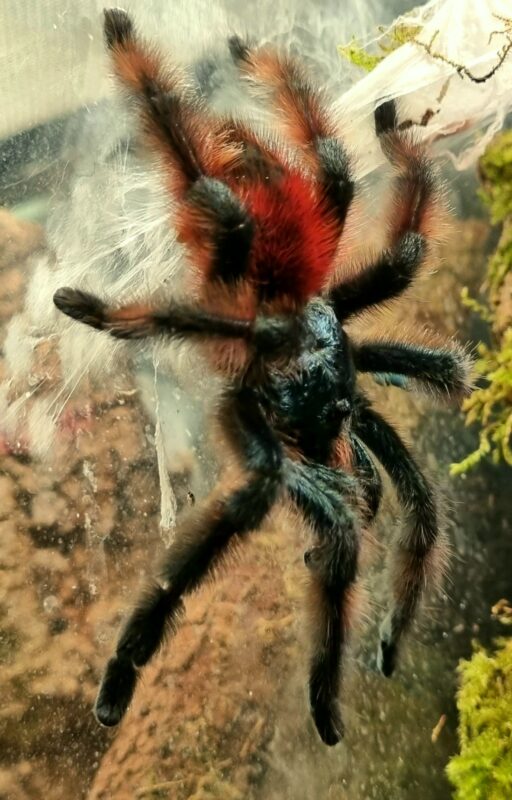
A fully grown Caribena versicolor will sport an impressive diagonal leg span of 12–15 cm, with females on the larger end and males typically a smidge smaller. Males tend to mature smaller, lankier, and unfortunately, their striking colours dull a bit post-maturity (it's tough being a tarantula bachelor). Females are the true showstoppers: robust, with sensational metallic greens and reds. Growth from spiderling to adult can take a few years, especially in cooler or less-fed conditions, but patience is rewarded with a genuine display-worthy specimen.
Lifestyle
C. versicolor is the textbook definition of an arboreal tarantula; think less 'digger' and more 'acrobatic tree-dweller.' In captivity, they'll spurn the ground in favour of the heights, constructing intricate, sometimes messy web-tunnels high up in their enclosure. Watching a versicolor spiderling build a cotton-candy-pink web palace overnight is a joy every keeper should experience. These spiders spend most of their time above ground, often blending into or lurking inside their webs, only occasionally dropping down for a sip of water or a meal. If you want a terrestrial pet rock, look elsewhere—these are hands-down treehouse enthusiasts.
Lifespan
As with many tarantulas, females win the longevity contest—living between 8 and 12 years, sometimes pushing even longer with proper care. Males, on the other hand, lead a ‘live fast, die young’ lifestyle: they mature in 2-3 years and rarely make it past their breeding debut, usually passing within a year of maturity. This means keepers typically spend more time with females, but regardless of sex, versicolors are a long-term commitment. Plan accordingly—you’re in this colourful web adventure for the long haul (or at least the next decade)!
Growth Rate
Caribena versicolor demonstrates a moderate growth rate—quicker than many terrestrials, but not sprinting ahead like some of the giant baboons. Warmer temperatures and regular meals speed up moults. Most spiderlings take about 2-4 years to reach maturity, with males maturing a tad faster. Varied diet and consistent husbandry promote healthy, predictable growth, but don’t panic if yours decides on a public strike from time to time; they can be stubborn when a big moult is brewing.
Temperament
Despite their showstopping looks, versicolors are typically quite docile—think of them as the 'friendly neighbours' of the tarantula world, though still quick on their feet. They rarely threaten, preferring to bolt into their webs at the first sign of danger. Spiderlings can be a tad skittish and prone to 'zoomies' (the technical term for bouncing about at warp speed). Bites are exceedingly rare, but these are display spiders, not cuddly pets. For best results (and intact nerves), observe rather than interact.
Temperature
Ideally, you'll want to keep your Caribena versicolor between 22–26°C—basically British summer day, every day. They’ll tolerate brief drops as low as 20°C without drama and short bursts up to 28°C, but aim for stability. A well-heated room often does the trick; avoid direct heat pads, which can dry them out and cause undue stress. If supplementing heat, use a thermostat-controlled heat mat on the side or gentle heat cable, always monitoring with a digital thermometer. Remember, sudden fluctuations are the enemy—steady, moderate warmth will keep your arboreal friend perky and webbing up a storm.
Humidity
Proper humidity is key for Caribena versicolor—aim for 70–80% relative humidity. This isn't an excuse to turn your enclosure into a swamp! Provide a large, clean water dish at all times, and overfill it occasionally to dampen part of the substrate. Lightly mist one side of the enclosure every few days, so your spider can drink droplets without flooding its web. Good cross-ventilation is crucial—think 'airy Caribbean bungalow,' not dank basement. Stale, humid air can quickly lead to health issues like mould or respiratory trouble, so balance moisture with plenty of airflow.
Visibility
If you love watching web architects at work, this is your spider! Young versicolors are brazen little things, often out and about, especially at dusk and after dark. As they mature, they'll spend more time hanging in or just outside their web tunnels. Still, with a well-designed enclosure, you'll usually see at least a few gorgeous, fuzzy legs or that iridescent carapace peeking out. Versis are a treat for keepers who appreciate both visible beauty and the odd game of 'spot the tarantula.'
Webbing
A web engineer par excellence, versicolors turn their vertical enclosures into silky works of art. Spiderlings produce bright white, fluffy webs almost overnight, often sealing themselves behind web curtains as they moult or eat. Adults construct elaborate tunnels and hammocks in high corners and around cage décor, using their retreats for protection and hunting bases. Expect your enclosure to quickly transform into a soft-silk city—messy, yes, but glorious. Don’t clean it away too often; webbing is home, pantry and safety blanket all rolled into one.
Feeding
Versicolors are enthusiastic eaters, especially as slings and juveniles. For spiderlings, offer appropriately sized prey (such as fruit flies, micro-crickets or pre-killed mini mealworms) every 4–5 days. Juveniles graduate to small crickets or dubia roaches twice a week, while adults do well with one good-sized insect weekly—or fortnightly if on the plump side. They're usually keen hunters, but can fast for weeks before a moult. Don’t panic if they refuse food—check for bald abdomens and darker colours (classic pre-moult signs). Remove uneaten prey within 24 hours to keep things fresh and stress-free. Overfeeding leads to chunky, lazy spiders; underfeeding slows growth. Aim for the Goldilocks approach: just right!
Enclosure Recommendations
Go vertical, not horizontal—a tall, clear enclosure (e.g. 20 x 20 x 30 cm or more for adults) is perfect. Provide lots of anchor points for webbing: upright cork bark, fake vines, or securely planted branches work well. Substrate should be moisture-retaining but not waterlogged—coco fibre or a peat mix 5–8 cm deep is plenty. Top-priority: Cross ventilation! Versicolors abhor stagnant air. Fix in a water dish, glued down if necessary, as they're notorious dish flippers. Hidey-holes high up, not on the ground, mimic their natural retreats. Light misting keeps humidity up. Avoid overcrowding with clutter; let your spider do the decorating (and it will—enthusiastically).
Experience Level
Caribena versicolor is best suited to keepers with some prior arboreal experience, or enthusiastic, well-read beginners ready for a challenge. Their fast movement, humidity needs and occasional stubbornness when it comes to eating or moulting mean they're not exactly ‘set and forget’. With good research, patience and respect for their speed, versicolors reward their keepers with stunning colours and fascinating webbing behaviours. Not a beginner’s first tarantula, but an excellent next step!
Final Thoughts
Caribena versicolor is a jaw-dropping centrepiece for any collection—a riot of colour, an ace web engineer and, if we're honest, a bit of a show-off. They're demanding, yes, but not impossible; do your homework, provide the right environment, and you'll be rewarded with a vivid, lively tarantula that's always up to something in their silken home. Perfect for those ready to advance past the beginner stage, versicolors are an absolute delight to observe. Just remember: quick movements, high humidity, and a 'look but don’t poke' approach are the keys to flourishing husbands and flourishing spiders alike. Go on, give yourself the gift of Caribbean colour—your spider shelf will thank you.
Community Species Gallery
Approved photos submitted by registered Spoodoire users.
No community images have been approved for this species yet.
Submit Your Photo
Log in to submit a photo for this species.
Available at The Spoodoire
Products linked to this species care guide.