

Species Care Guide
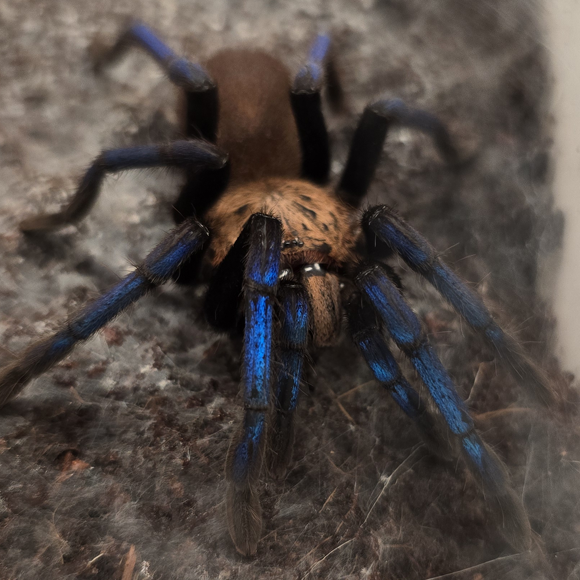
Birupes simoroxigorum
Bornean neon blue leg tarantula
Also known as: neon blue leg tarantula, Sarawak blue tarantula, Malaysian blue tarantula
Last updated: June 27, 2026
Buy this species
Origin
Birupes simoroxigorum, often hailed as the 'Gooty Sapphire of Borneo', hails exclusively from Sarawak, Malaysian Borneo. This region is renowned for its lush tropical rainforests and relentlessly muggy climate. Think thick jungle, towering trees, balmy nights, and just enough rain to keep your substrates moist for eternity. The forest floor where these spiders thrive is blanketed in leaf litter, roots, and quite a bit of shade, which helps maintain high humidity. Temperatures generally hover in the low-to-mid 20s°C. Due to their restricted natural range and striking beauty, they’re still a rare treat in collections – a reminder to ensure any purchases come from reputable captive-bred sources.
Adult Size
Adult females typically reach 10–11cm diagonal leg span, with males running slightly smaller (and leggier, as is tarantula tradition). Slings start off as tiny blue gems but, over several years, mature into stunning adults. Males also tend to be slimmer-bodied compared to the chunkier, longer-lived females. Growth pace is measured (but not glacial), so patience is rewarded with one of the hobby’s true stunners.
Lifestyle
This is a fossorial species through and through, meaning it’s a burrower by nature. In captivity, Birupes simoroxigorum behaves exactly like a secretive little cave-dweller, setting up burrows webbed from top to toe below the surface. While you might occasionally catch them at the entrance, most of their day-to-day antics happen out of sight, underground, and wrapped in silk. If you’re after a display spider that struts about at noon, you’ll want to look elsewhere. If you fancy watching elaborate burrow construction and webbing artistry, you’re in the right place.
Lifespan
Females of Birupes simoroxigorum can live well over a decade in captivity, sometimes up to 12–15 years with proper care. Males, as with most tarantulas, have the short straw – expect them to mature more quickly and then clock out within 2–3 years after maturity (sometimes even less). If you’re hoping for a lifelong pal, females are your best bet, though either sex is a delight to keep while they last.
Growth Rate
This species has a slow to medium growth rate, typical of many ‘blue’ Asian species. Slings can take several years to reach maturity, particularly females. Growth is influenced by temperature, feeding frequency, and humidity – warmer temperatures and regular meals will encourage them to moult a bit faster, but don’t rush them. Patience is rewarded with vibrant blue adults!
Temperament
Despite their glamour, Birupes simoroxigorum is famously shy and not especially defensive. They’ll bolt to their burrows at the first sign of disturbance. These spiders usually prefer to disappear rather than stand their ground or throw threat poses. However, their speed can catch keepers off guard, especially during rehousing. They’re best enjoyed as low-drama, high-silk roommates – and, like all tarantulas, are best appreciated from behind glass or acrylic rather than your hand.
Temperature
Birupes simoroxigorum prefers a consistent 22–26°C, which matches their tropical homeland. Most UK homes comfortably sit at the lower end of this, so additional spot heating isn’t usually needed except during particularly chilly spells. Avoid letting temperatures drop much below 20°C or spike above 28°C for extended periods. If heating is needed, use a reliable digital thermometer and heat mats attached to the side (not bottom!) of the enclosure. Overheating is far more dangerous than a cool spell, so when in doubt, err on the side of caution – and leave the sauna settings to your next spa visit.
Humidity
Humidity is a key ingredient – aim for 75–85% RH. Achieve this by keeping 8–12cm of slightly moist (not swampy) substrate and adding a generously sized water dish. Spot-mist one side occasionally, especially during molting or in hot weather, but don’t overdo it; soggy substrate invites mould and mites. Good cross-ventilation is crucial – so set up plenty of ventilation holes to prevent stagnant air. Spiders do appreciate a drink now and then, so keep that water topped up and watch out for webbed-over dishes (a Birupes signature move).
Visibility
You won’t see them hosting any parties above ground. Expect a mostly ‘absentee landlord’ situation, with brief appearances at the burrow entrance, especially at night. If you love watching clever web architecture or spot some gleaming blue legs at dusk, you’ll be delighted. Their showy colouring is best glimpsed under torchlight, so night-owls may catch a glimpse of a midnight wander.
Webbing
Birupes simoroxigorum are proper little web architects. They’ll seal themselves in silk tunnels running through the substrate and up to the entrance, sometimes even pulling in décor and moss to fortify their homes. Their webbing strengthens burrow walls and makes perfect ambush zones for unsuspecting feeders. While the top layer displays aren’t as thick as some Avics or Chromatopelma, the underground ‘tunnel network’ is a real marvel, if you’re ever lucky enough to see it!
Feeding
Slings will cheerfully take on pre-killed pinhead crickets or fruit flies 1–2 times per week. As juveniles, small crickets or roaches are great – offer one every 7–10 days. Adults handle larger crickets or dubia roaches once every 10–14 days. Adjust frequency during premoult (they'll refuse food, so don't fuss), and remove any uneaten prey after 24 hours. They have a good feeding response but won’t starve themselves fat, so avoid overfeeding. Avoid mealworms that might burrow and annoy them, and keep an eye on substrate cleanliness. Always offer live insects – Birupes is a committed ambush predator. They're not fussy eaters, but patience is key, as shy fossorials can go weeks in hiding after a good meal.
Enclosure Recommendations
Start slings in 16oz deli cups or small micro-enclosures with secure ventilation and at least 8cm of substrate. Juveniles and adults will need a deeper enclosure (20–30cm substrate depth is ideal) – the more digging room, the better. Plastic tubs or acrylic enclosures work well provided they lock securely and have front/side ventilation to prevent stagnant air. Add a water dish (even for slings – small bottle caps work), and keep a starter burrow in the corner to encourage digging. No need for excessive décor, though leaf litter and cork bark add a homey touch. Keep the substrate slightly damp, not saturated, and avoid direct bottom heating to prevent cooking their burrow. Regularly check for mould or pests, and always ensure escape-proof lids – Birupes are more slippery than they look.
Experience Level
Birupes simoroxigorum is best suited to keepers with at least intermediate experience, mainly due to their burrowing needs and skittish temperament. New keepers may find their shy behaviour and environmental requirements a bit challenging. Not the hardest tarantula on the market, but having some experience with Asian fossorials makes for smoother keeping and happier spiders.
Final Thoughts
Birupes simoroxigorum is a top pick for patient hobbyists who love secretive spiders and don't mind infrequent sightings in exchange for jaw-dropping blue glimpses. Their calm, reclusive personality and dazzling colours make them a grail tarantula for many, though their fossorial habits and environmental needs ask for a bit more experience. They're not party animals, but their subtlety and unique beauty win hearts over time. If you appreciate clever webbing, rare species, and the thrill of a midnight sighting, Birupes absolutely delivers. Just remember, they're a long game – but one well worth playing.
Community Species Gallery
Approved photos submitted by registered Spoodoire users.
No community images have been approved for this species yet.
Submit Your Photo
Log in to submit a photo for this species.
Available at The Spoodoire
Products linked to this species care guide.