

Breeding Notes
Brachypelma boehmei
Mexican fireleg tarantula
Also known as: Mexican fire leg tarantula, Mexican rustleg
Species-specific breeding guidance, seasonal context and practical caveats for experienced keepers.
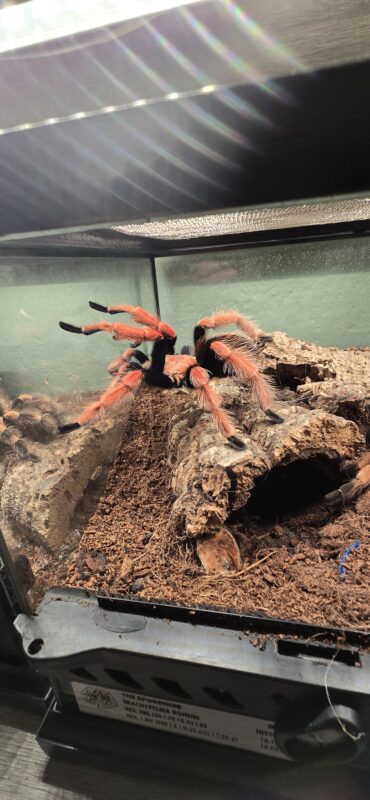
Species breeding reference
Breeding Notes
Pairing B. boehmei can be a test of patience and timing, rather than nerves of steel. Mimic the end of their wet season with a touch more humidity and solid meals before pairing up, and keep a close eye during introductions. Females aren’t always the most welcoming, so be prepared for retries and don’t rush post-pair care. With the right approach, you might be rewarded with hundreds of cute little fiery-kneed spiderlings, but it’s no guarantee—treat each attempt as an experiment.
Wild Breeding Season
Wild breeding tends to follow the seasonal rains in western Mexico, so your best bet is that most action happens after the wet season, as the ground softens and temperature shifts a touch lower. This likely means pairings in late summer to autumn in their home range.
Wild Environmental Triggers
Seasonal rains after a dry spell seem to be the big nudge for B. boehmei to get in the mood, with a temperature drop and increased ambient humidity acting as natural signals. Subtle changes rather than dramatic swings are probably the cue.
Native Climate Context
This species is used to warm, arid habitats with a noticeable wet season that breaks up months of dry, sunny weather. Even during the rains, the ground doesn't turn swampy; think more of a brief refresh, not constant damp.
Captive Breeding Window
Pairings generally go best towards the end of summer into early autumn, mirroring the post-rain conditions of their native range. Some keepers in the UK have seen success by lightly increasing humidity for a few weeks before introducing the pair.
Pre-pairing Conditioning
Offering both spiders a slight bump in humidity and a solid feed leading up to introductions can help them reach optimal condition—nothing drastic, just enough to hint at the passing of the dry season. Give them a comfortable hide each and keep disturbance to a minimum.
Male Introduction Guidance
Let the male settle in his own tub first, then introduce him to the female’s enclosure late in the day when she’s settled herself. It’s important to supervise closely—Brachypelma can be moody, and the male should have a clear escape route. Some gentle courtship drumming is a good sign things are going to plan.
Female Readiness Signs
A female that's recently moulted, fed well, and is showing a bit of wanderlust rather than hunkering down is likely ready. An open, alert posture and not immediately striking at the male are positive signs too.
Post-pairing Conditions
After the pairing, pop her back on slightly increased humidity and resume her routine, keeping it as stress-free as possible. Good feeding will help her build up reserves for a potential egg sac. Keep the male separate; repeat pairings can help but aren’t always possible.
Sac Timeline
Reports vary, but it’s usually several weeks to a couple of months before an egg sac appears after a successful pairing. She may hide away and become less interested in food once she’s preparing the sac.
Incubation Notes
Leave the sac with the female undisturbed for three to four weeks, then consider pulling it to finish incubating artificially at moderate humidity and stable temperature. Patience is key—don’t rush this stage.
Expected Sling Count
Clutch sizes are reported to range from around 200 to 600 spiderlings, but wild-to-wild variability and female condition can make the numbers swing a fair bit. Don’t count your spiderlings before they hatch!
Risks and Cautions
B. boehmei pairings aren’t the most dangerous in the genus, but cannibalism can happen if the mood isn’t right. Females can be picky, and failed pairings aren’t rare. It’s not beginner territory—plan ahead for a lot of spiderlings if you’re lucky, and don’t breed unless you have rehoming options.
Evidence confidence: Medium