


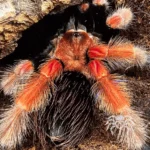

Pterinochilus lugardi
Price range: £6.00 through £40.00
Vanishes for days, then materialises at feeding time with Olympic sprinting form and a fondness for silk carpets over every possible entryway.
Tell me when it is available
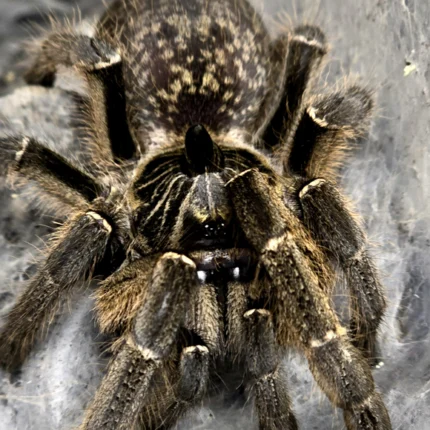
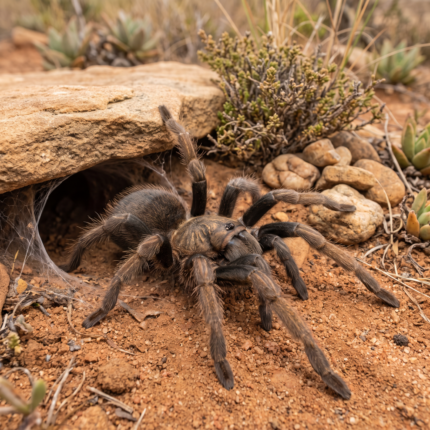
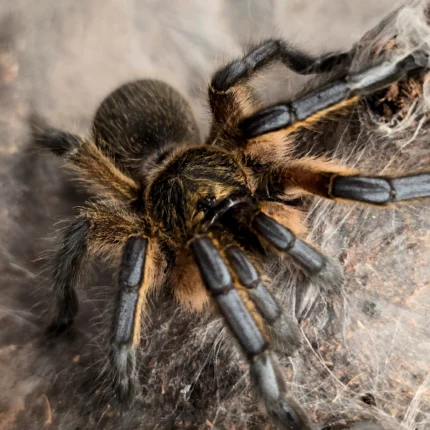
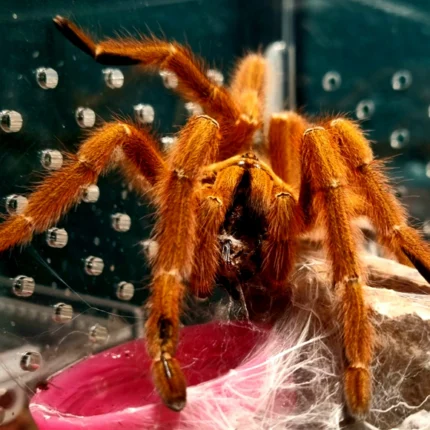
Pterinochilus lugardi, often referred to as the Fort Hall baboon, is a fossorial Old World tarantula hailing from Southern and Eastern Africa. Its natural habitat is as dry and open as they come—think sandy or loamy soils, scattered rocks, and the occasional patch of scrub. In captivity, it appreciates a deep substrate for its industrious tunnelling. Give it the chance and it will construct a proper labyrinth, webbing up entrances with its unmistakable silk. Adults in particular seem determined to achieve total privacy; sightings tend to coincide with the delivery of dinner or a late-night stroll.
This isn’t a spider for those seeking a showpiece. P. lugardi is often out of sight, but burrowing, webbing, and stealthy hunting leave plenty of evidence of its presence. Quick as a flash if disturbed, with a healthy defensive streak, it’s best approached with tools and respect. Speed and a willingness to stand its ground mean it’s best for those with a steady hand and some Old World experience. Females are long-lived—10 to 15 years isn’t unusual—while males seldom see more than 4. Growth is respectably quick for the genus, with maturity in 2 to 4 years if kept warm and well-fed.
Temperature should hover around 22–26°C, with moderate humidity (50–60%) and strong ventilation. Substrate depth of 15–20 cm will keep them content, and a secure, escape-proof lid is a must. Feeding is straightforward—crickets, locusts, and roaches are taken enthusiastically, though overfeeding does lead to a spider who’d rather lounge than dig. They aren’t climbers, rarely wander beyond their burrow, and have a reliable habit of turning water bowls into part of the décor. All in all, P. lugardi offers the kind of cryptic, quietly industrious charm that many fossorial fans appreciate—just don’t expect it to pose for photos.
Only logged in customers who have purchased this product may leave a review.
Species breeding reference
Breeding Notes
Breeding P. lugardi is a job for the patient, experienced keeper. Clear, species-specific breeding data is scarce, so most advice leans heavily on general Pterinochilus patterns and the species’ natural rhythms—expect a fair bit of trial, error, and luck. Treat this species with respect, provide stable conditions, and brace yourself for surprises. Not one for the faint-hearted or first-time breeder, but a rewarding challenge for those who value patience and resilience.
Breeding information for this species is a bit thin on the ground, so this guidance is based on the best available reports, native climate clues, and sensible keeper caution.
Wild Breeding Season
Precise wild breeding season is unclear, but patterns from the region and related species suggest mating likely follows the rainy season, when food is most plentiful and humidity peaks.
Wild Environmental Triggers
Seasonal rainfall and increased humidity in their arid to semi-arid habitats appear to act as breeding triggers, with spiders more active and visible above ground following rains.
Native Climate Context
These spiders are native to dry, open savannahs in Southern and Eastern Africa. Conditions swing from hot and dry to brief, wetter periods when the rains arrive, so temperature and moisture shifts might be relevant to their breeding cycle.
Captive Breeding Window
Pairings are usually attempted at the end of a cool spell or with a slight rise in humidity, much like after a simulated rain. There's no hard-and-fast rule, but late winter into early spring often works if you're following a UK season rhythm.
Pre-pairing Conditioning
Females benefit from a good feed-up and a slight increase in moisture a week or two prior to introduction, aiming to mimic the seasonal abundance that follows rain. Don’t let the enclosure get soggy—just a little extra dampness in one corner will do.
Male Introduction Guidance
Introduce the male into the female's enclosure at dusk, keeping a close watch—all old world baboons are fast and defensive. A well-fed female in a mature burrow is less likely to see the male as lunch, but always use long tools and give them plenty of space to interact.
Female Readiness Signs
A freshly moulted, robust adult female that’s webbed up a new burrow entrance and is active at night is likely receptive. If she’s aggressively defensive straight away, try again in a few days.
Post-pairing Conditions
After a successful pairing, remove the male promptly. Maintain stable warmth and gently increase humidity for a few weeks, then return to the drier routine as she readies herself for egg-laying. Minimal disturbance is best—she may seal herself off for weeks at a time.
Sac Timeline
Exact timelines for this species are not well documented, but females of related Pterinochilus tend to produce an egg sac around 4–8 weeks after pairing, which may then be guarded or hidden deep in a burrow for a similar period before spiderlings emerge.
Incubation Notes
The female typically incubates the sac in her own burrow. Make sure conditions stay stable, with good ventilation and just a hint more humidity than usual to prevent the sac from desiccating. Don’t attempt to pull the sac too soon; patience is vital.
Expected Sling Count
Clutch size is not firmly documented for this species, but close relatives are known for large sacs—100 to 200 spiderlings wouldn’t be surprising, but expect some variation.
Risks and Cautions
Females can be aggressive toward males and may cannibalise after pairing. They’re fast and defensive, so never let your guard down during introductions. Egg sacs can be abandoned or eaten if the enclosure becomes too wet, too dry, or is disturbed repeatedly. Success rates are inconsistent even among advanced keepers.
Evidence confidence: Low
UK Market Insight
Neutral UK availability and pricing context for this exact Species record.
Species care guide
Pterinochilus lugardi
Adult Size
12–15 cm diagonal leg span
Temperature
22–26°C
Humidity
50–60% RH
Temperament
This species embodies the phrase “looks can be deceiving.” P. lugardi is usually a ghost—secretive and out of sight—but make no mistake: corner one, and it’ll teleport across the enclosure at slipper-dodging speed. Defensive displays aren’t uncommon if prodded, with classic raised front legs and a bit of fang waving. Quick movements and reclusive behaviour are the norm, so best admire from a distance. Not the sort of tarantula to hang out with at parties, but a fascinating addition for those who value display value and a bit of drama at feeding time.
Defence
P. lugardi comes equipped with classic Old World sass—no urticating hairs here, just attitude and lightning-fast escape responses. If disturbed, they’ll rear up, show the standard threat pose, and might even attempt to bite if all else fails. Thankfully, they’d rather bolt than brawl, so ensure you’re keeping their enclosure secure and disturbance to a minimum. Use feeding tongs and give them their space—everyone will sleep easier, spider included.
Visibility
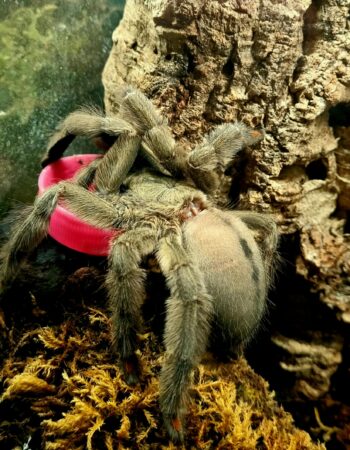
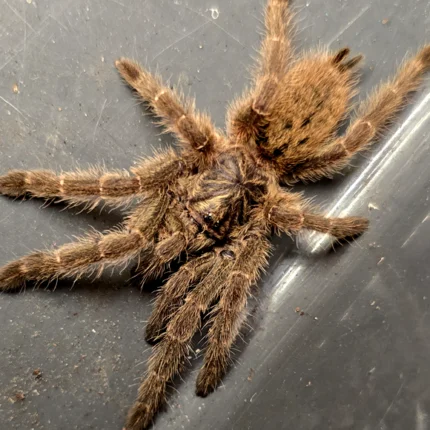
Expect your lugardi to spend much of its time in or around its burrow. They’re not pet rocks, but neither are they zookeepers’ show-offs. You’ll catch them moving at dawn or dusk, or when food is on offer—nothing perks up a lugardi like the pitter-patter of cricket feet. Webbing at the burrow entrance and construction projects are common, offering satisfyingly cryptic evidence of their presence. When out and about, their leggy, sandy appearance makes even brief sightings a treat for any enthusiast.
Experience Level
Due to their combination of speed, defensiveness and Old World temperament, P. lugardi is best suited for intermediate to experienced keepers. They’re not recommended for novices, mainly because even simple enclosure maintenance can get exciting very quickly. If you have a few New World species under your belt and fancy a fossorial challenge, they make a superb next step for the careful and prepared keeper.
Webbing
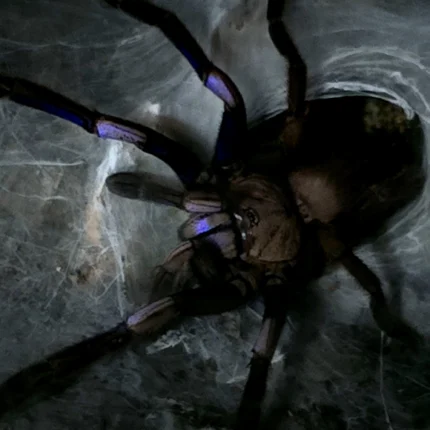
Lugardi are enthusiastic webbers, especially around their burrow entrances. Their silk serves more as a tripwire system than a decor statement—it provides security and early warning for anything (or anyone) foolish enough to come close. Over time, you’ll see thick carpets of silk adorned with debris, creating a distinctive 'lived-in' look. This behaviour gives hobbyists a peek at natural hunting strategies, with slings sometimes webbing up almost the entire enclosure, whereas adults focus on fortifying the entrance to their tunnel network.
Feeding
P. lugardi isn’t fussy when it comes to dinner. Crickets, locusts, dubia roaches and the occasional waxworm make for suitable meals. Slings can be fed two to three times per week, taking care to offer prey suitably sized for a quarter of the spider’s leg span. Juveniles and adults appreciate larger meals once a week or so, but don’t be tempted to overfeed; a plump lugardi is a lazy lugardi (and not a healthy one). Their feeding response is impressively quick—expect lightning-fast grabs and the odd threat posture if you interrupt mealtime. Remove uneaten prey after 24 hours to prevent stress or injury, especially after moults. Common rookie mistakes include leaving food in during a moult or offering oversized prey—when in doubt, err on the small side and marvel at how quickly your nimble hunter snatches it up.
Enclosure Recommendations
Choose a secure, well-ventilated enclosure at least three times the spider’s leg span in length and width, but not excessively tall—fall risks are real, especially for a fossorial species. Substrate (coco fibre, topsoil or a sandy soil mix) should be deep: aim for 15–20 cm to enable proper burrow construction. Provide a starter hide, such as a piece of cork bark partially buried, to encourage initial digging. A shallow water dish should be present at all times, topped up and cleaned regularly—even if your spider seems to think it’s a decorative hat. Avoid overly humid or damp conditions; a dry, airy atmosphere serves best. Secure, fine mesh or perforated lids prevent sudden escapes, and remember: fossorials are adept at lifting loose lids (they don’t skip burrow day at the gym). Decorations like leaf litter or moss are optional but add a touch of naturalistic flair.
Final Thoughts
For keepers who appreciate secretive, industrious spiders, P. lugardi offers endless fascination. Its speed, impressive webbing and fantastic burrowing make for a rewarding hands-off experience (the only kind we recommend). While not a beginner’s tarantula, those ready for an Old World challenge will find lugardi delivers both captivating behaviour and the occasional adrenaline boost during enclosure maintenance. Watching your spider emerge from a silk-adorned tunnel to hunt is a true showstopper—and if you enjoy the occasional game of ‘where’s my spider gone now?’, you’ll be in your element. An excellent, low-maintenance pet for those who respect boundaries and appreciate the wild at heart.
Species-specific guidance
Frequently Asked Questions
Is Pterinochilus lugardi suitable for beginners?
Pterinochilus lugardi, also known as the Fort Hall baboon, is best suited to intermediate or experienced keepers. Its speed, defensiveness, and classic Old World temperament mean managing routine enclosure maintenance can get exciting. If you’ve kept a few New World species and want a fossorial challenge, it’s a superb next step.
What is the adult size of Pterinochilus lugardi?
An adult Pterinochilus lugardi typically reaches a diagonal leg span of 12–15 cm. Females are generally larger and chunkier, outliving the leggier, faster-maturing males. While not the largest Old World species, their presence is certainly dramatic when visible.
How fast does Pterinochilus lugardi grow and what’s its lifespan?
Pterinochilus lugardi grows at a moderately fast rate for an Old World tarantula, often reaching maturity within 2–4 years with good food and warmth. Females can live 10–15 years, whereas males usually complete their lives within 3–4 years, often passing away shortly after their final moult.
What is the temperament and defence response of Pterinochilus lugardi?
Pterinochilus lugardi is reclusive but can be lightning-fast and defensive when disturbed. They may rear up in a classic threat pose and could bite if provoked. Handling is not recommended; The Spoodoire does not endorse handling of any tarantula. Always use feeding tongs and keep the enclosure secure.
What kind of enclosure does Pterinochilus lugardi need?
Choose a secure, well-ventilated enclosure with floor space at least three times the spider’s leg span, and deep substrate—15–20 cm—for proper burrowing. Avoid excessive height to minimise fall risks. Include a starter hide, a shallow water dish, and keep the environment dry and airy with strong ventilation.
Does Pterinochilus lugardi require high humidity?
Pterinochilus lugardi thrives with moderate humidity around 50–60% RH. Let most of the substrate stay dry and moisten a corner lightly if needed, especially for spiderlings. Good airflow is critical—avoid damp or stuffy conditions. In most UK homes, ambient humidity is sufficient for this adaptable species.
How visible is Pterinochilus lugardi in its enclosure?
Expect Pterinochilus lugardi to spend much of its time in its burrow, appearing mostly at dawn, dusk, or during feeding. Evidence of activity includes webbing and burrow construction. Sightings can be infrequent but rewarding—catching a glimpse of its sandy legs is a treat for any enthusiast.
How should I feed Pterinochilus lugardi?
Pterinochilus lugardi has an impressive feeding response and isn’t picky—crickets, locusts, dubia roaches, and occasional waxworms are all suitable. Offer slings small prey two to three times weekly and larger items for juveniles and adults about once a week. Remove uneaten food after 24 hours, especially around moults.


Reviews
There are no reviews yet.