

Harpactira pulchripes
Price range: £14.00 through £90.00
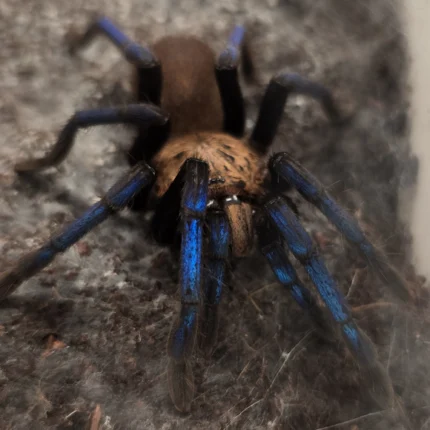
Thinks it’s a burrowing architect, but spends most evenings lurking by the front door like a blue-legged bouncer waiting for the local takeaway to arrive.
Tell me when it is available
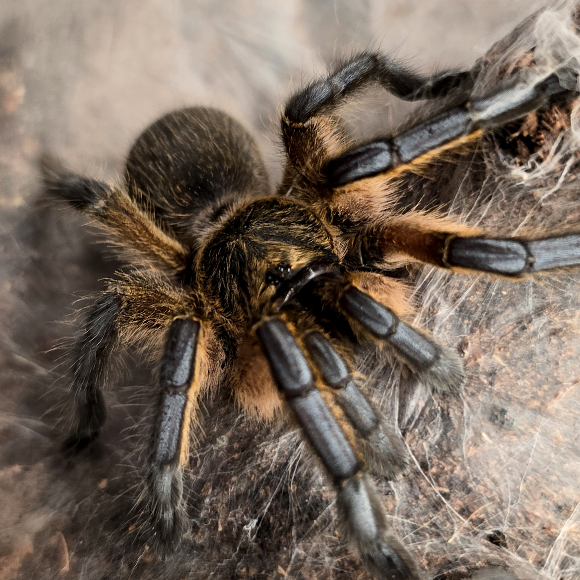
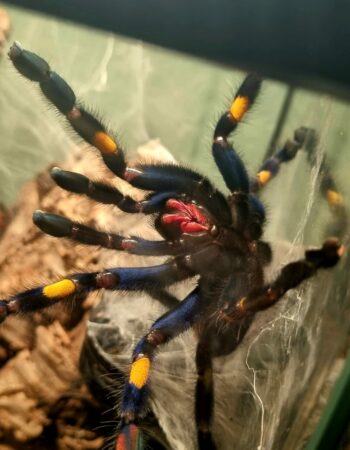
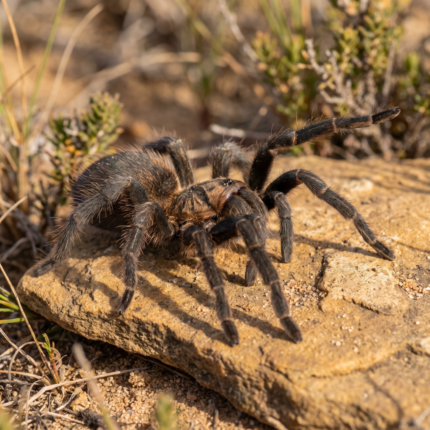
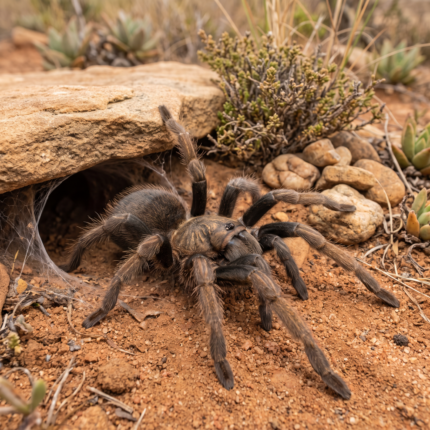
Harpactira pulchripes is one of those tarantulas that manages to cause a stir among keepers—with gold leg markings that are as conspicuous as they are photogenic, and behaviour that’s just the right blend of reclusive and bold. Native to South Africa’s Eastern Cape, these fossorial spiders embrace their inner mole, making themselves comfortable in deep, web-lined burrows and only occasionally making a public appearance at feeding time.
Care is straightforward if you mind the basics: ample substrate (think 20–25 cm for adults), consistent temperatures (21–24°C fits perfectly with most British front rooms) and a keen eye for humidity levels—a modest 50–65% is about right. Ventilation matters; if you prize your spider’s wellbeing, so should fresh air in the enclosure. Feeding is uneventful, save for the fact that pulchripes have a knack for ambush hunting, launching out of their burrow at crickets or roaches with more enthusiasm than you’ll see at most tarantula mealtimes.
As with many Old World species, handling is best left to the imagination. This isn’t a tarantula to pass round at family gatherings. Defensive behaviour isn’t the default, but speed and a preference for privacy mean a hands-off approach is safest for all involved. You’ll find them at their most visible guarding burrow entrances or occasionally showing off those gold knees from the safety of their silken retreat, especially as darkness falls. Webbing is functional, often neatly constructed, with a taste for modest home improvements after each enclosure revamp or moult.
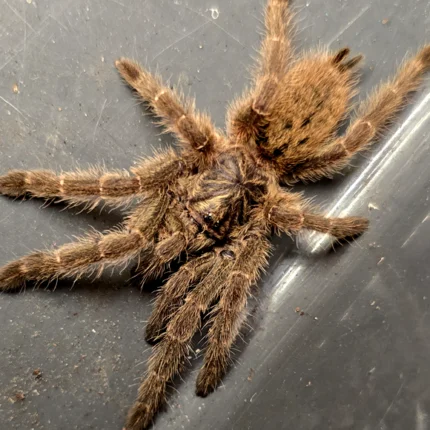
Growth is fairly brisk for an Old World, so slings become blue-legged adults before you know it. Females offer the long game and can clock up over a decade if well cared for; males, by contrast, draw the short straw and rarely last much beyond maturity. A rewarding species for those with a bit of experience, or anyone ready to progress beyond the basics—just don’t expect a tarantula that enjoys being fussed over.
Only logged in customers who have purchased this product may leave a review.
Species breeding reference
Breeding Notes
Breeding Harpactira pulchripes is a challenge best left to experienced hands. Success relies on carefully cycling environmental cues, a well-conditioned female, and plenty of patience. Reports vary, so treat timelines and numbers as rough guides—not guarantees. If you do manage a sac, you’ll be in rare company, as breeding this species in captivity is admired but not often achieved.
Breeding information for this species is a bit thin on the ground, so this guidance is based on the best available reports, native climate clues, and sensible keeper caution.
Wild Breeding Season
Precise wild breeding timings for Harpactira pulchripes aren’t widely published, but given its Eastern Cape roots in the southern hemisphere, activity in the late spring to early summer seems likely. Wild pairs might start becoming active as temperatures rise following the winter dry spell, though timing may shift a bit in captivity.
Wild Environmental Triggers
Seasonal rainfall, gradually warming temperatures, and increased insect activity probably encourage mating above ground. A transition from the drier winter months into a milder, slightly wetter spring may spark reproductive behaviour, with changing day length playing a subtle role.
Native Climate Context
This species is used to dry, warm grasslands with short bursty rains and mild winters. The local climate rarely gets properly cold, and the dry season gives way to a gentler period with some humidity and warmth. Mimicking this ebb and flow can help simulate that natural cycle if you’re planning a pairing.
Captive Breeding Window
Pairings tend to be most successful after the female has freshly moulted and conditions have been slightly adjusted to reflect the seasonal shift into spring or early summer—think a gentle increase in temperature and a touch more moisture, but never soggy.
Pre-pairing Conditioning
Let your female settle in after a pre-mating moult, with a few weeks of solid feeding and a slightly elevated humidity. During this period, gradually nudge temperatures up by a couple of degrees, but keep things stable and avoid any abrupt changes.
Male Introduction Guidance
Introduce the male to the female’s enclosure in the evening, when spiders are more naturally active. Make sure there are good hides and exit options for the male, as things can turn south quickly. Observing closely but avoiding direct interference is the way to go. Remove the male if the female turns aggressive or if he seems uninterested after repeated introductions.
Female Readiness Signs
A well-fed female with a plump abdomen who’s recently moulted is your best bet. She’ll stay in and near her burrow, but may be seen webbing more at the entrance—a sign she might be ready for a visitor. Still, female mood can be unpredictable, so patience and safety precautions are a must.
Post-pairing Conditions
After a successful pairing, keep the enclosure undisturbed but slightly on the warmer side, with occasional light misting to keep one section of the substrate gently moist. Gradually bring back previous conditions and avoid overfeeding while she’s in pre-sac mode.
Sac Timeline
Exact timelines are sketchy for this species, but it’s reasonable to expect an eggsac to appear between 6 and 12 weeks after pairing, mirroring what’s been seen in close relatives. Leave the sac with the female for the first month or so; overly early removal risks underdeveloped young.
Incubation Notes
Keep the sac in the female’s care if possible, providing steady, moderate humidity and warmth. If artificial incubation is needed, use a classic incubator set-up that mimics the previous conditions but avoid excessive moisture. Sac care specifics remain a bit of a guessing game for this species, so err on the cautious side.
Expected Sling Count
Captive breeding records are sparse, but slingsac numbers seem to range anywhere from around 50 up to 150 spiderlings, with some variation possible depending on female size and condition.
Risks and Cautions
Females can be temperamentally unreliable and may eat males even if they seem receptive, so never leave a pairing unattended. There’s not much margin for error with environmental swings, and sacs can fail if humidity spikes or drops. Egg-sac cannibalism or abandonment are reported risks, so be watchful but not intrusive.
Evidence confidence: Low
UK Market Insight
Neutral UK availability and pricing context for this exact Species record.
Species care guide
Harpactira pulchripes
Adult Size
12–15 cm diagonal leg span
Temperature
21–24°C
Humidity
50–65% RH
Temperament
While not aggressive, Harpactira pulchripes is all about boundaries—cross them, and it’s gone quicker than you can say ‘where did it go?’ They’re generally shy and prefer retreat over confrontation, but being an Old World species, they can put on a defensive display if truly pestered. Fast and skittish rather than bitey, they’re more likely to vanish down their burrow than stand and fight. In short: admire, don’t poke, and everyone will get along swimmingly.
Defence
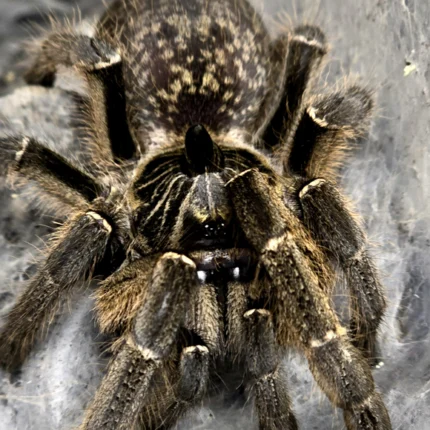
H. pulchripes belongs to the Old World club, so there are no urticating hairs to flick at you—just good old-fashioned attitude. Their primary defence is speed; if startled, they’ll dart for cover with impressive agility. Threat displays (front legs raised, showing those golden knees) are rare but not unheard of, especially if cornered. Gloves aren’t necessary, but respect most definitely is—never underestimate their power to startle both you and themselves.
Visibility
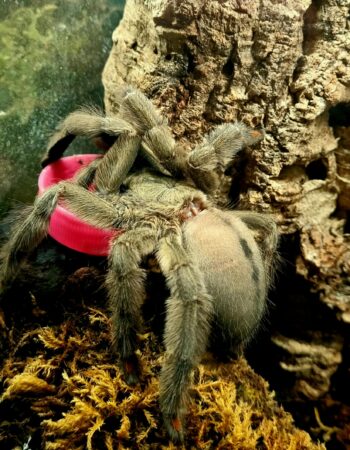
Despite their fossorial nature, pulchripes are surprisingly visible when settled in. They regularly guard the mouth of their burrow or lounge under webbing, particularly in the evening. Feeding time is prime-time viewing, as they’ll often pounce out for prey in spectacular fashion. While you won’t see them bouldering about during the day, you’re not likely to forget they live there—their gorgeous gold legs stand out even in the dimmest light.
Experience Level
This species is best suited to keepers with some prior tarantula experience—not because it’s an unholy terror, but due to its speed and Old World attitude. Beginners can succeed if they’re confident, cautious, and committed to not handling. A great choice for those wanting to step up from beginner species and enjoy a striking display tarantula without taking on a total challenge. Respectful, hands-off care is the name of the game!
Webbing
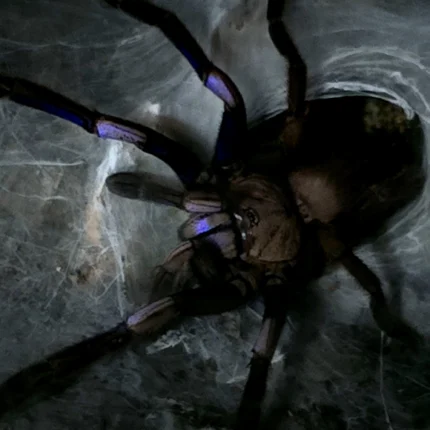
Harpactira pulchripes is a creative webber, using silk to reinforce its burrow, line tunnels, and occasionally to drape over surface décor like a tiny, golden-legged decorator. You won’t see the epic, thick webbing of some arboreals, but over time a neat network appears—practically a spidery welcome mat for prey (or for the unimpressed postman). Webbing activity ramps up after rehomes, moults, or any attempted enclosure remodelling by their keeper.
Feeding
Slings enjoy frequent meals of appropriately sized pinhead crickets, pre-killed mini mealworms, or confused micro-roaches. Feed every 3–4 days, being careful not to overfeed or leave uneaten prey, as slings will burrow for weeks after moulting and don’t need an accidental snack-induced injury. Juveniles and adults thrive on a diet of crickets, dubia roaches, or locusts—one or two a week is plenty. Pulchripes are keen eaters with a fast, athletic feeding response, but don’t be tempted to force-feed if they’re in pre-moult; just remove uneaten prey after 24 hours and try again in a few days. As always, variety is the spice of (spider) life. A water dish is a must for all sizes.
Enclosure Recommendations
A secure, horizontally oriented enclosure with plenty of depth for digging is ideal. For slings, tubs with at least 7–10 cm of substrate work well, moving up to 20–25 cm for juveniles and adults; coco fibre or a soil/loam mix is perfect. Provide a starter burrow (poke a hole or angle a hide) to encourage settlement, but expect them to quickly improve on your interior design! Good ventilation is critical—side vents help prevent stuffy, damp conditions. Add a water dish and a cork bark hide, even if it soon vanishes under webs. Avoid sharp décor, as these are master diggers and sometimes disturb their own landscaping. Ensure the lid is secure—these spiders are quick when they want to be!
Final Thoughts
Harpactira pulchripes enjoys a near-mythical status for its dazzling looks (those legs!) and fascinating habits. It’s an ideal choice for the aspiring keeper ready to step beyond the basic New World species, offering just the right balance of ‘watch me vanish at lights-out’ and ‘check out my golden knees on display’. Their fossorial tendencies mean you’ll have fun watching them redecorate, and their feeding response can be dramatic. Drawbacks? They’re not the best for handling (hands off, always), and their speed demands respect. Otherwise, you’re left with a truly rewarding species that turns even simple maintenance into a show. Highly recommended for the tarantula enthusiast looking for something with character—and major glitz.
Species-specific guidance
Frequently Asked Questions
Is Harpactira pulchripes suitable for beginners?
Harpactira pulchripes is best for keepers who already have some tarantula experience. They're not dangerous, but their speed and Old World attitude mean they’re better suited to those comfortable with fast, skittish species. Beginners can have success with lots of research and hands-off care, but this isn’t a first spider for most.
How large does an adult Harpactira pulchripes get?
A fully grown Harpactira pulchripes typically reaches a diagonal leg span of 12–15 cm. Females are larger and chunkier, while males are slim and often a touch smaller. Both genders have striking golden colouration, especially the females, making them a real showpiece in any collection.
What is the temperament and defence style of Harpactira pulchripes?
Harpactira pulchripes is generally shy and prefers to bolt for cover if disturbed rather than show aggression. However, as an Old World species, it can put on a defensive display when cornered—raised legs and attitude, but no urticating hairs. Their main defence is speed, so respect is essential. Handling is not recommended.
How quickly does Harpactira pulchripes grow and how long does it live?
Harpactira pulchripes grows at a medium rate—slower than some, but fast enough to see regular progress. With good care, slings can reach adulthood in 2–4 years. Females may live 12–15 years, while males usually mature in 3–5 years and have much shorter adult lives.
What feeding routine suits Harpactira pulchripes?
Slings of Harpactira pulchripes thrive on small prey like pinhead crickets or pre-killed mini mealworms every 3–4 days. Juveniles and adults do well with crickets, roaches, or locusts once or twice a week. They have a fast feeding response, but avoid leaving uneaten prey, especially during moults. Always provide a water dish.
What enclosure and substrate does Harpactira pulchripes need?
Provide a secure, horizontally oriented enclosure with plenty of depth—7–10 cm substrate for slings, 20–25 cm for adults. Use coco fibre or a soil/loam mix for easy digging. Include a starter burrow and a water dish. Good cross-ventilation is important, and keep the setup escape-proof, as these spiders are quick and resourceful.
How should I manage humidity and moisture for Harpactira pulchripes?
Maintain moderate humidity around 50–65%. Lightly moisten part of the substrate a couple of times a week while keeping the rest mostly dry. Ventilation is key to prevent mould. Always provide a broad water dish and avoid making the enclosure overly damp—these spiders prefer drier conditions with just enough moisture for moulting.
How visible and active is Harpactira pulchripes in captivity?
While Harpactira pulchripes is fossorial and loves to burrow, it's often visible at the mouth of its burrow or under webbing, especially in the evening. Feeding time brings them out in dramatic fashion. You’ll get decent glimpses of their golden legs and tidy webbing, even though they aren’t constantly on display.


Reviews
There are no reviews yet.