

Breeding Notes
Harpactira pulchripes
Golden blue-legged baboon tarantula
Also known as: golden blue leg baboon, golden blue-legged baboon
Species-specific breeding guidance, seasonal context and practical caveats for experienced keepers.
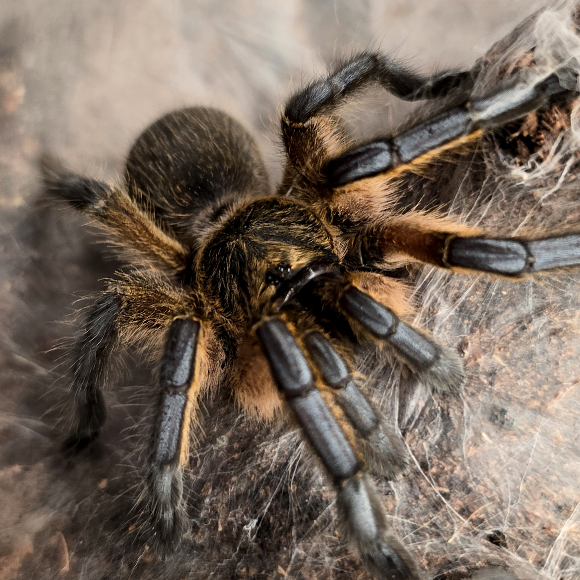
Species breeding reference
Breeding Notes
Breeding Harpactira pulchripes is a challenge best left to experienced hands. Success relies on carefully cycling environmental cues, a well-conditioned female, and plenty of patience. Reports vary, so treat timelines and numbers as rough guides—not guarantees. If you do manage a sac, you’ll be in rare company, as breeding this species in captivity is admired but not often achieved.
Breeding information for this species is a bit thin on the ground, so this guidance is based on the best available reports, native climate clues, and sensible keeper caution.
Wild Breeding Season
Precise wild breeding timings for Harpactira pulchripes aren’t widely published, but given its Eastern Cape roots in the southern hemisphere, activity in the late spring to early summer seems likely. Wild pairs might start becoming active as temperatures rise following the winter dry spell, though timing may shift a bit in captivity.
Wild Environmental Triggers
Seasonal rainfall, gradually warming temperatures, and increased insect activity probably encourage mating above ground. A transition from the drier winter months into a milder, slightly wetter spring may spark reproductive behaviour, with changing day length playing a subtle role.
Native Climate Context
This species is used to dry, warm grasslands with short bursty rains and mild winters. The local climate rarely gets properly cold, and the dry season gives way to a gentler period with some humidity and warmth. Mimicking this ebb and flow can help simulate that natural cycle if you’re planning a pairing.
Captive Breeding Window
Pairings tend to be most successful after the female has freshly moulted and conditions have been slightly adjusted to reflect the seasonal shift into spring or early summer—think a gentle increase in temperature and a touch more moisture, but never soggy.
Pre-pairing Conditioning
Let your female settle in after a pre-mating moult, with a few weeks of solid feeding and a slightly elevated humidity. During this period, gradually nudge temperatures up by a couple of degrees, but keep things stable and avoid any abrupt changes.
Male Introduction Guidance
Introduce the male to the female’s enclosure in the evening, when spiders are more naturally active. Make sure there are good hides and exit options for the male, as things can turn south quickly. Observing closely but avoiding direct interference is the way to go. Remove the male if the female turns aggressive or if he seems uninterested after repeated introductions.
Female Readiness Signs
A well-fed female with a plump abdomen who’s recently moulted is your best bet. She’ll stay in and near her burrow, but may be seen webbing more at the entrance—a sign she might be ready for a visitor. Still, female mood can be unpredictable, so patience and safety precautions are a must.
Post-pairing Conditions
After a successful pairing, keep the enclosure undisturbed but slightly on the warmer side, with occasional light misting to keep one section of the substrate gently moist. Gradually bring back previous conditions and avoid overfeeding while she’s in pre-sac mode.
Sac Timeline
Exact timelines are sketchy for this species, but it’s reasonable to expect an eggsac to appear between 6 and 12 weeks after pairing, mirroring what’s been seen in close relatives. Leave the sac with the female for the first month or so; overly early removal risks underdeveloped young.
Incubation Notes
Keep the sac in the female’s care if possible, providing steady, moderate humidity and warmth. If artificial incubation is needed, use a classic incubator set-up that mimics the previous conditions but avoid excessive moisture. Sac care specifics remain a bit of a guessing game for this species, so err on the cautious side.
Expected Sling Count
Captive breeding records are sparse, but slingsac numbers seem to range anywhere from around 50 up to 150 spiderlings, with some variation possible depending on female size and condition.
Risks and Cautions
Females can be temperamentally unreliable and may eat males even if they seem receptive, so never leave a pairing unattended. There’s not much margin for error with environmental swings, and sacs can fail if humidity spikes or drops. Egg-sac cannibalism or abandonment are reported risks, so be watchful but not intrusive.
Evidence confidence: Low