

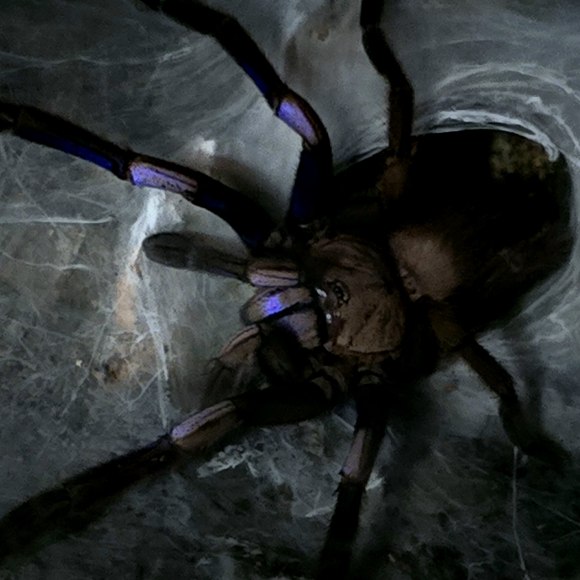
Chilobrachys natanicharum
Price range: £12.00 through £80.00
A brisk-growing, fossorial webber from Thailand, best kept by those with a taste for silkwork, burrowing and a spider that keeps you guessing. Not for handling.
| Weight | 100 g |
|---|---|
| Dimensions | 13 × 13 × 9 cm |
Tell me when it is available
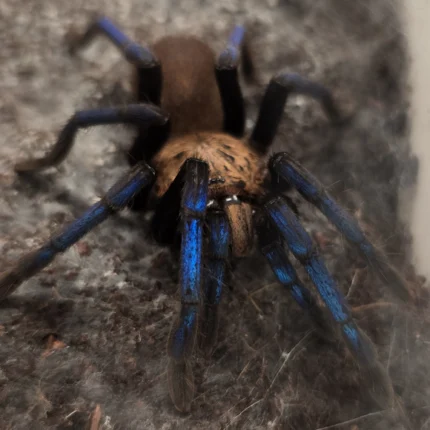
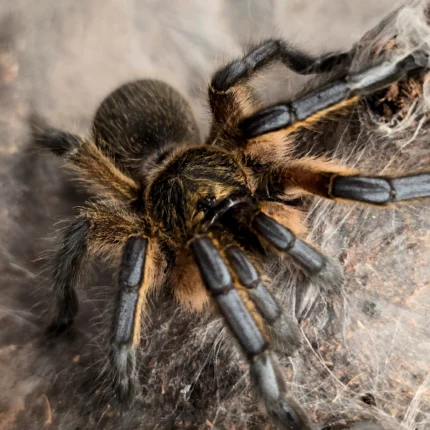
“Chilobrachys natanicharum looks like someone accidentally gave a lightning bolt eight legs and severe trust issues. Most of the time it hides underground in a silk-covered bunker, only emerging briefly to remind you it’s absolutely stunning before vanishing again at warp speed. It’s shy, spicy, and basically the goth roommate of the tarantula world.”
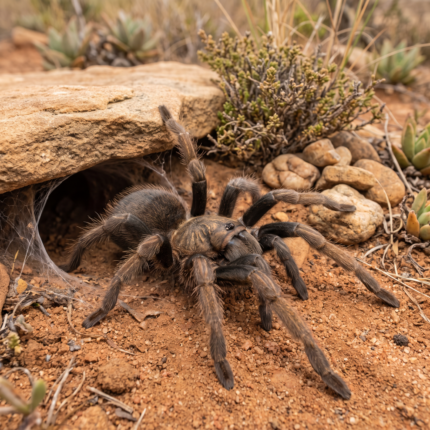
Chilobrachys natanicharum is one for those who appreciate a spider that earns its keep in silk. Native to Thailand’s damp forests, these fossorial tarantulas excel at two things: burrowing deep and webbing up every inch of substrate you offer. In captivity, you’ll see them craft elaborate silken tunnels, but don’t expect many curtain calls—they’re masters of discretion, making rare appearances that are all the more satisfying for their scarcity.
Adults top out around 15–18cm diagonal leg span, giving them plenty of presence, and females will settle in for well over a decade if given good care. Growth is relatively swift and juveniles moult frequently, so you’ll see real progress year on year. Their temperament can best be described as ‘businesslike’: swift, defensive if pressed, and prone to show off their threat postures if you linger too long. While they won’t go looking for trouble, they won’t tolerate heavy-handedness, either. Handling is not advised—unless you’re in training for a new career as a sprinter.
Enclosures should prioritise depth over floor space—20–30cm of moist, compact substrate is ideal. Cross-ventilation is a must; stagnant, muggy air leads nowhere good. Temperature should be kept between 23–27°C with a dip at night, whilst humidity wants to hover around 70–80%. In terms of feeding, young ones benefit from frequent, appropriately sized prey. Adults do well with a meal every week or so—nothing too lavish or you’ll have a tarantula built like a rugby ball.
As for visibility, their webbing is the headline act: expect dense, sprawling silk and innovative burrow systems that seem to change overnight. They may not be front and centre like some, but there’s a unique satisfaction in observing their handiwork—and occasional midnight escapades. Chilobrachys natanicharum is best suited for those who enjoy the quieter, more architectural side of tarantula keeping and are unfazed by a challenge or two on rehousing day. A rewarding species for those willing to meet them on their terms—and keep their fingers well out of the way.
Only logged in customers who have purchased this product may leave a review.
Species breeding reference
Breeding Notes
Breeding Chilobrachys natanicharum is firmly for the advanced crowd—reports are sparse, and outcomes can swing wildly. If you’re tempted, treat every pairing as experimental and don’t count your slings before they’ve hatched. Maintain steady humidity and warmth, mirror the seasonal cues, watch for subtle signs, and above all, respect their privacy (and foul mood) throughout.
Breeding information for this species is a bit thin on the ground, so this guidance is based on the best available reports, native climate clues, and sensible keeper caution.
Wild Breeding Season
Direct breeding reports for this species are virtually nonexistent, but looking at their life in southern Thailand, it’s likely their peak breeding activity lines up with the start or end of the intense wet season—anywhere from late spring through early autumn when conditions are warm, humid, and there’s plenty of cover.
Wild Environmental Triggers
Heavy rains raising humidity and flooding low burrows probably kickstart breeding, as the region swings from hot, muggy build-up into full monsoon chaos. The abrupt transition from moderately dry to soaking wet spells seems to be a common nudge for these secretive burrowers.
Native Climate Context
Phang Nga, their patch in southern Thailand, rarely cools off—expect 25–28°C much of the year, humidity hovering around 80–90%, and most rain falling full tilt between May and October. Even when it lets up, the ground doesn’t get chance to dry out properly, so it’s always a bit steamy.
Captive Breeding Window
Based on climate and wider genus behaviour, your best shot is to gently ramp up humidity and simulate that pre-monsoon build-up in spring, pairing them as rains would naturally arrive—late spring into summer seems safest, but nobody’s clocked reliable UK pairings yet.
Pre-pairing Conditioning
Get both spiders looking well-fed and robust, as the process can stress even the hardiest individuals. Replicate a proper rainy spell just before introductions: up substrate moisture, regular gentle misting, and keep temperatures steady in the mid-20s°C. If you can, trigger a mild drop in pressure or lighting to mimic a good thunderstorm (but no need to bring the weather indoors).
Male Introduction Guidance
Let the male lay down his courtship silk in a tunnel or on the surface first, ideally overnight, then introduce him carefully to the female’s enclosure. Stay close—Chilobrachys can be aggressive and a mismatched rendezvous often spells trouble. Daytime intros when both are calm seem to have best odds, but always have something sturdy handy for intervention, just in case she decides dinner is on the cards.
Female Readiness Signs
A female who’s recently moulted and is regularly webbing near her burrow entrance (but not at her fattest) might be receptive. If she sits out in the open, interacts with web vibrations, or doesn’t instantly lunge for a meal, those are decent early signs—though Chilobrachys can be cryptic or fickle, so nothing is guaranteed until you try.
Post-pairing Conditions
Once mating’s done, restore slightly drier conditions for a couple of weeks and keep disturbances to a minimum. After that, gradually bring back high humidity and leave her to her burrow—deep, moist substrate helps, with a shallow water dish topped up religiously. Any cleaning or checks should be quick, stealthy, and as infrequent as you can manage.
Sac Timeline
There’s little direct evidence for this species, but expectations based on the genus point to a sac being laid around 4–8 weeks post-mating. Female may guard or line her entire burrow densely with web, refusing food in the run-up. Don’t disturb her once she goes into full sac mode—she might cannibalise the lot if stressed.
Incubation Notes
Let mum do the work where possible. For those needing to pull the sac, a warm (around 26°C), humid incubator mimicking deep burrow conditions is best. The eggs typically spend 4–6 weeks developing, but patience is crucial and earlier intervention does more harm than good.
Expected Sling Count
Numbers for this species aren’t published, but Chilobrachys sacs are famed for being large—success stories for similar species quote anywhere from 100–300 spiderlings if things go smoothly. High losses aren’t uncommon, so treat huge hatch-outs with caution rather than excitement.
Risks and Cautions
Chilobrachys natanicharum is notoriously unpredictable, both in temperament and breeding response. Cannibalism is a big risk at every stage, and females are quick to scrap a sac at the slightest hint of disturbance. Their speed and defensiveness make every step more challenging. Best left to serious and patient keepers with prior breeding experience in this genus.
Evidence confidence: Low
UK Market Insight
Neutral UK availability and pricing context for this exact Species record.
Species care guide
Chilobrachys natanicharum
Adult Size
15–18 cm leg span
Temperature
23–27°C
Humidity
70–80% RH
Temperament
Let’s be frank—Chilobrachys natanicharum is not anyone’s candidate for the tarantula Miss Congeniality crown. They’re fast, easily startled, and will quickly show off their defensive postures if annoyed. While not outwardly aggressive, they won’t hesitate to defend their territory, especially when you’re poking about during maintenance. Many keepers find their personalities fascinating: you quickly learn to respect their boundaries! In summary, handling is not recommended (unless you fancy chasing a turbo-charged spider around your living room).
Defence
Chilobrachys natanicharum doesn’t bother with urticating hairs like their New World cousins—their weapon is speed and attitude. Their primary defence is a dramatic threat posture followed by a lightning-quick retreat or, on a bad day, a bite. While their venom won’t land you in A&E, it’s still best avoided. Approach with respect, use long tools, and remember: they’re defending, not plotting.
Visibility
These spiders have perfected the art of being seen only on their own terms. Most of the time, you’ll spot just a leg or two poking out from a webbed-over burrow entrance. Occasionally, you’ll be rewarded with an impressive show as they patrol their kingdom at dusk or after a good meal. Their webbing, however, is an ever-present spectacle—complex sheets and tunnels that turn a plain enclosure into something out of a Halloween décor shop. Patience pays off for those who enjoy rare but spectacular sightings.
Experience Level
This isn’t your first tarantula—or at least, it probably shouldn’t be! Due to their speed, defensiveness, and moisture requirements, Chilobrachys natanicharum is best for intermediate to advanced keepers who are confident in their abilities and ready for a bit of a challenge. Beginners might want to start with something a touch slower and a lot less keen to show off their fangs (for educational purposes, of course).
Webbing
Chilobrachys natanicharum is a webbing machine, rivalled only by some of the famous Avicularia or GBBs. Give them depth and they’ll create an intricate lattice of silk both above and below ground. Their web tunnels become highways for nightly patrols and exits for food delivery. This species will reward the patient keeper with a structural web display that never stays the same for long. It’s like watching a tiny, hairy architect at work (who never submits planning permission).
Feeding
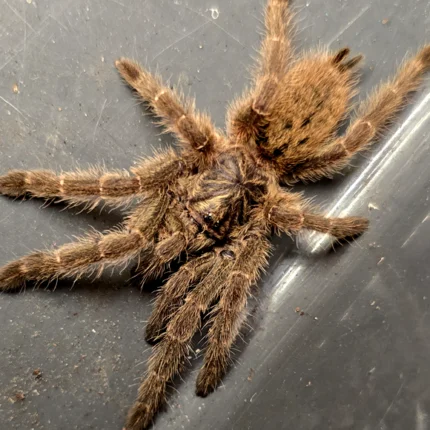
Young slings will happily tuck into appropriately sized pinhead crickets, pre-killed roaches, or fruit flies a couple of times a week. Juveniles and adults can take larger meals—dubia roaches, mealworms, or standard crickets—every 7–10 days. For adults, once every week or two is plenty unless they’re prepping for a moult. Overfeeding is a common mistake: a round abdomen is healthy, but a tarantula shaped like a fuzzy football is not. Always remove uneaten prey within 24 hours to avoid stress or unwanted ‘cohabitation’. Their feeding response is generally enthusiastic; expect classic ‘ambush predator’ strikes and the occasional wild chase. Growth is rapid with frequent meals, but don’t be tempted to feed just for a spectacle.
Enclosure Recommendations
Start slings in small, escape-proof containers with around 7–10cm of moist substrate—think starter flats or deli pots with secure lids and good cross-ventilation. For adults, a 30x30x30cm enclosure works splendidly, but most important is depth: 20–30cm of substrate allows proper burrowing. Use coco fibre, peat, or a mix, kept moist (never soggy). Provide multiple starter burrow holes with a cork bark or flat slate ‘roof’ to encourage tunnelling. A spacious water dish is essential, and clutter the surface with dried leaf litter for web anchoring. Ventilation is critical—stagnant air is a recipe for disaster—so ensure there’s plenty without drying things out. Skip elaborate decorations; the spider will bulldoze its way to perfection no matter what you put in.
Final Thoughts
Chilobrachys natanicharum is a top choice for hobbyists who like a spider with personality (and a busy construction schedule). They combine impressive size, rapid growth, and mind-boggling web structures with a touch of diva attitude in the temperament department. Not one for handling, but a real joy to observe when they’re active—and even more so when they transform your enclosure into their own silk-strewn fortress. The key challenges are humidity maintenance and safe rehousing, but that’s a small price for a species that never stops surprising you. Give them depth, respect their space, and you’ll have a truly unique member of your tarantula family.
Species-specific guidance
Frequently Asked Questions
Is Chilobrachys natanicharum suitable for beginners?
Chilobrachys natanicharum is best suited to intermediate or advanced tarantula keepers. They are fast, defensive, and have specific moisture requirements, making them a bit much for those new to the hobby. Beginners may prefer a less demanding species before taking on this burrowing web artist.
What kind of temperament does Chilobrachys natanicharum display?
This species is fast, easily startled, and known for its defensive nature. While not overtly aggressive, Chilobrachys natanicharum won't hesitate to posture or retreat if disturbed. Many find their behaviour fascinating, but respect for their space is a must. The Spoodoire does not endorse handling of any tarantula, especially not this one.
How large does Chilobrachys natanicharum get as an adult?
Adult Chilobrachys natanicharum can reach a diagonal leg span of 15–18cm. Females are typically a bit stockier and longer-lived than males, who are leggier but don't stick around as long. These spiders make the most of their size to dart back to their burrows when startled.
What is the growth rate of Chilobrachys natanicharum?
Chilobrachys natanicharum is known for its relatively quick growth rate. With proper warmth, feeding, and humidity, juveniles moult frequently and reach adult size in just a few years. Growth slows after maturity but remains steady with continued good care.
How should I feed my Chilobrachys natanicharum?
Slings enjoy small prey like pinhead crickets or pre-killed roaches a few times a week, while juveniles and adults can tackle larger insects every 7–10 days. Adults often need feeding only once every week or two. Always remove uneaten prey within 24 hours to avoid stress or unwanted companions.
What humidity and moisture levels does Chilobrachys natanicharum require?
Aim for 70–80% relative humidity. Use a deep, moisture-retaining substrate such as coco coir and regularly mist or gently overflow the water dish. It's crucial to allow part of the enclosure to remain drier and to provide good ventilation to avoid stagnant air and mould issues.
What is the ideal enclosure setup for Chilobrachys natanicharum?
For adults, a 30x30x30cm enclosure with 20–30cm of deep, moist substrate is ideal. Provide multiple starter burrow entrances, a spacious water dish, and surface clutter like dried leaves for web anchoring. Strong ventilation is essential, and elaborate decorations are unnecessary, as this spider loves rearranging its space.
How visible is Chilobrachys natanicharum in captivity?
Chilobrachys natanicharum is a master of hiding and prefers to stay tucked away in its burrow or web tunnels. Expect to spot a leg or two peeking out most of the time. Active sightings are typically at dusk or after feeding, but their intricate webbing provides a spectacular, ever-changing display.
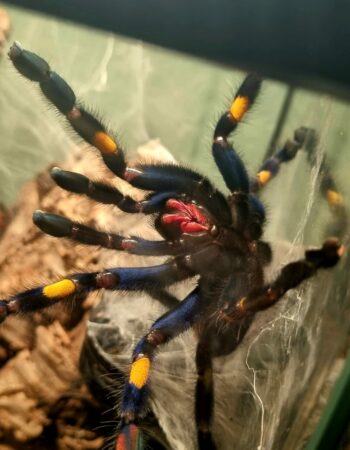


Reviews
There are no reviews yet.