


Psalmopeus irminia
Price range: £7.00 through £60.00
Masters of acrobatics and dramatic redecorating, P. irminia disappears for days, only to reappear mid-moult or when a cricket dares cross the wrong bit of silk.
| Weight | 0.01 g |
|---|---|
| Dimensions | 3 × 3 × 5 cm |
Tell me when it is available
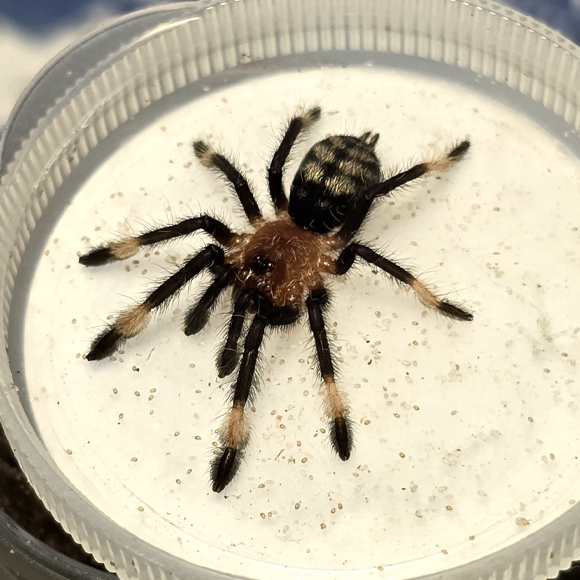
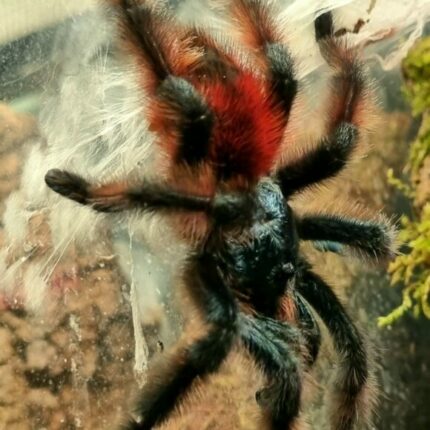
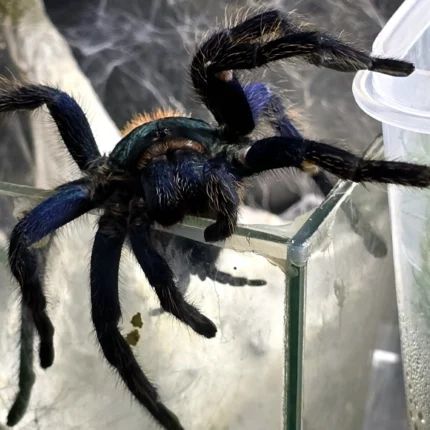
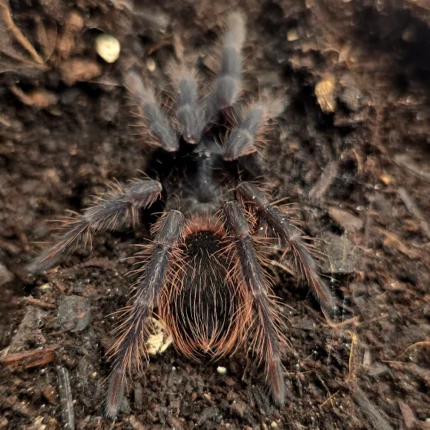
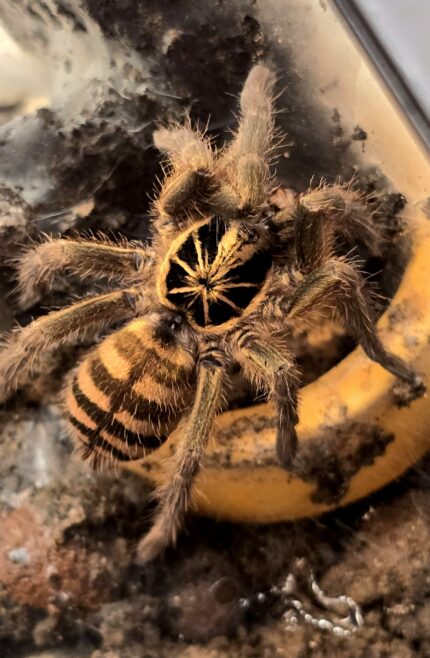
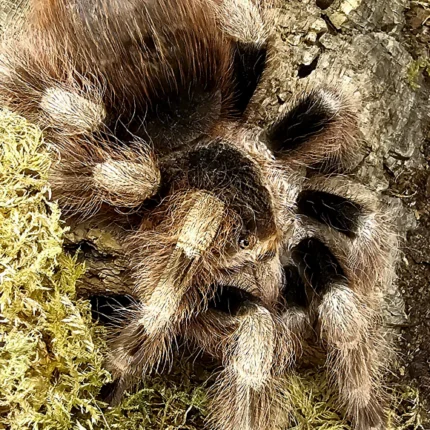
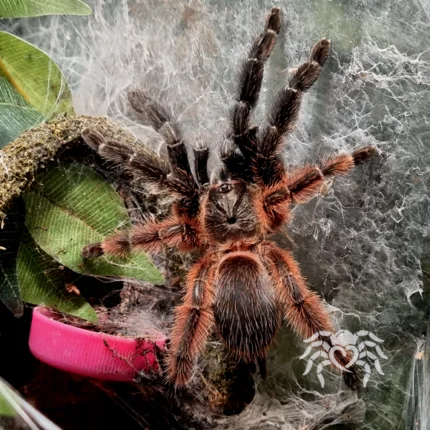
Psalmopeus irminia, sometimes known as the Venezuelan Sun Tiger, is a classic for arboreal enthusiasts. Native to Venezuela and surrounding regions, these spiders are happiest scaling the heights of their enclosures and fashioning elaborate silken retreats. Daytime sightings are rare; expect them to appear at dusk, when a flash of orange chevrons signals a quick tour of their domain or an enthusiastic feeding response. Adult females reach an impressive 13–15cm diagonal leg span and have a noticeably bulkier build than the typically leggier, lighter males. Growth is reassuringly quick, with spiderlings racing to adulthood in under three years—assuming you can keep up with their appetite and occasional pre-moult theatrics.
Best reserved for intermediate or advanced keepers, P. irminia is quick, skittish and unapologetically defensive if cornered. Their preferred tactic is to bolt rather than bite, but the classic threat pose is a reminder of their attitude. They don’t have urticating hairs, so no itchy arms—just the risk of a spider-shaped blur appearing in places it shouldn’t if your lid isn’t secure.
Humidity around 70–80% keeps them content, with good airflow and vertical décor such as cork bark tubes essential. A tall, locked enclosure is a must—these are Olympic-level climbers and escape artists. Strong webbing habits mean you’ll rarely know which end to peer into next, and architectural revamps are routine. Feeding time is lively; juveniles and adults both take well-varied invertebrate prey, but as with most fast-growing arboreals, watch for food refusal prior to a moult. Females can grace you with their presence for over a decade if well kept, while males usually bow out within a few years. Not a display tarantula by day, but a rewarding project for those who appreciate nocturnal webwork and tarantula acrobatics.
Only logged in customers who have purchased this product may leave a review.
Species breeding reference
Breeding Notes
Pairing Psalmopeus irminia is not for the faint-hearted. When conditions are right—plenty of humidity and steady warmth after a full feed—results can be impressive, but aggressive tendencies make every introduction a dicey affair. Expect colourful acrobatics, rapid movement, and the odd dash to safety. With cautious timing and a watchful eye, you might get a healthy clutch, but patience (and nerves of steel) are essential. Definitely one for the keen keeper, not a beginner’s first swing.
Wild Breeding Season
Direct field studies are scarce, but with their habitat lying close to the equator, the breeding season for these arboreal tigers likely aligns with periods of peak rainfall, particularly during the wettest months. That said, females may become receptive at other times if seasonal cues (like humidity spikes) are mimicked.
Wild Environmental Triggers
In their moist, muggy forests, the main environmental cues for mating appear to be extended periods of high humidity and warmth—classic rainforest weather. A swell of rain and slightly dropping barometric pressure often gets these spiders in the mood.
Native Climate Context
Think sopping-wet and steamy rainforest. Temperatures hover just over 25°C year-round with humidity often nudging above 85%. Rain comes in fierce bursts, especially from March through June in their wild range.
Captive Breeding Window
In captivity, successful pairings are frequently reported after a period of increased misting and slightly higher temperatures, typically at the tail end of winter or start of spring in the UK (mirroring the early wet season in their home turf). However, timing does not appear to be fiercely restricted if conditions are right.
Pre-pairing Conditioning
Both male and female benefit from a steady diet and excellent hydration before pairing. Boost humidity for a week or two and slightly increase night-time temperatures. Make sure the female is well-fed but not obese—plump and pleased, but not a pudding.
Male Introduction Guidance
Introduce the male in the evening when both spiders are less active. Offer him straight to her retreat entrance with ample climbing space for a speedy exit. Keep a barrier or soft brush handy if things get heated, as females can be quite feisty and unromantic.
Female Readiness Signs
You may notice the female spending more time near the entrance of her web or making less dramatic threat displays when disturbed. Increased webbing or a fresh moult in the past month can also signal she’s feeling sociable. There’s never a guarantee, so move forward with care.
Post-pairing Conditions
Keep conditions stable and damp, with ongoing high humidity and moderate warmth. Don’t scrimp on ventilation—fresh air is your friend. Avoid moving or disturbing the female’s enclosure once pairing has taken place, as stress can lead her to eat the male or the future egg sac.
Sac Timeline
Egg sacs may appear anywhere from four to eight weeks after pairing, depending on temperature, feeding, and the female’s mood. Patience is required, as the process is rarely linear and some females take their sweet time.
Incubation Notes
Leave the sac with the female for three to five weeks if she appears calm and attentive. If worried about cannibalism or neglect, consider artificial incubation after a couple of weeks. Maintain warmth and very high humidity, but avoid letting water condense directly on the sac.
Expected Sling Count
Clutch size varies, but you’re typically looking at several dozen to over a hundred slings per sac. Numbers fluctuate quite a bit, so expect a range rather than a cert.
Risks and Cautions
Females of this species can be unpredictable and defensive. Premature, hungry, or recently moulted males are at high risk. Mishaps are common, even for seasoned keepers. Old world speed and defensive behaviour ramp up the challenge—never let your guard down, and don’t expect every pairing to end in success or survival.
Evidence confidence: Medium
UK Market Insight
Neutral UK availability and pricing context for this exact Species record.
Species care guide
Psalmopeus irminia
Adult Size
13–15 cm diagonal leg span
Temperature
22–26°C
Humidity
70–80% RH
Temperament
Elegant yet feisty, the Venezuelan Sun Tiger is lightning-fast and known for its skittish temperament. While they're not naturally aggressive, if startled or cramped, they’ll make a dash rather than dive into battle. If cornered, expect a defensive threat pose that says ‘back off!’ far more politely than some Old Worlds. Their athleticism is entertaining to watch, but make sure your enclosure is escape-proof, or risk telling guests there’s a jogging Sun Tiger loose in the house.
Defence
P. irminia doesn’t possess urticating hairs, so the classic itchy-arm outcome is unlikely. When threatened, they rely on their speed and a so-sassy threat posture, baring fangs and raising those lovely front legs in a display that could put a Victorian opera singer to shame. They're more about the dramatic escape than confrontation, but do approach with care, especially during rehouses, and always use soft tools.
Visibility
A pleasure and a tease, Sun Tigers spend daylight hours tucked away, plotting their next web extension project. You’ll get the best looks at dawn, dusk, or after a midnight snack run. While not as reclusive as some, they’re more night-owl than exhibitionist, making the random daytime appearance an exciting treat. Their web architecture and orange-striped legs gleaming in torchlight offer real visual interest for the patient keeper.
Experience Level
With their rapid movements and tendency to teleport when disturbed, P. irminia is best left to intermediate or advanced keepers who have a steady hand and healthy respect for spider aerobatics. They’re not ideal for beginners, but if you’re comfortable with quick species and want a visually stunning tarantula, you’re in for a treat. Handle only with your eyes — both for your sake and theirs.
Webbing
These guys work hard on their silk décor, weaving thick, impressive webs that double as climbing nets and private suites. They often create tube-like retreats high in the enclosure, filled with layers of slings and moulting mats. P. irminia’s webbing is less about trapping food, more about fortifying home and keeping you guessing as to which end is the front door. Expect regular upgrades and, sometimes, a complete architectural re-think seemingly overnight.
Feeding
P. irminia boasts a ravenous appetite, especially when young. Slings (baby spiders, for those new to the game) will take down pre-killed or appropriately sized live crickets, roaches, or even mealworms twice weekly. Juveniles and adults enjoy larger crickets, dubia roaches, or the occasional locust once every week. Watch for periods of food refusal — usually a sure sign a moult is coming. Never leave uneaten food in the enclosure during pre-moult, as nobody likes company when they’re feeling fragile. Avoid overfeeding adults; chubby spiders are more at risk of injury. As always, stick to prey no larger than the spider’s abdomen and maintain variety to encourage healthy growth. Feeding time is a spectacle, so only feed what your Sun Tiger can tackle confidently.
Enclosure Recommendations
Tall, secure, and well-ventilated is the mantra for this species. Use an arboreal enclosure with plenty of vertical space (30cm+ for adults) so they can show off their climbing prowess. Include cork bark tubes, upright sticks, and robust fake or live plants to make things interesting. Substrate should be moist but not swampy — 5 to 8cm of coco fibre or similar works well. Ensure excellent cross-ventilation to prevent stagnant air and unwanted mould. Every enclosure should boast a water dish, and consider positioning a hide high up for that penthouse feel. Seal all gaps, as Sun Tigers are Olympic-calibre escapologists.
Final Thoughts
P. irminia is a true hobbyist’s spider: fast, strikingly beautiful, and always up to something behind its silken curtains. They’re a little bit hands-off and a whole lot of show when out and about, rewarding patient keepers with glimpses of their bright, tiger-striped legs. Their speed and defensiveness make them less suited to beginners, but for those with a bit of experience and a good set of tweezers, they’re a nearly unbeatable display species. If you love web architecture, nocturnal drama, and the odd challenge, this is a tarantula you simply can’t ignore.
Species-specific FAQs are not available yet.


Reviews
There are no reviews yet.