

Breeding Notes
Davus pentaloris
Guatemalan tiger rump tarantula
Also known as: tiger rump tarantula, Guatemalan tiger-rump
Species-specific breeding guidance, seasonal context and practical caveats for experienced keepers.
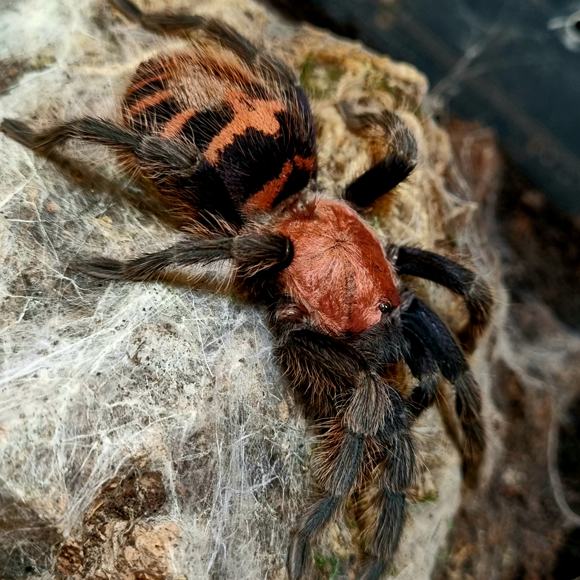
Species breeding reference
Breeding Notes
Captive breeding of Davus pentaloris is possible for committed keepers with some experience under their belt. They aren’t the trickiest but do require close attention to seasonal shifts, female condition, and humidity changes. Natural breeding cues appear to mirror the onset of rainier, humid weather in the wild. Success hinges on good timing and gentle care post pairing, with moderate clutch sizes and a manageable incubation window. Approach with patience and a watchful eye, and you might just raise a new generation of these forest-floor gems.
Wild Breeding Season
True wild breeding timing is still up for debate with this species, but based on its Central American roots, the main action likely kicks off shortly after the first heavy rains. This tends to be late spring into summer in their native habitat, when the air gets stickier and the ground softens up—prime conditions for romance underground.
Wild Environmental Triggers
These tarantulas probably key into the arrival of substantial rains and the rising humidity, which signal everything from burrow construction to breeding readiness. A marked uptick in rainfall and warmer nights could give them the nudge they need to get things started.
Native Climate Context
Davus pentaloris hails from forested foothills where wet and dry seasons mark the calendar. Expect temperatures between 24°C and 27°C, with humidity climbing above 80% during the rainy period from late May through October. The rest of the year tends to be drier and still quite warm.
Captive Breeding Window
Success stories from keepers often point to spring and summer as the most likely windows for pairing, ideally right after a female’s fresh moult and with a gentle bump in humidity. Outside of that, results become a bit hit-and-miss.
Pre-pairing Conditioning
Let your female settle in and get well-fed after moulting, keeping humidity moderately high for a couple of weeks. Raise humidity gently—not a deluge, just enough to mimic the shift into wetter weather. Both spiders will appreciate a period of good food and calm before any introductions.
Male Introduction Guidance
Introduce the male to the female’s enclosure during the evening or early night when tarantulas are naturally most active. Give the female plenty of space to retreat—Davus pentaloris is fairly tolerant, but accidents do happen. Remove the male if there’s more aggression than interest or if he sticks around too long after mating behaviour finishes.
Female Readiness Signs
A freshly moulted, plump female that spends time near her burrow entrance is often a good sign. Some slight restlessness or webbing around her hide might mean she’s getting in the mood. Don’t try pairing if she’s looking dull or is approaching a moult.
Post-pairing Conditions
After mating, boost humidity but keep things well-ventilated to avoid stale conditions. Feed her moderately but avoid power-feeding, as too much food can delay sac production. Leave her undisturbed and resist the urge to peek too often—privacy is key.
Sac Timeline
Reports from captive breeding suggest a sac may appear anywhere from 6 to 10 weeks after pairing if conditions are right. Handle with care; unnecessary checks can stress the female and jeopardise the eggsac.
Incubation Notes
Leave the sac with the female if you trust her maternal instincts—she often does a fine job if kept undisturbed. Expect the eggsac incubation to last around 6–8 weeks before spiderlings start to emerge. Some keepers gently remove the sac at the late egg or ‘eyed’ stage for artificial incubation, especially if the mother is nervous.
Expected Sling Count
Clutch size tends to be moderate—anywhere from 60 to just over 120 spiderlings per sac has been seen in captive conditions, but numbers can vary quite a bit.
Risks and Cautions
Davus pentaloris isn’t known for extreme aggression, but mismatched pairing timing can lead to cannibalism, so keep introductions short and supervised. Humidity swings and stagnant air can spell disaster for eggsac health. If the female seems restless or aggressive after pairing, remove the male promptly. As with many Central American terrestrials, patience pays off—rushing rarely leads to better outcomes.
Evidence confidence: Medium