



Psalmopoeus cambridgei
Price range: £5.00 through £35.00
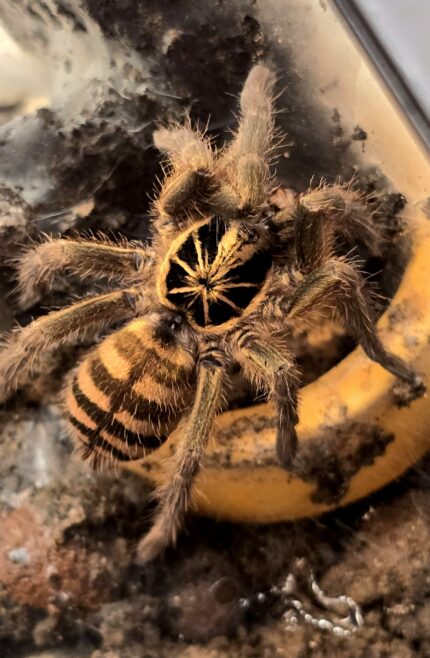
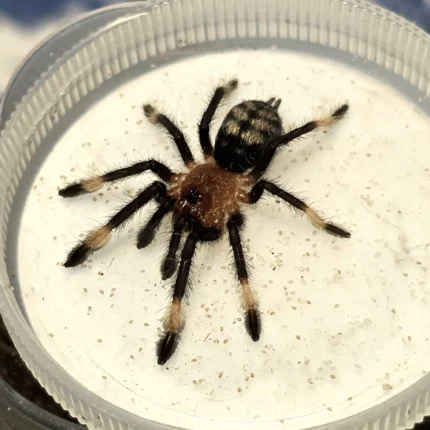
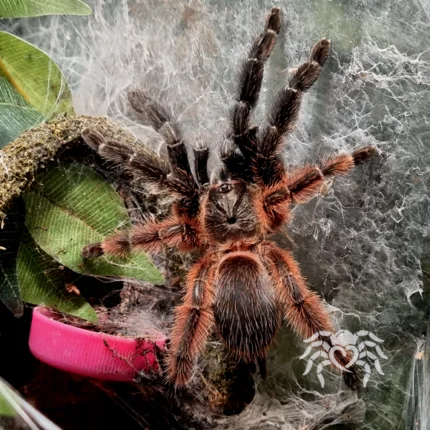
The Trinidad Chevron is the perfect blend of beauty, attitude, and intrigue. Their bold markings and energetic feeding response deliver regular entertainment, while their industrious webbing adds a touch of wild rainforest drama to your shelf. They’re not for the faint of heart—or the ham-fisted…
Tell me when it is available
The Trinidad Chevron is the perfect blend of beauty, attitude, and intrigue. Their bold markings and energetic feeding response deliver regular entertainment, while their industrious webbing adds a touch of wild rainforest drama to your shelf. They’re not for the faint of heart—or the ham-fisted handler—but for intermediate and advanced hobbyists, P. cambridgei are unforgettable. They demand a bit more attention to detail than your average terrestrial and can turn rehousing into an adrenaline sport, but the rewards are well worth it. Come for the pattern, stay for the personality. Just don’t forget your catch cup—and your sense of humour!
Only logged in customers who have purchased this product may leave a review.
Species breeding reference
Breeding Notes
Psalmopoeus cambridgei isn’t the hardest Psalmopoeus to breed, but it’s still a tarantula that will test your arboreal instincts. Aim to mimic those Trinidadian rainstorms with warmth and a good dose of humidity, let the female get comfortable high up, and proceed slowly. Pairing can go either way, even with a cooperative male, so don’t treat it as a sure thing. Expect a decent number of slings if all goes to plan, but don’t be surprised by a false start or sudden female mood swings. Solid experience goes a long way with these fiery climbers.
Wild Breeding Season
The details on wild breeding seasons for this species in Trinidad aren’t widely published, but with a warm, tropical climate year-round, breeding activity likely ramps up in line with periods of higher humidity or after seasonal rains.
Wild Environmental Triggers
Breeding is probably nudged along by spikes in humidity and rainfall, with warm temperatures staying fairly steady. It’s the classic tropical rhythm – wet spell hits, spiders get talking.
Native Climate Context
Think humid rainforest canopy: 23–28°C most of the year, humidity on the high side (65–75%), and the occasional heavy downpour. It’s a lush, constantly warm, and muggy wonderland for a tarantula.
Captive Breeding Window
There’s no strict calendar period reported, but greater success is often found by mimicking wet season conditions—think raising humidity for a few weeks and maybe dropping temps very slightly before rewarming to signal ‘breeding weather’.
Pre-pairing Conditioning
Give adults a good feed a couple of weeks before introduction, and spruce up the enclosure with extra vertical hides and some humidity-boosting misting. Let the female settle and establish a strong web retreat – hungry or stressed females are less likely to play nice.
Male Introduction Guidance
Introduce the male early evening, ideally after a light misting – the scent of fresh rain and approaching dusk are natural cues. Keep him safe by guiding him to the edge of the female’s web, and be watchful—Psalmopoeus females can be very fast if they’re not feeling sociable. Have long tweezers handy just in case!
Female Readiness Signs
When she’s settled, well-fed, and webbing consistently, she’s generally in the right frame of mind for pairing. Some females may show more visible activity around their retreat or create a dense mating web when ready.
Post-pairing Conditions
Leave her undisturbed, maintain elevated humidity and steady warmth, and don’t skip her usual meals—she’ll need the energy if fertilisation has taken. Males generally won’t last if left in, so it’s safest to remove him promptly after mating attempts.
Sac Timeline
Reports vary, but if conditions are met, a successful female may produce an egg sac within 4–8 weeks after pairing. This can take a bit longer if the female has recently moulted or if things are cooler than usual.
Incubation Notes
Let the sac stay with mum for at least 3–4 weeks before considering removal for artificial incubation, if you’re an experienced keeper. Psalmopoeus can be decent mums, but disturbance can risk sac destruction, so be hands-off where possible.
Expected Sling Count
Clutch sizes aren’t always published, but typical sacs for Psalmopoeus species can range from 80 to over 150 spiderlings when things go well.
Risks and Cautions
Pairings can turn aggressive quickly—females can move at lightning speed, so extra caution is vital for both spiders’ safety. False pregnancies, eaten males, and sac failures are not unusual. This is not a beginner’s breeding project—fast reflexes and experience with tricky arboreals are a must.
Evidence confidence: Medium
UK Market Insight
Neutral UK availability and pricing context for this exact Species record.
Species care guide
Psalmopoeus cambridgei
Adult Size
13–15 cm leg span
Temperature
22–26°C
Humidity
65–75% RH
Temperament
Psalmopoeus cambridgei is a dash of drama queen mixed with ninja reflexes. Generally reclusive but lightning-fast if disturbed, they spend most of their time hidden away in silk retreats. Not aggressive by nature, but absolutely willing to show off their speed if you overstep their boundaries! Expect threat postures or darting escapes rather than stand-and-fight behaviour. These are not tarantulas for handling—catch cups are your friends. Their unpredictable bolting speed keeps things interesting for hobbyists; just be mindful and never trust a still cambridgei!
Defence
Unlike many New World tarantulas, Psalmopoeus cambridgei lacks urticating hairs—which is good news for your skin but less so if you’re after a docile spider. Their main defence is a frankly Olympic-level sprint, often vanishing into their hide before you’ve even realised you’ve disturbed them. In rare cases, they may show a threat posture or use a defensive bite, but with respect and the right approach, that’s unusual. Give them hiding places and avoid unnecessary disturbance, and you’ll mostly enjoy a drama-free display.
Visibility
Visibility is a classic game of ‘now you see me, now you don’t’. As adults, P. cambridgei often waits in ambush at the mouth of their web tunnel, ready to pounce on prey with style—so you’ll catch regular glimpses, especially around feeding times. At night, they’re more active, sometimes wandering the enclosure like a tiny, stripy tree leopard. Youngsters are a bit shyer, staying hidden more often. Overall, while not the world’s most brazen show-off, they strike a nice balance between being secretive and providing some visual treats for patient keepers.
Experience Level
Psalmopoeus cambridgei isn’t ideal for absolute beginners thanks to their speed, risk of escape, and slightly more demanding humidity needs. Confident intermediates and up will find them a real joy, especially those looking for something less stubborn than some of the old world counterparts. If you’ve kept a few arboreals or feisty terrestrials, stepping up to a Chevron is a logical next move. Not for the handling crowd, but perfect for keepers wanting a lively, display-capable species with gorgeous patterning and fun behaviours.
Webbing
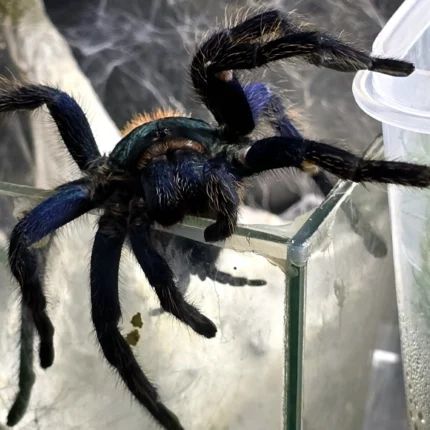
Talk about a home decorator! Chevrons are prolific webbers, spinning dense, intricate retreats in bark tubes, cork rounds, or between branches. Their webs serve as both defensive stronghold and hunting blind—the perfect spot for them to lunge at wayward crickets (or, occasionally, leap into the abyss during rehousing). Unlike terrestrial webbers, the silk here is usually in the upper half of the enclosure, filling hollows and climbing structures. Don’t be surprised to see them reworking or expanding their empire after each moult—or taking over unused flower pots in seconds!
Feeding
Young cambridgei slings are voracious and respond with gusto to food. Start with suitably-sized prey like pre-killed pinhead crickets, micro roaches, or fruit flies. Feed slings 2–3 times per week; they grow fast and often—just watch for that next explosive moult. Juveniles can move up to one or two small crickets or roaches a week, and adults will greedily snatch anything up to an appropriately sized locust or mealworm every 7–10 days. Remove uneaten prey within 24 hours, especially before moults—these spiders hate uninvited dinner guests during vulnerable moments. Avoid overfeeding to prevent obesity, especially in females; plump abdomens may look healthy but can create moulting complications. Remember: a chunky Chevron does not equal a happy one!
Enclosure Recommendations
A vertical-style enclosure is essential—think tall, not wide. For adults, 30cm (H) x 20cm (W) x 20cm (D) is a good starting point; slings do well in tall deli cups or small arboreal tubs, upgraded as they grow. Use at least 5cm of slightly damp substrate (coco fibre, soil blends) to help with humidity, but don’t overdo it—these spiders won’t dig. Cork bark tubes or curved pieces make excellent vertical hides; fill the upper enclosure with climbing options (fake plants, branches) to encourage webbing. A small, stable water dish (don’t forget to clean it!) is a must. Ventilation is key—cross-vent holes stop stuffiness and keep mould at bay. Prepare for ample silk, and avoid fiddling inside the enclosure too much, lest you witness a high-speed dart for freedom.
Final Thoughts
The Trinidad Chevron is the perfect blend of beauty, attitude, and intrigue. Their bold markings and energetic feeding response deliver regular entertainment, while their industrious webbing adds a touch of wild rainforest drama to your shelf. They’re not for the faint of heart—or the ham-fisted handler—but for intermediate and advanced hobbyists, P. cambridgei are unforgettable. They demand a bit more attention to detail than your average terrestrial and can turn rehousing into an adrenaline sport, but the rewards are well worth it. Come for the pattern, stay for the personality. Just don’t forget your catch cup—and your sense of humour!
Species-specific FAQs are not available yet.

Reviews
There are no reviews yet.