

Monocentropus balfouri
Price range: £12.00 through £80.00
Spins enough web to convince you a silk factory’s moved in, then vanishes for days—only reappearing to snatch dinner with unseemly enthusiasm.
| Weight | 100 g |
|---|---|
| Dimensions | 16 × 16 × 16 cm |
Tell me when it is available
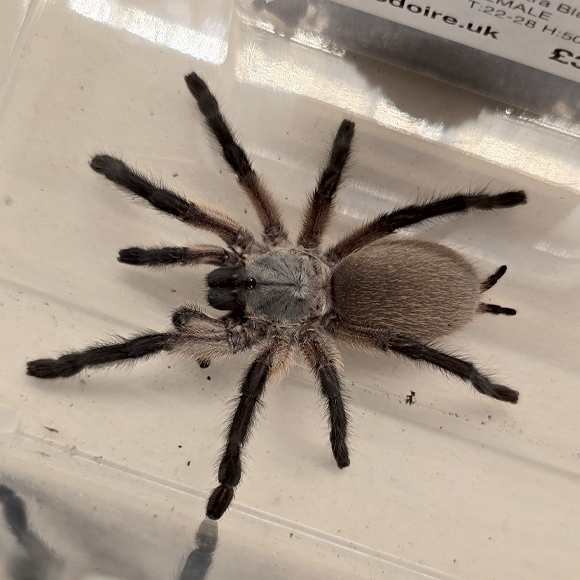
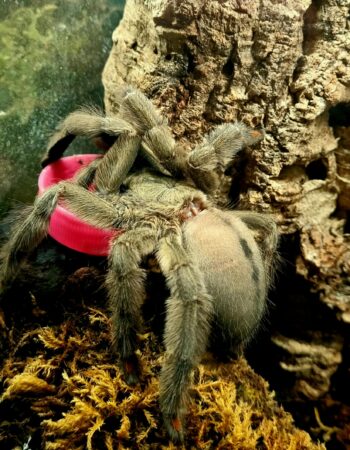
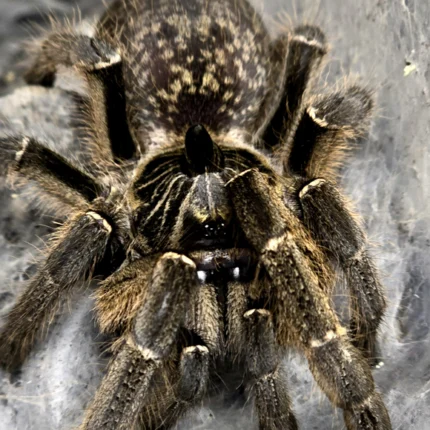
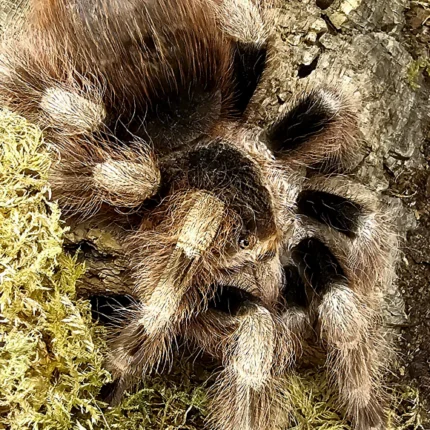
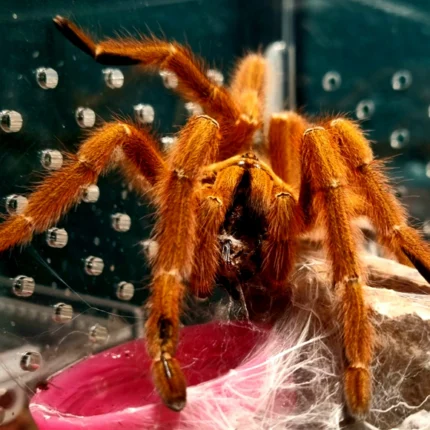
Monocentropus balfouri, the blue beauty from Socotra Island, tends to approach life with its own unique flair. Forget pigeon-holing this species—they’re neither truly arboreal nor fossorial, but somewhere pleasingly in-between. In captivity, expect both elaborate silk tunnels and a penchant for vertical exploration (often just to prove they can). Webbing is prolific: thick, luminous silks criss-cross every hide and anchor point, so even if the spider’s gone underground, you’ll see evidence of their creative urges everywhere.
They play well with others—at least sometimes—making advanced communal setups an intriguing (if unpredictable) option. Solitary keeping is certainly more forgiving, and recommended unless you’re seasoned and fond of spider soap operas. Females get impressively chunky, outliving males several times over, and will reward patient keepers with a decade or more of antics and occasional leg-waggling displays. Males, meanwhile, grow up quickly, wander, mature, and then fade away much as one might expect from their reputation.
Care-wise, aim for 22–26°C, moderate humidity (50–65%), and almost obsessive attention to ventilation. Despite their love for humidity bumps, a stuffy enclosure is a proper no-no. With their medium growth rate and robust feeding response, they’re as much art project as animal—watch out for those lightning pounces at feeding time. Calm handling is best left to the theoretical: they’re swift and defensive, always more inclined to vanish into a silken barricade than make friends with your hand.
If you’re after a species where the webs are sometimes more visible than the spider and drama occasionally comes in the form of DIY home makeovers rather than direct confrontation, M. balfouri won’t disappoint. A colourful challenge for anyone looking to level up from beginner species, but one that quietly rewards patience, proper setup, and a good sense of humour.
Only logged in customers who have purchased this product may leave a review.
Species breeding reference
Breeding Notes
M. balfouri is one of the few tarantulas with a reputation for successful breeding both solo and communally, but don’t mistake that for simplicity. Breeding is much more forgiving than most African species, but a cool head, close supervision, and a well-prepped female are still key. Pairings can be peaceful or tense, sacs can be plentiful or frustratingly absent—best tackled by experienced hands, not first-time breeders.
Wild Breeding Season
There’s no solid wild observation to pin down the breeding season, but their home turf on Socotra has a hot, arid climate with short, wetter periods between May and December. Captive results have cropped up at different times of year, so there’s probably some wiggle room rather than a strict window.
Wild Environmental Triggers
Rainfall or post-wet spells likely play a part in wild breedings, with a bit more humidity and maybe some seasonal cooling after the searing hottest months. These shifts would nudge mature females to get broody in their natural scrubby hideouts.
Native Climate Context
Monocentropus balfouri is right at home with Socotra’s toasty days (around 22–26°C for most of the year), moderate humidity, and occasional bursts of rain—think dry with the odd humid spike, not swampy. There’s more rain in May and from October onwards, but it never really gets cold.
Captive Breeding Window
Enthusiasts have had success year-round, but pairing at the tail end of a mild moist spell (mirroring autumn or spring at home) seems to work well. Boost humidity slightly for a few weeks before pairing, then let it taper off after introductions.
Pre-pairing Conditioning
Give your female a steady diet and keep her enclosure warm and lightly humid—about 60–65% for a bit. Some keepers gently overflow the water dish every so often, but don’t let things get soggy. She should be well-fed, freshly moulted, and settled in her burrow.
Male Introduction Guidance
This species is famously less aggressive towards males than most, but don’t get cocky. Introduce the male in the evening with plenty of anchor points for webbing. Leave both spiders undisturbed and supervise closely at first. Having tongs at the ready is always wise in case things turn sour.
Female Readiness Signs
A receptive female should be plump, calm, and will often sit out in the open or near her burrow entrance, sometimes tweaking her webbing. Males will readily approach and drum if she’s up for it. If the female is skittish or snappy, she’s probably not keen yet.
Post-pairing Conditions
Once mating’s done, keep things warm and let humidity drop back to drier baseline levels. A nice, peaceful enclosure helps—minimal disturbance and plenty of time to relax. Make sure she’s got a full belly and a good, private sanctuary.
Sac Timeline
Reports vary, but females can drop a sac anywhere from 4 to 12 weeks after pairing (often on the shorter side if conditions are just right). Expect a bit of a wait—it’s never clockwork with this lot.
Incubation Notes
Egg sacs are generally left with the female, who will mother her brood admirably. If you’re artificially incubating, aim for steady warmth and avoid damp conditions. Slings tend to cluster and share food in communal settings if you leave the sac with mum.
Expected Sling Count
Clutch sizes can be all over the place, but anywhere from 50 to 150 spiderlings is typical, with occasional reports of numbers outside that range. Communal groups can grow fast once they get going.
Risks and Cautions
While less murderously antisocial than other tarantulas, there’s always a risk of aggression or cannibalism if conditions aren’t spot on. Communal setups might seem tempting, but juvenile cannibalism is possible if food or space runs low. Males often don’t last long after doing the deed.
Evidence confidence: Medium
UK Market Insight
Neutral UK availability and pricing context for this exact Species record.
Species care guide
Monocentropus balfouri
Adult Size
12–15 cm diagonal leg span
Temperature
22–26°C
Humidity
50–65% RH
Temperament
M. balfouri are known for their independence and strong personalities. While not the angriest tarantula you’ll meet, they are fast, feisty and possess a stubborn streak that would make your nan proud. They’d much rather bolt into a tunnel or vanish into their fortress of silk than stand and fight, but don’t mistake their shyness for docility—these spiders will defend themselves if provoked and are quick on their feet. For all their beautiful appearance, handling is not recommended for obvious reasons: they simply don’t appreciate it (and you might lose them up your sleeve).
Defence
When feeling threatened, Monocentropus balfouri are all about flair: they retreat at lightning speed, barricade themselves with elaborate webs, or give you an impressive threat posture for your troubles. They don’t possess urticating hairs, so you won’t end up itchy—just startled! If cornered, they’ll stand their ground and may even bite, but with an attitude best described as 'leave me alone and no one gets hurt.' Respect their boundaries and you’ll enjoy their antics at a safe distance.
Visibility
These spiders are notorious for their secretive habits—think of them as the introverts of the hobby. Expect to see flashes of blue legs weaving webs or ambushing prey, especially around dusk, but they’ll happily vanish into their silk tunnels for days at a time. However, with a well-set enclosure, you’ll often catch glimpses of their artistry and tidying as they rearrange everything to their liking. While not out in the open 24/7, the web architecture and occasional leg-waggling make up for their sometimes bashful nature.
Experience Level
Monocentropus balfouri are best left to intermediate or advanced hobbyists, mostly due to their speed, defensive behaviour, and higher maintenance demands for perfecting humidity and ventilation. Beginners with their hearts set on this species should invest plenty of time in research (and perhaps some running shoes). Their communal potential is a draw for brave keepers, but solo specimens are more forgiving. If you’re looking to level up from your first tarantula, this is a fantastic next step—with a dash of respect and caution mixed in.
Webbing
If you love the look of artistically webbed enclosures, M. balfouri will not disappoint! They’re prolific silk producers—think of them as the Banksys of the spider world—spinning thick, luminous webs that snake across every corner, tunnel and hide. Webs serve multiple purposes: camouflage, protection, communication in communal groups, and even the odd kitchen for catching dinner. Don’t tidy up too often; their webs are essential to their sense of security and well-being.
Feeding
Monocentropus balfouri aren’t especially fussy eaters, so crickets, locusts, dubia roaches, and mealworms all make tasty menu options. Spiderlings love pre-killed or very small prey twice a week, while juveniles and adults can be offered live feeders once a week (or more if you’re keen on seeing some food aggression!). Don’t let leftover prey wander for days, as stress and risk of injury aren’t on the menu. Adults, especially females, have impressive feeding responses—watch those lightning-fast pounces! Overfeeding can cause obesity (and shorten lifespan), so keep meals in balance and allow them to 'fast' occasionally if their abdomens seem chunky. As with all tarantulas, clean water in a dish is a must—and watching a balfouri sip water is oddly adorable!
Enclosure Recommendations
A sturdy and escape-proof enclosure is essential, as M. balfouri are expert explorers—lid clips recommended! For a single adult, a 30 x 30 x 30cm glass or acrylic enclosure works well; for communal attempts, size up significantly and add multiple hides with many escape routes. Provide 10–15cm of dry, compacted substrate for burrowing (coco fibre, sandy soil mixes) and plenty of anchor points like cork bark, rocks and fake plants for webbing. A large, shallow water dish is a must, even in low humidity. Ventilation should be excellent, with cross and top airflow to prevent the enclosure from becoming stuffy. Don't forget a snug hide, or your balfouri may silk up the corners in protest! Resist the urge to clean webs unless absolutely needed—they are prized real estate for your spider.
Final Thoughts
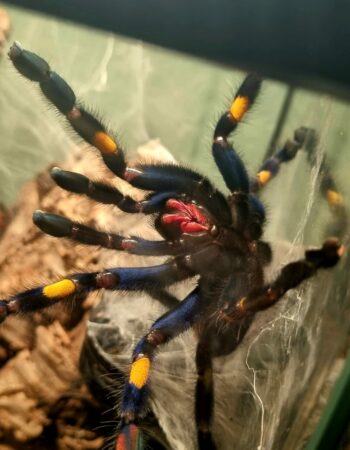
The Monocentropus balfouri is a true showpiece species—equal parts beauty, mystery, and drama. Their shimmering blue legs and communal possibilities have made them a fan-favourite, and their webbing antics turn any enclosure into a living piece of art. Don’t be fooled by their standoffish demeanour; their antics are endlessly watchable for the patient hobbyist. Challenges include their speed, potential for defensive behaviour, and higher enclosure requirements, but the rewards are utterly worth it. Watching a balfouri colony work together or even just a lone adult remodel their silk palace is a pleasure few spiders match. If you fancy something truly unique and don’t mind the odd game of hide and seek, you’ll love this charismatic species.
Species-specific FAQs are not available yet.

Reviews
There are no reviews yet.