

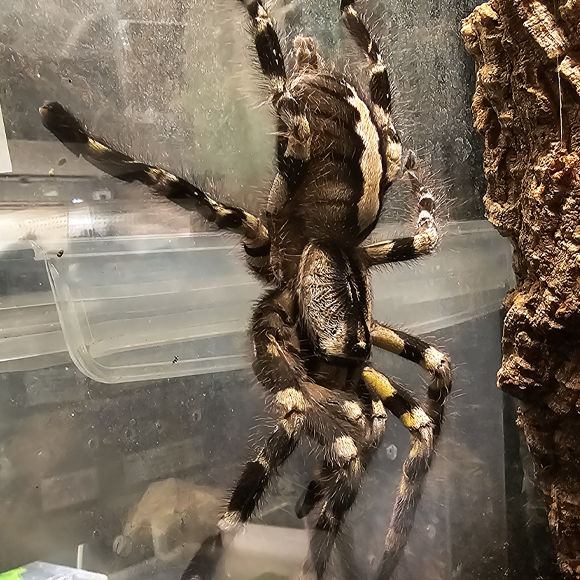
Poecilotheria regalis
Price range: £20.00 through £130.00
Expert at lurking unseen until dusk, then appears in a blur just as you’re tidying the enclosure. Not a fan of interruptions or unnecessary drama—webbing reflects current mood.
| Weight | 100 g |
|---|---|
| Dimensions | 16 × 16 × 16 cm |
Tell me when it is available
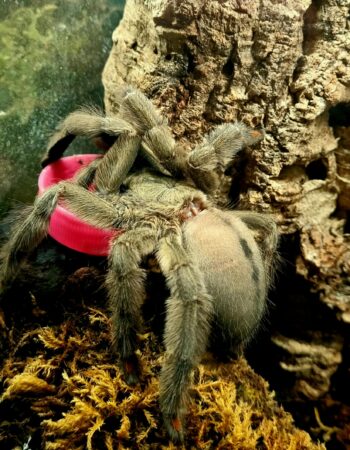
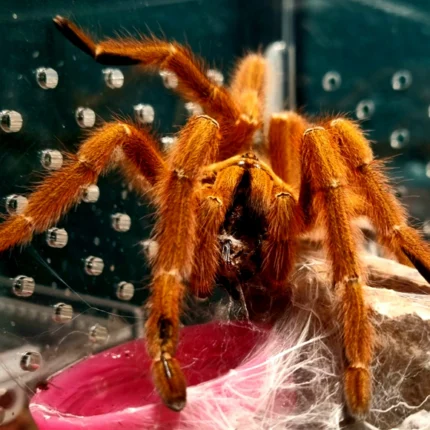
Poecilotheria regalis, sometimes referred to as the Indian Ornamental, is the quintessential arboreal tarantula for keepers who respect both speed and subtlety. Native to the forests of India and Sri Lanka, these spiders spend their days perched vertically on tree trunks or hiding in cork-bark retreats, toes just visible and ready for a bolt at Formula 1 pace. They’re champion web architects, favouring tunnels and silken retreats over grand constructions—if you see a stripey leg, consider yourself lucky.
Females reach 15–18cm in diagonal leg span and can live over a decade (provided you don’t suffer too much from jump-scares); males are slimmer and often don’t see their fifth birthday. Growth is rapid with good conditions, so don’t be stunned when your tiny sling outgrows its cup before you’ve finished your tea. Warm, well-ventilated enclosures with plenty of climbing space are a must—this isn’t a species that appreciates a ground-dwelling set-up. Keep humidity around 65–75% and temperatures 22–25°C, with a touch of extra warmth in winter if needed (but no tropical saunas, thank you).
P. regalis is best enjoyed as a ‘watch but don’t touch’ contender. They’ll flee rather than fight, but can deliver a medically significant bite if really pressed. Routine maintenance—shed removal, topping up water—needs a steady hand and sometimes a soft brush. Their evening escapades might just coincide with your hunt for a working torch, and they’re at their best when left to their vertical gymnastics. Not the species for the hands-on keeper or those seeking a consistently visible display, but for those who appreciate behaviour over bravado, regalis delivers.
Feed appropriately sized crickets, roaches or (for slings) flightless fruit flies, and do keep an eye out for abandoned dinners skulking in the webbing. As ever, remove old food and avoid overfeeding unless you want your spider looking more spherical than regal.
For anyone who enjoys a dry sense of humour, the occasional game of ‘spot the spider’, and the challenge of keeping an iconic old world tarantula, Poecilotheria regalis remains a longstanding favourite. Respect its speed, tweak the enclosure as needed, and it’ll reward you with glimpses of true arboreal elegance—plus the odd cardiovascular workout when it dashes for cover.
Only logged in customers who have purchased this product may leave a review.
Species breeding reference
Breeding Notes
P. regalis breeding requires sharp observation, good timing, and nerves of steel. With their speed and defensive edge, these aren’t a beginner’s project. Plan pairings to coincide with high humidity after a simulated rainy spell, give both tarantulas plenty of space and food, and keep a close watch. Sacs can be sizeable, but successful pairings aren’t guaranteed, so take a cautious and respectful approach. These remarkable spiders play by their own rules, so flexibility and patience are rewarded.
Wild Breeding Season
Most wild breeding from closely related species seems to align with post-monsoon periods when humidity is consistently high, so it’s likely P. regalis gets busy during or just after the wettest months, typically late summer into autumn in southern India.
Wild Environmental Triggers
Increased rainfall, warm and stable temperatures, and higher ambient humidity are likely triggers for breeding activity. The onset of the monsoon and the period just after give optimal moisture and cover for successful pairing and egg sac protection in the wild.
Native Climate Context
P. regalis comes from hot, humid forests of southern India where temperatures often hover in the mid-20s Celsius, with humidity ranging from 60% up to 85% and intense rain during the monsoon from May to November. The transition from the dry season to peak wet season marks a period of environmental abundance and would provide the natural cues for breeding.
Captive Breeding Window
Pairing attempts are most likely to succeed if timed with a simulated post-rainy season environment, so late summer to early autumn in the UK—roughly August through October—works well, provided conditions mimic increased enclosure humidity as would happen after the monsoon.
Pre-pairing Conditioning
Feed both spiders well and ensure the female is freshly moulted and properly hydrated. A slight uptick in enclosure humidity a couple of weeks before introductions may simulate natural triggers and help with receptivity. Avoid pairing if the female's colours are dull or she's looking too close to moult.
Male Introduction Guidance
Introduce the male into the female’s enclosure late in the day when activity levels rise. This species is quick, and introductions are risky—ensure plenty of vertical structure and space for the male to retreat. Keep a close eye: never rush and be ready with a long tool to separate them if things turn sour.
Female Readiness Signs
Females that are receptive may drum or stay visible near their retreat entrances, sometimes showing more tolerance of the male’s approach. A female that lunges, threatens, or doubles down on hiding isn’t ready.
Post-pairing Conditions
Once mating is observed, feed the female generously and keep enclosure humidity steady but not waterlogged. Withhold extra misting for a week or two, then gently boost humidity and offer deeper, undisturbed retreats to help her settle for sac production.
Sac Timeline
Egg sacs generally appear six to eight weeks after a successful pairing, but timing is variable. The female may hold off if conditions aren’t right, and sacs can sometimes be laid later than expected, so patience is key. Never disturb the female unduly during this window.
Incubation Notes
Females will usually tend the sac for up to eight weeks. If you choose to remove the sac for artificial incubation, wait at least 30 days but no longer than 40. Slings will reach first moult inside the sac; after that, they’re ready to be rehoused.
Expected Sling Count
Sac sizes tend to be in the 80 to 200 range, but some large, well-fed females may produce more. Not every sling will make it to second instar, so don’t expect a perfect count.
Risks and Cautions
These are fast, defensive spiders that won’t hesitate to defend themselves or their egg sac. Failed pairings can lead to cannibalism, so prior experience with pairing defensive arboreals is a must. Failed or dud sacs aren’t unusual; patience and careful observation help, but don’t expect every pairing to yield slings.
Evidence confidence: Medium
UK Market Insight
Neutral UK availability and pricing context for this exact Species record.
Species care guide
Poecilotheria regalis
Adult Size
15–18 cm diagonal leg span
Temperature
22–25°C
Humidity
65–75% RH
Temperament
Deceptively shy but quite capable of giving you a scare! Poecilotheria regalis prefers fleeing to fighting, vanishing into its web retreat at the first sign of movement. But if cornered or startled it’s blindingly quick—think Formula 1 spider with an attitude. Defensive displays aren’t common, but can happen when their patience (or tolerance of humans) runs out. This is not a spider for frequent disruptions or a heavy-handed approach. Enjoy from a distance!
Defence
Their preferred tactics are vanishing acts—bolting at warp speed or hiding in webbed retreats. If pushed, they may rear up and flash their undersides (with those fabulous warning stripes), signalling it’s time to back off. Unlike their New World cousins, Poecilotheria regalis doesn’t have urticating hairs; instead, it packs a medically significant bite that demands respect. Routine maintenance should always be done with care, and a soft brush can help guide your regal friend away from danger (yours and theirs).
Visibility
Most often you’ll spy just stripey legs hanging out from behind cork bark, but they do come out in the evening (when your torch batteries are dying) for a stretch or a snack. If their set-up allows, you’ll be treated to some spectacular climbing and webbing. Expect long periods of ‘Where is it?’ followed by unexpected photo opportunities when it’s parading up the glass. Not exactly a tarantula for round-the-clock display, but when you see them—they are breathtaking.
Experience Level
Due to their speed, occasional defensiveness and need for careful enclosure management, Poecilotheria regalis is best suited to keepers with intermediate to advanced experience. They’re certainly not for the faint of heart or someone new to tarantulas, but with a bit of respect and proper set-up, they’re manageable. The real joy comes from observing their behaviour and appreciating their dramatic patterns—no handling required (or recommended!).
Webbing
Not quite the silk factories of Avicularia or the carpet weavers of Chromatopelma, but they do produce a fair amount of web—especially in the corners of their arboreal mansions. They line their retreats with silk, sometimes building elaborate tunnels between bark slabs. This serves as both home and quick escape route. Webbing is a good sign your P. regalis feels safe; lack of web sometimes suggests it’s not happy with its décor—time to feng shui your spider’s pad!
Feeding
Slings thrive on pre-killed or tiny live crickets, flightless fruit flies, or even recently moulted roaches. As they grow, upgrade the menu to bigger crickets, Dubia roaches, or locusts—just stick to prey no larger than the spider’s abdomen for safety. Slings and juveniles should be fed twice a week, while adults do nicely on one or two good feeds per week. Poecilotheria regalis is a ferocious eater, sometimes tackling prey with dramatic aerial pounces. Don’t overfeed; a plump abdomen is normal but ballooning is bad. Always remove uneaten prey, especially before moulting, as these spiders loathe uninvited dinner guests during vulnerable moults. Bonus tip: feeding at dusk seems to match their natural hunting instincts and makes for more exciting feeding responses.
Enclosure Recommendations
Go tall rather than wide! Arboreal enclosures (30 x 30 x 45 cm minimum for adults) work well. Cork bark slabs leaned vertically, with anchor points for webbing, are a must. Add a solid water dish and about 5 cm of slightly moist substrate—coco fibre or a peat-based mix works well. Good cross-ventilation top and sides prevents condensation and mould, especially at higher humidity. Avoid cluttering the floor; provide open climbing space. For juveniles and slings, smaller vertically-oriented tanks or deli cups are perfect. Always secure the lid—P. regalis are Olympic escape artists! Grooming their home occasionally and giving them stable microclimates makes for a happy, visible spider.
Final Thoughts
Poecilotheria regalis is an unforgettable centrepiece for any seasoned keeper’s collection: stunning patterns, impressive size, and a display of natural arboreal behaviour rarely matched. They’re not ideal for those seeking a handleable pet or a spider that’ll mug for the camera, but if you love to watch natural behaviour and appreciate grace under silk, this is your species. The main challenge is managing their speed and enclosure tweaks—get that right, and they’re a pure joy (with a dash of adrenaline). Their conservation value only adds to their appeal, making every well-cared-for specimen a small win for the species. If you want beauty, drama and a touch of the wild in your home—look no further.
Species-specific guidance
Frequently Asked Questions
Is Poecilotheria regalis suitable for beginner tarantula keepers?
Poecilotheria regalis, or the Indian Ornamental, is best suited for intermediate to advanced keepers. Their incredible speed, occasional defensiveness, and need for carefully managed enclosures can be challenging for newer enthusiasts. They’re wonderful display spiders for those with some experience, but not ideal if you’re new to tarantulas.
What temperament can I expect from Poecilotheria regalis?
Poecilotheria regalis is generally shy, preferring to bolt and hide rather than display aggression. However, they can be very fast and may show defensive behaviour if cornered or harassed. Handling is not recommended—their speed and medically significant bite mean it’s better to enjoy their beauty from a safe distance. The Spoodoire does not endorse handling of any tarantula.
How large does an adult Poecilotheria regalis get?
Adult Poecilotheria regalis can reach an impressive 15–18 cm diagonal leg span, with females tending towards the upper end of that range. Males are usually slimmer and a bit smaller. Their size, combined with striking patterns, makes them an unforgettable centrepiece in any collection.
How quickly does Poecilotheria regalis grow?
This species has a medium-to-fast growth rate, especially during the sling and juvenile stages. With warmth and a steady diet, your tiny spiderling can quickly become a leggy juvenile in just a couple of years. They moult frequently when young, so be prepared for regular care and enclosure upgrades.
What is feeding like for Poecilotheria regalis?
Poecilotheria regalis is a voracious eater, often ambushing prey with dramatic leaps. Offer suitably sized insects like crickets or Dubia roaches—prey should be no bigger than the spider’s abdomen. Slings eat twice a week; adults once or twice. Remove uneaten prey, especially before moulting, as they dislike disturbances during this vulnerable time.
What humidity and moisture levels does Poecilotheria regalis need?
Aim for 65–75% humidity for Poecilotheria regalis. Keep substrate slightly moist and always provide a water dish. Daily misting is useful for slings, but avoid overdoing it—adequate cross-ventilation and letting the surface dry between mistings help prevent mould. Never let the enclosure become swampy; stable but not soggy is the goal.
What sort of enclosure is ideal for Poecilotheria regalis?
Poecilotheria regalis thrives in tall, vertically oriented enclosures, ideally 30 x 30 x 45 cm for adults. Include upright cork bark for climbing and webbing, along with a secure lid—they are escape artists. Provide good cross-ventilation and keep the substrate about 5 cm deep and slightly moist. Avoid floor clutter and focus on vertical climbing space.
How visible is Poecilotheria regalis in captivity?
Poecilotheria regalis spends much of its time tucked away in web retreats or behind cork bark, with just a glimpse of its distinctive legs. They do emerge in the evenings or at feeding time, providing great viewing opportunities. While not always on show, when visible, their patterns and arboreal antics are truly breathtaking.
Related products

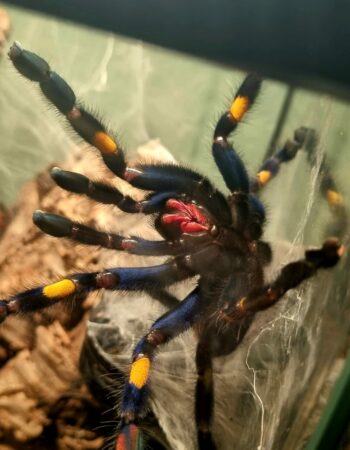
Phormingochilus hatihati
Phormingochilus hatihati is the definition of 'stunning but sassy'. Not only are they visually striking, with metallic sheens and elegant build, but they’re endlessly fascinating to observe—when they grace you with their presence. They’re not the easiest in the hobby, but their bold webbing, feeding…

Reviews
There are no reviews yet.