

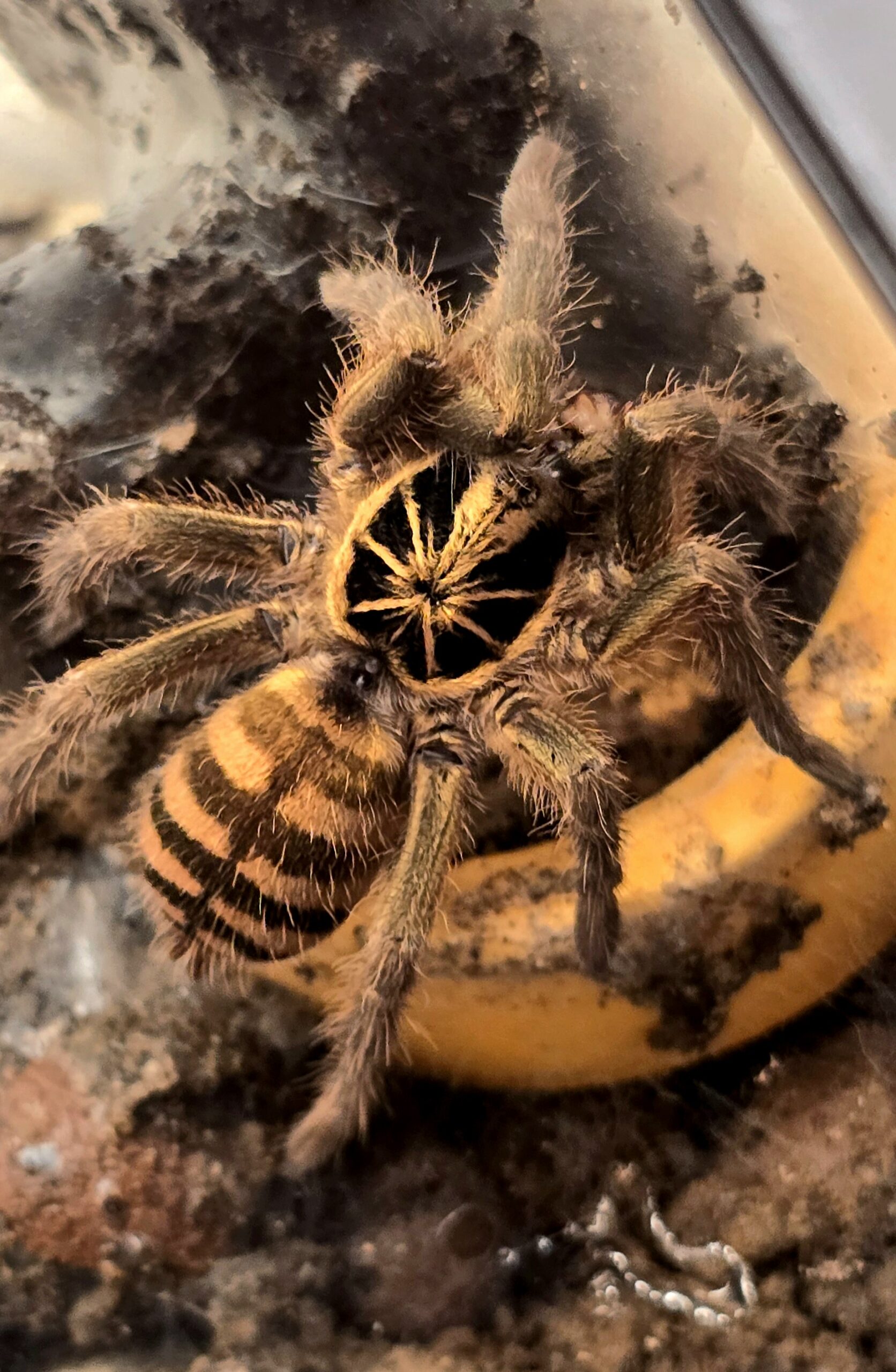
Neoholothele fasciaaurinigra
Price range: £70.00 through £520.00
Quick to vanish behind silk curtains, this one webs like it’s rehearsing for a minor home renovation show and only emerges when it’s convinced you aren’t paying attention.
Tell me when it is available
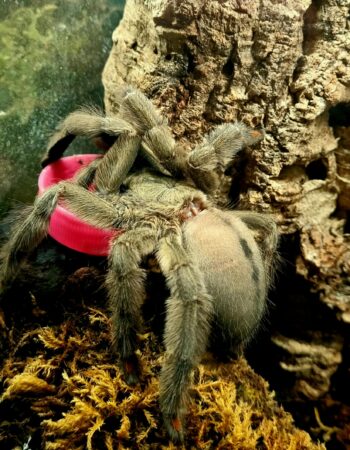
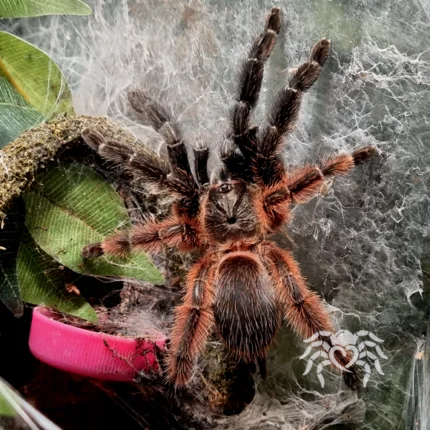
Neoholothele fasciaaurinigra has never been one to pick sides—far from committing to a fossorial or arboreal lifestyle, this Venezuelan-Colombian web artist mixes both with enthusiasm. In captivity, they’ll create silk curtains and tunnels at ground level, then climb up décor to continue their architectural efforts higher up. Give them cork bark, leaf litter, and the odd upright branch, and you’ll be rewarded with a network of silk as intricate as any London underground map.
Adults top out at a modest 7–8cm diagonal leg span, so their antics won’t take over the whole shelf. Females will keep you company for up to a decade, while males sprint through life a bit faster. Growth is steady—quick enough to keep you interested, slow enough that you won’t suddenly need a new enclosure every month. Temperatures between 22–26°C and humidity in the 70–80% range keep them chipper, though ventilation is key (no one enjoys mildew, least of all the spider).
Expect a spider more interested in vanishing behind web curtains than standing its ground. Defence means bolting into dense silk retreats, not tantrums. No urticating hairs, and biting is so rare it barely warrants a mention. Visibility isn’t bad for a semi-burrower, with regular appearances at dusk and, for the patient, a front-row seat to web maintenance antics.
This species is an intermediate choice—quick if startled, but never sulky or needlessly dramatic. Feeding is straightforward, and they rarely refuse a meal unless in pre-moult. Regular food and careful enclosure design keep both spider and keeper happy; just try not to knock over their latest webbing project as you poke about for uneaten crickets. In return, you’ll enjoy a genuinely interesting display species that rewards observation and rewards good husbandry.
Only logged in customers who have purchased this product may leave a review.
Species breeding reference
Breeding Notes
Neoholothele fasciaaurinigra has a growing reputation as a charismatic webber but remains something of a cautious project for breeders, mainly due to patchy data and variable success rates. With a cosy, humid, well-ventilated setup and a calm, chunky female, you’ll tick most boxes—but treat timing, pairing, and sac development as temperamental, not set in stone. A little patience and extra caution go a long way here.
Breeding information for this species is a bit thin on the ground, so this guidance is based on the best available reports, native climate clues, and sensible keeper caution.
Wild Breeding Season
Precise timing isn’t pinned down for this species, but coming from the tropics of northern South America, breeding likely aligns with the region’s wetter parts of the year when food and humidity are both on the up. In such environments, pronounced dry seasons are rare, so reproductive activity could spread across much of the calendar.
Wild Environmental Triggers
Increased rainfall, high humidity and stable warm temperatures seem to get things moving in nature, with plenty of leaf litter and cover to provide safe retreats for courtship and egg-laying. There’s no chilly winter reset here, just a rhythm of rain and abundance.
Native Climate Context
This species calls the tropical forests of Venezuela and Colombia home: always warm, always humid, and rarely dipping below 22°C even at night. You’re dealing with a spider that doesn’t expect true ‘seasons’, just cycles of more or less rain and plentiful cover.
Captive Breeding Window
Pairings are best attempted when your female is well-fed and settled, ideally synchronised with freshly moulted adults. There’s no need for brumation-like cool-downs, but some keepers have had luck nudging conditions slightly damper for a couple of weeks before introducing the male, echoing the natural ‘rainy’ period.
Pre-pairing Conditioning
Make sure your female is chunky, fully recovered from her last moult, and offered regular meals for several weeks prior. Slowly upping humidity by moistening more of the substrate may help simulate those natural tropical downpours and tip the balance in your favour.
Male Introduction Guidance
Introduce the male in the evening, when spiders are naturally more active. Offer him access to the female’s webbed retreat so he can pick up her scent cues, but stay close—there can be a bit of boisterous drumming and, at times, a quick dash for safety if she’s in a grump. Have a long tool or soft paintbrush ready to separate them if things go south. Multiple short introductions may give the best chance rather than one prolonged encounter.
Female Readiness Signs
A well-fed female with webbing activity, especially near her retreat, and no sign of premoult is what you want to see. Often she’ll show interest in the male’s courtship drumming rather than bolting or defensive posturing.
Post-pairing Conditions
Keep the enclosure warm and humid, with extra leaf litter or structure to let her feel secure. Limit disturbances and continue offering food until you spot preparatory webbing or reclusive behaviour. Don’t let things get soggy, but steady humidity seems key.
Sac Timeline
There’s little data specific to this species, but closely related Neoholothele and similar genera can lay a sac within 4–8 weeks following a successful pairing, especially if conditions remain stable and quiet.
Incubation Notes
Egg sacs are typically guarded fiercely in dense web retreats. Do not attempt to remove the sac for at least 3–4 weeks, unless you notice obvious issues. Humidity should be kept high but avoid stagnant air. Opening the sac prematurely often leads to disaster, so patience is your best friend.
Expected Sling Count
Hard numbers are lacking, but Neoholothele fasciaaurinigra likely produces moderate sacs, perhaps in the range of 30–80 slings, comparable to other small-to-medium web-building species from similar climates. Don’t expect the massive numbers you’d get from some New World terrestrials.
Risks and Cautions
Females can be moody during and after pairing—cannibalism is a real risk, especially if either spider is underfed or stressed. Males are rarely long-lived after maturity, so timing is critical. Some keepers report that this genus can be touchy about changes in humidity or overhandling during the sac period, so hands-off is the rule after pairing. Always treat these as intermediate projects rather than ideal first-time breeders.
Evidence confidence: Low
UK Market Insight
Neutral UK availability and pricing context for this exact Species record.
Species care guide
Neoholothele fasciaaurinigra
Adult Size
7–8cm diagonal leg span
Temperature
22–26°C; stable is best
Humidity
70–80% RH
Temperament
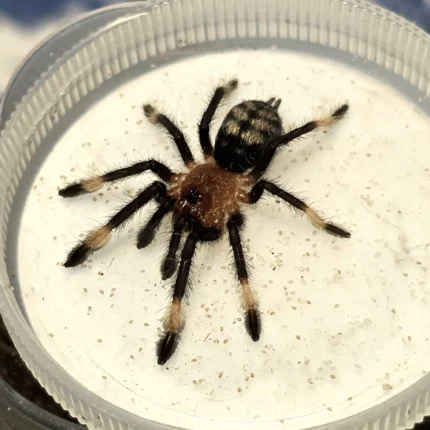
With blazing gold stripes and a cheeky attitude, Neoholothele fasciaaurinigra is more likely to leg it than to square up. Quick-footed and prone to fancy web retreats, they are rarely defensive, preferring to disappear into their silken fortifications at the first sign of disturbance. While their speed might surprise the uninitiated, aggression is rare. They’re happiest when left to plot their latest web improvements, and will only bolt if truly startled.
Defence
No urticating hairs, so no hairy surprises! Defence usually means diving into a silk tunnel or pulling a disappearing act behind curtains of web. While they may drum their legs in irritation if you really push your luck, biting is very rare and almost always avoidable with gentle, respectful husbandry. As always, be mindful during maintenance and try not to upend their lovely web masterpieces.
Visibility
Although not the most brazen spider on the block, Neoholothele fasciaaurinigra is much more visible than many fossorial species. You’ll often spot them tending their webs or peeking out from their lair, especially at dusk or after the lights go out (night-owl behaviour is their jam). If you arrange décor with a viewing window in mind, you’ll be rewarded with some wonderful natural behaviour and plenty of photo ops.
Experience Level
Solid choice for intermediate keepers wanting to graduate from true beginner spiders—fast bolters can spook the unprepared, but their care needs aren’t fussy. Patience and respect go a long way, and attentive hobbyists will quickly learn this spider’s rhythms and quirks. Not quite a ‘set and forget’ species, but not a nightmare either—ideal for anyone after something unusual without veering into the seriously spicy.
Webbing
Prepare to be impressed—these spiders are avid web architects! Their enclosures often become thick with silk ‘tunnels’, curtains, and even suspended platforms, making them a treat for those who love visually interesting set-ups. Webbing is their preferred tool for both predator evasion and prey capture, and you’ll regularly see new additions, renovations, and occasional demolitions. Be careful not to destroy their masterpieces during maintenance, or you might get the full ‘eight-legged stink eye’.
Feeding
Young slings will devour pre-killed pinhead crickets, fruit flies or chopped mealworms with gusto, and should be fed twice a week, removing any leftovers to avoid attracting pests. Juveniles and adults enjoy a varied diet of appropriately sized crickets, small roaches, or larvae every 7–10 days, adjusting frequency if you notice a chunky abdomen (they do appreciate a diet, unlike some of us). This species is usually an enthusiastic eater—the classic ‘web and wait’ tactic in action—so don’t be surprised to see lightning-fast pounces. Molt cycles may lead to fasting, so don’t panic if they turn up their noses at dinner now and then. The big mistake? Overfeeding or offering prey that’s too large. Keep it sensible and your spider will display all the feeding antics you could wish for!
Enclosure Recommendations
A well-ventilated plastic or glass enclosure around 20x20x25cm does nicely for adults—tall enough for some semi-arboreal climbing but not too huge to make finding your spider a Sherlockian task. Provide 5–8cm of moisture-retentive substrate such as fine topsoil or coco fibre, with a cork bark slab or upright piece to anchor webbing. Add some leaf litter and artificial plants for aesthetics and additional climbing or hiding options. Never skip the water dish. Lid ventilation and some side holes keep things fresh. Dazzling web structures are most impressive when there’s vertical décor, so pop in a branch or two. Keep any hides partly exposed if you want to see your resident web artist in action!
Final Thoughts
Neoholothele fasciaaurinigra is the spider equivalent of a hidden treasure—with vibrant stripes, dynamic webbing skills and endearing shyness, it’s a highlight for anyone after something more than a pet hole. The manageable size, moderate care requirements and fascinating behaviours make them a delight for any keeper ready for a faster-moving species. Their impressive webwork ensures there’s always something to admire, and those who take the time to mimic their wild home are rewarded with natural, captivating behaviour. A perfect choice for those looking to expand their collection with a species that’s out of the ordinary but not outrageously high-maintenance. Watch out, though—collecting these beauties can be just as addictive as biscuits with your tea!
Species-specific guidance
Frequently Asked Questions
Is Neoholothele fasciaaurinigra suitable for beginners?
Neoholothele fasciaaurinigra is best suited to intermediate keepers. While its husbandry requirements aren’t overly demanding, it is a fast-moving species that can bolt if startled, which might catch out true beginners. With a bit of patience and respect for its quick demeanour, it’s a fantastic next step for those looking to expand their spider experience.
What temperament and defence behaviours does Neoholothele fasciaaurinigra show?
Neoholothele fasciaaurinigra is generally shy and non-defensive. Rather than displaying aggression, it will usually dash for cover or vanish into its web tunnels when disturbed. It lacks urticating hairs, so you won’t get any itchy surprises. Biting is rare and easily avoided with gentle, sensible husbandry. The Spoodoire does not endorse handling of any tarantula.
How large does an adult Neoholothele fasciaaurinigra get?
Adult Neoholothele fasciaaurinigra are petite, reaching a diagonal leg span of 7–8cm. Females are a bit chunkier and live far longer, while males are more slender and mature faster. Their compact size makes them ideal for smaller, manageable enclosures without sacrificing big personality or visual interest.
How quickly does Neoholothele fasciaaurinigra grow?
Neoholothele fasciaaurinigra has a medium growth rate. Slings can grow rapidly, doubling in size within a year if kept warm and well-fed. Ultimate size and speed of maturity will vary, but you can expect regular progress without it being over in a blink. Food, temperature, and some individual stubbornness all play a part.
What is Neoholothele fasciaaurinigra like when it comes to feeding?
Neoholothele fasciaaurinigra is an enthusiastic eater, using the classic 'web and wait' hunting style. Slings will take pre-killed prey such as pinhead crickets or fruit flies, whilst juveniles and adults enjoy small crickets or roaches every week or so. Avoid overfeeding and remove uneaten food, especially during moults. Feeding response is lively—don’t be surprised by lightning-fast pounces!
How should humidity and moisture be managed for Neoholothele fasciaaurinigra?
This species prefers a humid environment, with 70–80% relative humidity and good ventilation. Moisten one side of the substrate and let the other stay drier, so the spider can choose. A shallow water dish is essential. Mist lightly every few days but don’t soak the enclosure—think damp jungle, not swamp. Good airflow helps prevent mould.
What enclosure setup suits Neoholothele fasciaaurinigra?
A ventilated enclosure about 20x20x25cm is ideal for adults, providing space for both semi-arboreal and fossorial habits. Use 5–8cm of moisture-retentive substrate, add cork bark or branches for webbing, and include leaf litter or artificial plants. Always provide a water dish, and ensure plenty of vertical décor for impressive web structures. Lid ventilation and side holes keep conditions fresh.
Does Neoholothele fasciaaurinigra climb or burrow more, and is it visible?
Neoholothele fasciaaurinigra is the ultimate all-rounder, frequently webbing up both ground and elevated surfaces. Expect intricate silk tunnels, curtains, and even platforms. While it isn’t the boldest spider, it’s visible far more often than most burrowers—especially at dusk or under low light. Arrange décor for a viewing window to enjoy its natural behaviours.

Reviews
There are no reviews yet.