

Breeding Notes
Neoholothele fasciaaurinigra
Bumblebee tarantula
Species-specific breeding guidance, seasonal context and practical caveats for experienced keepers.
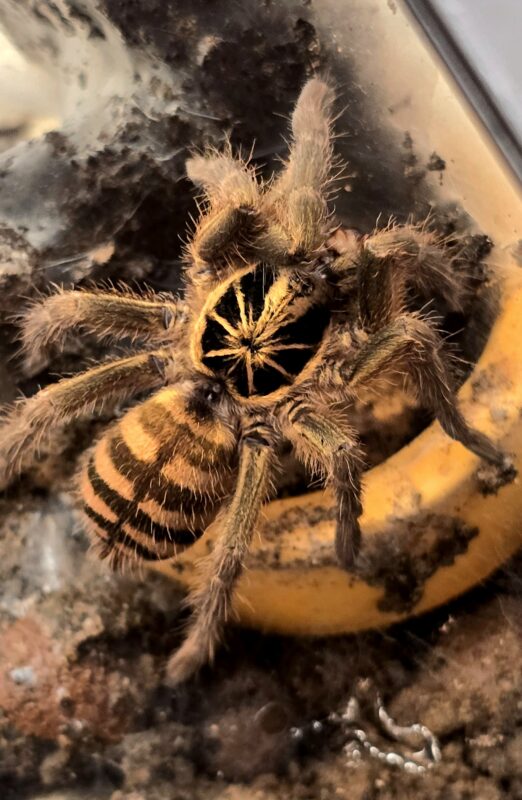
Species breeding reference
Breeding Notes
Neoholothele fasciaaurinigra has a growing reputation as a charismatic webber but remains something of a cautious project for breeders, mainly due to patchy data and variable success rates. With a cosy, humid, well-ventilated setup and a calm, chunky female, you’ll tick most boxes—but treat timing, pairing, and sac development as temperamental, not set in stone. A little patience and extra caution go a long way here.
Breeding information for this species is a bit thin on the ground, so this guidance is based on the best available reports, native climate clues, and sensible keeper caution.
Wild Breeding Season
Precise timing isn’t pinned down for this species, but coming from the tropics of northern South America, breeding likely aligns with the region’s wetter parts of the year when food and humidity are both on the up. In such environments, pronounced dry seasons are rare, so reproductive activity could spread across much of the calendar.
Wild Environmental Triggers
Increased rainfall, high humidity and stable warm temperatures seem to get things moving in nature, with plenty of leaf litter and cover to provide safe retreats for courtship and egg-laying. There’s no chilly winter reset here, just a rhythm of rain and abundance.
Native Climate Context
This species calls the tropical forests of Venezuela and Colombia home: always warm, always humid, and rarely dipping below 22°C even at night. You’re dealing with a spider that doesn’t expect true ‘seasons’, just cycles of more or less rain and plentiful cover.
Captive Breeding Window
Pairings are best attempted when your female is well-fed and settled, ideally synchronised with freshly moulted adults. There’s no need for brumation-like cool-downs, but some keepers have had luck nudging conditions slightly damper for a couple of weeks before introducing the male, echoing the natural ‘rainy’ period.
Pre-pairing Conditioning
Make sure your female is chunky, fully recovered from her last moult, and offered regular meals for several weeks prior. Slowly upping humidity by moistening more of the substrate may help simulate those natural tropical downpours and tip the balance in your favour.
Male Introduction Guidance
Introduce the male in the evening, when spiders are naturally more active. Offer him access to the female’s webbed retreat so he can pick up her scent cues, but stay close—there can be a bit of boisterous drumming and, at times, a quick dash for safety if she’s in a grump. Have a long tool or soft paintbrush ready to separate them if things go south. Multiple short introductions may give the best chance rather than one prolonged encounter.
Female Readiness Signs
A well-fed female with webbing activity, especially near her retreat, and no sign of premoult is what you want to see. Often she’ll show interest in the male’s courtship drumming rather than bolting or defensive posturing.
Post-pairing Conditions
Keep the enclosure warm and humid, with extra leaf litter or structure to let her feel secure. Limit disturbances and continue offering food until you spot preparatory webbing or reclusive behaviour. Don’t let things get soggy, but steady humidity seems key.
Sac Timeline
There’s little data specific to this species, but closely related Neoholothele and similar genera can lay a sac within 4–8 weeks following a successful pairing, especially if conditions remain stable and quiet.
Incubation Notes
Egg sacs are typically guarded fiercely in dense web retreats. Do not attempt to remove the sac for at least 3–4 weeks, unless you notice obvious issues. Humidity should be kept high but avoid stagnant air. Opening the sac prematurely often leads to disaster, so patience is your best friend.
Expected Sling Count
Hard numbers are lacking, but Neoholothele fasciaaurinigra likely produces moderate sacs, perhaps in the range of 30–80 slings, comparable to other small-to-medium web-building species from similar climates. Don’t expect the massive numbers you’d get from some New World terrestrials.
Risks and Cautions
Females can be moody during and after pairing—cannibalism is a real risk, especially if either spider is underfed or stressed. Males are rarely long-lived after maturity, so timing is critical. Some keepers report that this genus can be touchy about changes in humidity or overhandling during the sac period, so hands-off is the rule after pairing. Always treat these as intermediate projects rather than ideal first-time breeders.
Evidence confidence: Low