

Grammostola pulchra
Price range: £35.00 through £230.00
Rarely in a hurry, occasionally visible, and only spins webbing where strictly necessary—think of it as the minimalist’s answer to tarantula keeping.
| Weight | 60 g |
|---|---|
| Dimensions | 4 × 3 × 3 cm |
Tell me when it is available
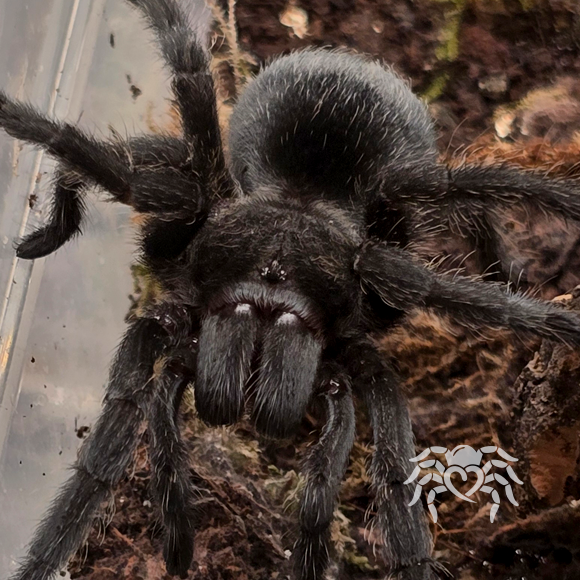
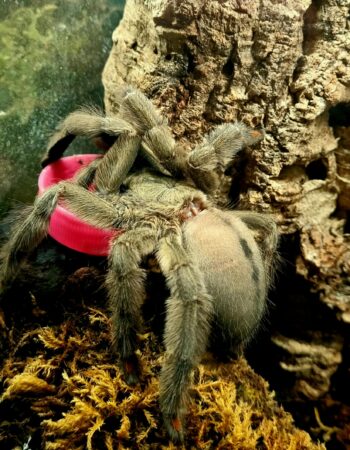
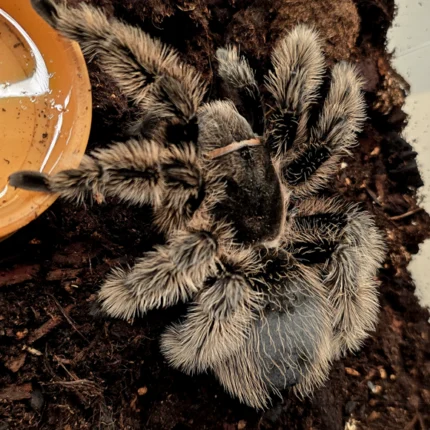
Grammostola pulchra, widely known as the Brazilian Black, is the tarantula hobby’s answer to a reliable old Volvo: solid, unflappable, and quietly handsome in an all-black suit. Native to southern Brazil and parts of Uruguay, these terrestrial spiders favour mild, gently fluctuating conditions—not the kinds prone to drama. Their idea of adventure is a slow stroll across the enclosure, perhaps after dusk or when you’re not peering too obviously.
Growing to a respectable 14–16 cm diagonal leg span, G. pulchra is more robust than the average house spider, though never a true giant. Females can outlive your average goldfish by several decades—occasional reports of 25 years aren’t unheard of, while males, true to tarantula form, do their bit in half the time (if that).
Growth is measured in glacial terms. Spiderlings may take the best part of a decade to reach adulthood, so patience is a virtue. The payoff is an adult spider with a velvety black appearance and a relaxed, gently inquisitive temperament. Their defensive displays are half-hearted at best—most would rather make a dignified retreat than kick up a fuss. Urticating hairs are possible but rarely weaponised unless unduly provoked, so a bit of respect and gentle maintenance habits go a long way. Handling is best left to theory; your spider won’t thank you for it, and neither will your nerves.
Enclosure-wise, floor space matters more than height. Offer 7–10 cm of moisture-retentive substrate—they’ll occasionally indulge in some light landscaping when the mood takes them. A snug hide, accessible water dish and decent cross-ventilation complete the setup. G. pulchra doesn’t appreciate jungle-like humidity; 55–65% does nicely, with slightly damper corners for juveniles. If your house is perennially chilly, a thermostatically controlled heat mat can be attached to one side—no oven roasting required.
Feeding isn’t a full-time job. As adults, a meal every 10–14 days will suffice, with G. pulchra showing little interest in gorging. They may go off their food while moulting or if they sense a cold snap incoming. Remove uneaten prey promptly—this is not a spider inclined towards midnight wrestling matches with crickets.
Visibility is, at last, a strong point. Mature pulchra are content to occupy the open, contentedly browsing their territory or simply loafing about. Juveniles are shyer, but grow bolder with age and time. Their webbing is functional rather than exuberant—just enough for the job, no more.
Overall, G. pulchra’s combination of gentle disposition, longevity, and practical tolerance to British household conditions make it a strong choice for the newcomer and still a reliable favourite for the more seasoned keeper. As always, slow doesn’t mean dull—every moult, subtle web and midnight stroll are well observed from the comfort of your armchair.
Only logged in customers who have purchased this product may leave a review.
Species breeding reference
Breeding Notes
Grammostola pulchra aren’t the hardest to breed but they aren’t foolproof either. Getting the right seasonal cues and a cooperative pair is your best bet, as is patience and attention to subtle changes in their behaviour. Success rates seem to improve with mature, well-rested females and a touch of seasonal fluctuation, so steady hands and realistic expectations go a long way. Lovely slings if you can get them—but don’t assume it’ll happen on your first go.
Wild Breeding Season
Wild Grammostola pulchra likely breed during the wetter, warmer months—think late spring into summer—when rainfall is high in southern Brazil and Uruguay. Exact months are uncertain without direct field studies, but the natural rainy season runs from late October to March.
Wild Environmental Triggers
In nature, seasonal rain and rising humidity seem to set the scene for romance, with spiders becoming noticeably more active and receptive once conditions are reliably damp and food is plentiful. A gentle rise in warmth, longer days, and an uptick in prey availability are all part of the script.
Native Climate Context
Grammostola pulchra comes from the subtropical south of Brazil and Uruguay, where the grasslands and forest edge see mild winters, warm summers, and a pronounced rainy season. Ambient temperatures typically range from 16 to 25°C across the year, with humidity sitting between 55–85% depending on month, peaking during the rainy season.
Captive Breeding Window
In the UK, the best shot at pairing is after a decent winter cooldown (down towards 18–20°C for a month or two) before gradually returning to mild warmth and slightly higher humidity in early spring. Aim to breed from February to April for conditions that echo their wild cycle.
Pre-pairing Conditioning
Prior to introductions, both the male and female should be well-fed and recently moulted. A slight seasonal cooling, followed by gradually rewarming and increased misting, sets the scene. Don’t let things get soggy; just ease up on dryness and keep the diet rich and varied throughout.
Male Introduction Guidance
Introduce the male after dusk, with plenty of webbing and hiding spots for both. Keep a divider handy if he seems too bold or she too uninterested. Stay present to monitor, as G. pulchra females can be unpredictable. If there’s leg drumming and mutual curiosity, let things play out, but separate at the first sign of hostility—you rarely get a second chance if it goes wrong.
Female Readiness Signs
Look for a freshly moulted and heavily webbed female who stays out in the open more than usual, occasionally tapping or responding to vibrations. A receptive female tends to tolerate the male’s approach and may vibrate or shift position to acknowledge him.
Post-pairing Conditions
Once mating is done, keep the female in a quiet, stable environment with slightly raised humidity and regular feeding. Avoid cleaning or disturbing her enclosure too much, as this can disrupt her instinct to build a sac. Reduce frequency of feeding after a few weeks but keep water topped up.
Sac Timeline
Egg sacs are usually produced within 6 to 12 weeks of a successful pairing, though reports do vary. Don’t panic if she takes her time—there’s quite a range, so patience is key.
Incubation Notes
Once the sac is laid, leave it with the female for at least 4 weeks if she remains attentive. You can artificially incubate after this point, but many keepers prefer to let her do the work barring obvious issues. Eggs typically develop into mobile slings in 6–8 weeks from laying, provided humidity and temperature remain steady.
Expected Sling Count
Egg sacs reportedly range from 100 to 250 spiderlings, though individual sacs can run smaller or larger—expect surprises, and never count your pulchras before they hatch.
Risks and Cautions
Females may eat the male during introductions, especially if under-conditioned or disturbed. False pregnancies and dud sacs aren’t uncommon, and egg retention can happen with sudden changes in humidity or temperature. Good records and close monitoring are essential; successful breeding isn’t a given, even for experienced hands.
Evidence confidence: Medium
UK Market Insight
Neutral UK availability and pricing context for this exact Species record.
Species care guide
Grammostola pulchra
Adult Size
14–16 cm diagonal leg span
Temperature
21–24°C
Humidity
55–65% RH
Temperament
If tarantulas had a zen master, it’d be Grammostola pulchra. They are famously docile, slow-moving and unlikely to start drama. Sudden movements may elicit a gentle retreat, but generally, they’re the picture of poise. Even their defensive displays are almost apologetic; give them respect, and they’ll give you peaceful cohabitation. While their friendly reputation tempts many toward handling, it’s not recommended—spiders prefer to do their brooding from the safety of the ground (and we like our spiders uninjured). Expect fascinating behaviour, a laid-back attitude and all the charisma of a midnight ninja.
Defence
The Brazilian Black isn’t much for theatrics, preferring to walk away from trouble rather than put on a display. If particularly annoyed, they may give a little threat pose or flick a few urticating hairs, but compared to their feistier cousins, they’re almost polite in their protests. Urticating hairs can irritate sensitive skin and eyes, so avoid direct contact and always wash hands after maintenance. Don’t press your luck—every spider, however gentle, deserves your respect and a wide berth during cleaning and rehousing.
Visibility
G. pulchra are a delight for keepers who enjoy actually seeing their eight-legged pets. Adults especially are often on display, lounging outside their hides and occasionally taking slow strolls around their kingdom. Juveniles and slings may be a bit shyer, but usually lose much of this bashfulness with age and security. Active mostly at night but not averse to the occasional daytime appearance (particularly at feeding time), they’re one of the best ‘show spiders’—black velvet legs gleaming under the light, striking regal poses for admiring fans.
Experience Level
Thanks to their hardy nature, calm temperament and forgiving care requirements, Grammostola pulchra is an ideal starter species for new keepers looking to dip their toes (responsibly!) into tarantula world. Intermediate and advanced hobbyists love them for their looks, reliability and sheer presence—everyone’s collection deserves that velvety black touch. Just remember their slow pace might try the patience of those expecting lightning-fast growth, but their gentle disposition more than makes up for any wait.
Webbing
While not exactly spiders gone wild with the silk, G. pulchra do produce modest webbing—often lining the entrance to their hide, making a soft mat for lounging, or giving their food the occasional safety net. You won’t see thick layers of silk festooning every corner, but what they do spin serves a clear purpose. It’s a subtle but fascinating behaviour to watch, especially when they reline their lair with exquisite precision. Webbing is usually more pronounced in slings, becoming less dramatic as they age.
Feeding
Start your slings off with pre-killed or pinhead crickets, fruit flies or similarly dainty morsels once per week. Juveniles graduate to larger crickets, mealworms or small roaches—once every 7–10 days. Adults can be fed once every 10–14 days, keeping in mind that this species doesn’t have the world’s biggest appetite. Avoid overfeeding; they tend toward the plush side with too much food. Remove uneaten prey after 24 hours to maintain good hygiene and avoid night-time intruders (looking at you, rogue crickets). Pulchra may go on hunger strikes during moult or colder months—don’t panic, just check that water’s always available and leave them be. Watching that careful, slow feeding response is half the fun—no wrestling, no drama, just a leisurely gourmet meal.
Enclosure Recommendations
Provide your Grammostola pulchra with a terrarium offering at least three times the spider’s leg span in floor space and enough height to discourage climbing but not risk injury from falls (15–25 cm high is perfect for adults). Use 7–10 cm of moisture-retentive substrate (coco fibre, soil or a mix does nicely), giving them the option to dig if they’re feeling industrious. Add a sturdy hide (half flowerpots or cork bark work brilliantly) and a wide, shallow water bowl that’s easy to clean. Ventilation is essential: cross-flow or mesh tops work well, but watch for excessive drying. Decorations are entirely optional—your spider will appreciate the effort, even if it quietly ignores them. Regular spot cleaning and water bowl checks are the secret to long-term success.
Final Thoughts
Grammostola pulchra is a hobby legend and for good reason. Hardy, beautiful and easygoing, this is a spider that rewards patience with decades of gentle companionship and regular, regal display. Their slow growth may frustrate sprinters, but those willing to invest time will be rewarded with one of the smoothest, most visually striking tarantulas available. Stunning velvety black looks? Check. Relaxed personality? Absolutely. Ideal for the first-timer but still a prized possession for seasoned hobbyists. Just remember, slow doesn’t mean boring—every meal, moult and night-time stroll is a pleasure to watch. If you want a spider that will outlast your houseplants and only judge you silently from afar, the Brazilian Black is the one.
Species-specific FAQs are not available yet.
Related products

Reviews
There are no reviews yet.