

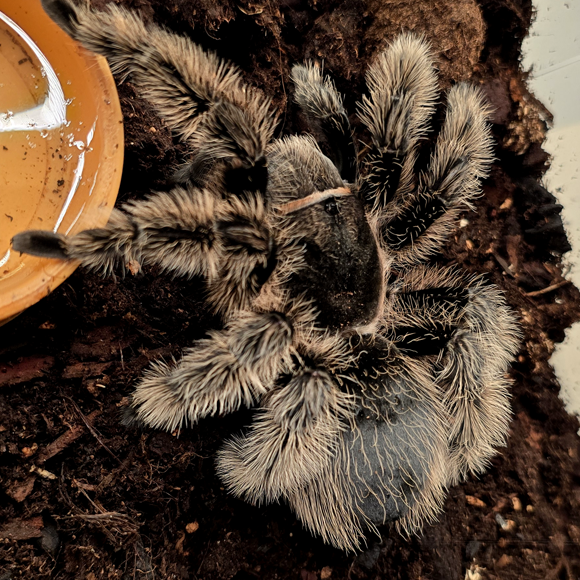
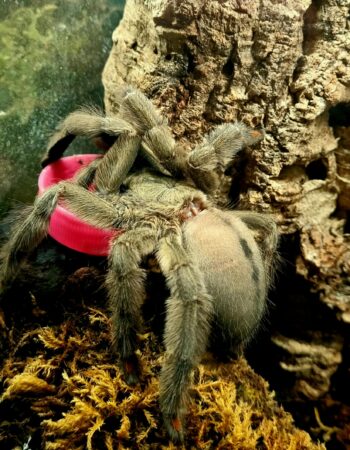
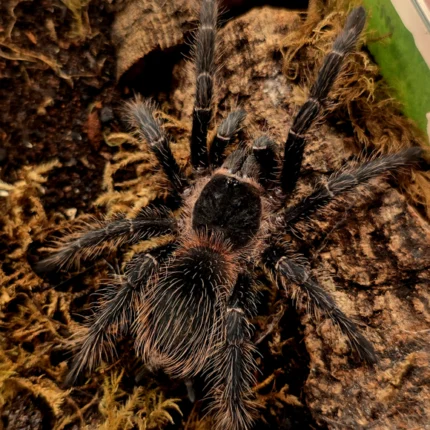
Tlitocatl albopilosus (Curly Hair) Adult Female
£50.00
Tliltocatl albopilosus is a calm, fluffy New World tarantula loved for its curly appearance, hardy nature, and relaxed personality.
| Weight | 200 g |
|---|---|
| Dimensions | 13 × 10 × 9 cm |
| Size | Adult Female (approx. 6″) |
| Sex: | Female |
| Life Stage | Adult |
| Temp. | 22-28 |
| Geography | Nicaragua/Honduras |
| Modus vivendi | Terrestrial |
Out of stock
Tell me when it is available
Only logged in customers who have purchased this product may leave a review.
UK Market Insight
Neutral UK availability and pricing context for this exact Species record.
Species care guide
Tliltocatl albopilosus
Adult Size
12–15 cm diagonal leg span
Temperature
21–24°C
Humidity
50–65% RH
Temperament
With a charmingly placid reputation, Curly Hairs are one of the hobby’s true sweethearts. They rarely bolt, deliver the hairy stare when annoyed, and are more likely to turn their back on drama than make a scene. Slings and juveniles can be a tad skittish but soon grow out of it. Occasional flinging of hairs happens if you push your luck—but overall, this species is a pleasure to keep and watch, provided you let them rule their domain in peace.
Defence
Their go-to move when annoyed is to show you their back and, if necessary, kick up a modest cloud of urticating hairs from their abdomen. These tiny barbed bristles are best avoided—while they’re not launching a full-scale war, irritation to skin or eyes is not much fun. Give them space, use tools for maintenance, and everyone gets along nicely. Bites are extremely rare and typically a result of extreme provocation.
Visibility
Curly Hairs are wonderfully visible for a terrestrial tarantula. Given a secure hide, they’ll often lounge in plain sight, surveying their realm or chin-deep in substrate redecorating efforts. They’re active mostly at night or during quiet hours, but don’t be surprised to find yours front and centre even when the lights are on. In short: a display species that actually shows up for its own show.
Experience Level
Few tarantulas are kinder to new keepers than the Curly Hair. Their forgiving temperament, straightforward care needs, and robust health make them an ideal starter species. However, seasoned keepers enjoy their personality just as much. As long as you’re not aiming for a high-maintenance diva, this species will fit beautifully into most collections.
Webbing
While not industrial webbers like Avicularia or OBTs, Curly Hairs do put down enough web to claim their territory and line their burrows or hides. Expect a bit of web matting across their substrate, around entrances, and sometimes artistically draped over their water dish (for reasons known only to tarantulas). Watch for increased webbing before a moult—it’s usually a sign of an imminent costume change.
Feeding
Young slings do well on pre-killed or tiny live prey—think pinhead crickets, fruit flies, or baby roaches. Feed every 4–7 days, increasing prey size as the tarantula grows. Juveniles move up to small crickets or dubia roaches, taking meals every 7–10 days. Adults thrive on a steady diet of adult crickets, locusts, or dubia roaches, offered every 10–14 days (they’re not gluttons, after all). Curly Hairs have a healthy appetite, but don’t overfeed—an overly round abdomen is charming but unhealthy. Remove uneaten prey after 24 hours and never feed during or just after a moult, as their new skin is tender. Mistakes to avoid: feeding wild-caught insects and unnecessary fattening—this tarantula is more tortoise than hare when it comes to metabolism.
Enclosure Recommendations
A 30x30x30cm enclosure suits an adult nicely—think sturdy glass, secure plastic, or a well-ventilated acrylic tank. Ventilation is key: cross-vent holes high and low prevent a stagnant, stuffy home. Use 10–15cm of loose substrate (coco fibre, topsoil or a mix), which is deep enough for a shallow burrow. Add a hide (cork bark or half flowerpot—nothing fancy) and a shallow water dish. Avoid high drops and sharp decor—Curly Hairs are not known for graceful landings. Keep clutter to a minimum and make maintenance easy. For slings, smaller containers with suitable hides work best until they earn their big-girl (or boy) enclosure.
Final Thoughts
The Curly Hair is the tarantula world’s equivalent of a reliable hatchback with fluffy seat covers—robust, low-maintenance, and surprisingly loveable! Their gentle nature, frequent visibility, and gorgeous looks (those curly hairs really are something) make them a fantastic choice for keepers of all levels. Their ‘beginner-friendly’ reputation is hard-earned, but don’t underestimate their charm—they’ve hooked many a seasoned collector. If you fancy a tarantula with personality, forgivable quirks, and a high cuddle-factor (visually, not physically), this species will quickly become one of your favourites. The only real challenge? Not adopting a half dozen more.
Species-specific FAQs are not available yet.
Related products

Reviews
There are no reviews yet.