

Breeding Notes
Pamphobeteus sp. “machala”
Machala Purple Bloom Tarantula
Also known as: Machala tarantula, Purple Bloom tarantula
Species-specific breeding guidance, seasonal context and practical caveats for experienced keepers.
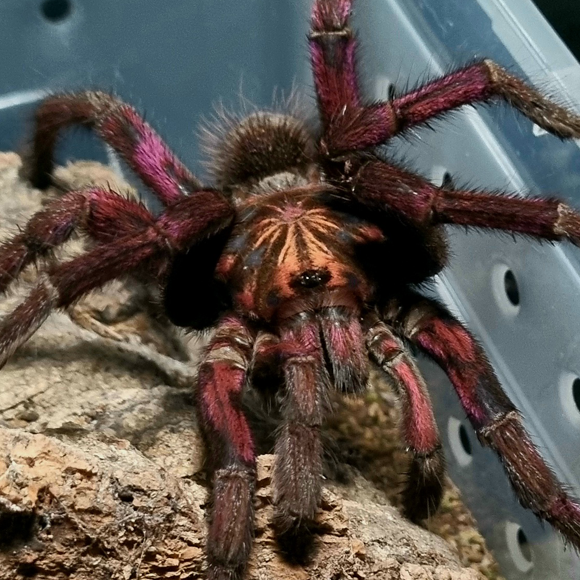
Species breeding reference
Breeding Notes
Pamphobeteus sp. 'machala' breeding is still a bit of a frontier. Reliable info is sparse, so you’ll be leaning heavily on weather cues, genus experience, and a lot of patience. Treat every pairing as an experiment, and don’t expect guaranteed results. Only attempt this project if you’re stout-hearted, have solid tarantula experience, and a backup plan for a surprise sackful of spiderlings.
Breeding information for this species is a bit thin on the ground, so this guidance is based on the best available reports, native climate clues, and sensible keeper caution.
Wild Breeding Season
Exact timing is unconfirmed for Pamphobeteus sp. “machala.” As a South American rainforest native, breeding in the wild likely coincides with wetter months or transitional periods when humidity peaks and conditions are lush. Close relatives are often reported to breed as rains pick up, but without concrete field data, treat this as cautious inference.
Wild Environmental Triggers
Seasonal rains and high humidity seem to play a part in triggering natural reproductive behaviour, with females most receptive during or just after periods of intense rainfall. Consistent warmth and dense ground cover would round out the formula.
Native Climate Context
Hailing from the tropical forests of Ecuador and Peru, these spiders experience steady warm temperatures year-round, with dramatic seasonal swings in rainfall. The habitat is humid, with high rainfall from March through May and again in October and November.
Captive Breeding Window
For captive breeding attempts, mimic the seasonal shift into wetter conditions, ideally just after a mature female has completed a solid molt. Early spring or autumn can work, but focus more on environmental cues than calendar dates.
Pre-pairing Conditioning
Feed both spiders up well and provide extra humidity for a few weeks before pairing. A cooling period isn’t strictly needed, but a bump in moisture leading up seems to get females more receptive based on genus experience. Let them both settle after their last molts – patience pays off with this lot.
Male Introduction Guidance
Introduce the male into the female’s enclosure during the evening. Both spiders should be well fed to help stave off any cannibalistic urges. Supervise with a barrier ready—Pamphobeteus can be unpredictable, and males often need a quick retreat.
Female Readiness Signs
A freshly molted, well-fed female is your best bet. She may web more than usual around her den, and sometimes leaves a few new scrapes on the surface. Receptivity can be hit and miss, so don’t push it if she stays reclusive or seems agitated.
Post-pairing Conditions
Keep conditions nice and humid, but don’t go swampy—crank up airflow so the air stays fresh. Minimal disturbance is key. Keep feeding the female but avoid overdoing it, as a gravid female may lose her appetite anyway.
Sac Timeline
Egg sac timing is sketchy for Pamphobeteus sp. “machala”, but for closely related species, expect a sac about 4–8 weeks after pairing if things go well. There are big swings in reports, so don’t worry if yours takes a little longer.
Incubation Notes
Once the female produces an egg sac, she’ll often guard it fiercely. If planning to pull the sac for artificial incubation, wait at least three weeks, keeping conditions humid (but not wet) and stable. Watch for mold if artificial, and don’t let the little ones dry out.
Expected Sling Count
Reports for similar Pamphobeteus species range from 100 to over 200 spiderlings per sac, but numbers for 'machala' specifically are not pinned down. Be ready for a surprise – it rarely seems to be a small clutch.
Risks and Cautions
Females can be touchy, and cannibalism is always a risk. Avoid pairing with freshly molted or clearly unreceptive females. Some keepers report successful sac production followed by female or egg sac eating – stress and disturbance likely don’t help. Patience and careful, hands-off management are vital for any success with this genus.
Evidence confidence: Low