

Breeding Notes
Harpactira namaquensis
Species-specific breeding guidance, seasonal context and practical caveats for experienced keepers.
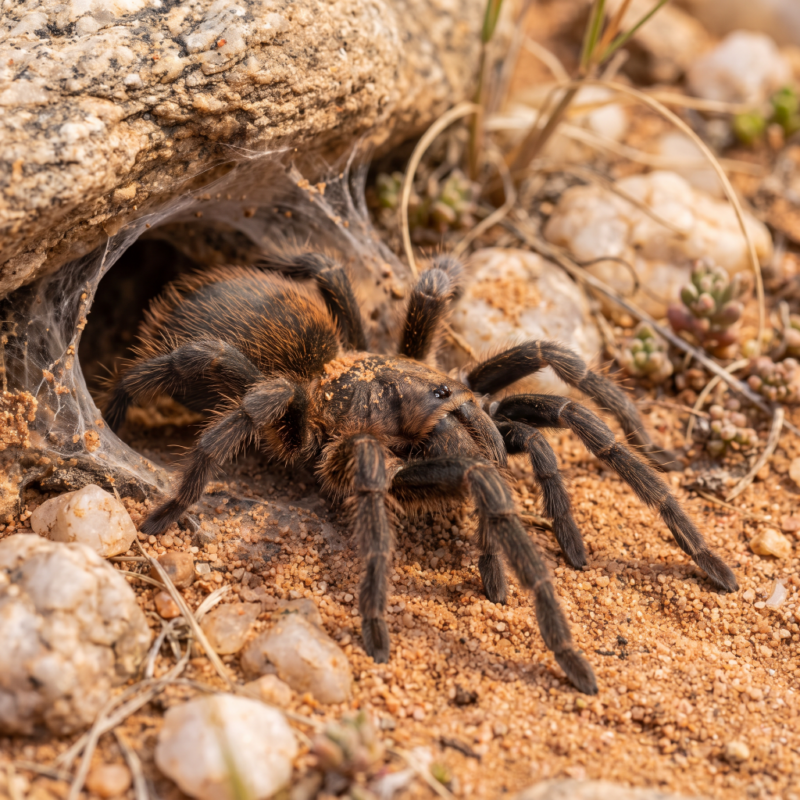
Species breeding reference
Breeding Notes
Breeding H. namaquensis is no walk in the park, mostly suited to keepers with solid experience and patience to work with shy, burrowing types from dry climates. With little in the way of firm captive reports, most advice here comes from observing close kin and matching native conditions—think spring warmth, a touch of rain, but nothing soggy. Pair cautiously, watch for trouble, and don’t expect a quick turnaround from pairing to slings. The result, if successful, is a handful of rugged little diggers—but getting there is strictly for those who appreciate a challenge and don’t mind a bit of guesswork along the way.
Breeding information for this species is a bit thin on the ground, so this guidance is based on the best available reports, native climate clues, and sensible keeper caution.
Wild Breeding Season
Precise wild breeding seasonality for Harpactira namaquensis hasn’t been formally documented, but considering its native Namaqualand roots, most activity likely links to the region’s spring and early summer—when temperature and humidity become a touch milder than the harshest dry months.
Wild Environmental Triggers
Breeding in the wild is probably nudged along by subtle increases in humidity after rare seasonal rains, moderate night-time cooling, and a general uptick in insect activity. These slightly gentler seasonal shifts tend to coincide with the end of the region’s dry winter.
Native Climate Context
Coming from southern Namibia and north-western South Africa, H. namaquensis puts up with hot, dry days and brisk, chilly nights for much of the year, with bursts of more forgiving conditions in the spring and early summer. This arid climate fosters hardy, burrowing behaviour and quick responses to short windows of improved conditions.
Captive Breeding Window
Best results seem to come from pairing attempts during the early part of the Southern Hemisphere’s spring, which you can replicate with a gentle rise in temperature and a very modest humidity bump—never sodden, just enough to hint at wetter times.
Pre-pairing Conditioning
Females should be well-fed and freshly moulted before pairing is considered. You’ll want to slightly increase feeding and perhaps introduce a tiny bit of extra moisture one to two weeks beforehand, but keep things mostly dry and airy. Too much humidity is a bigger risk than too little.
Male Introduction Guidance
Introduce the male in the evening when both spiders are most active. Keeping part of the enclosure partitioned allows you to monitor reactions safely. Gentle coaxing with a brush can work, but always be ready to separate them if the female seems agitated. Leaving the male overnight is high risk—supervise every interaction.
Female Readiness Signs
A receptive female requires a plump, hydrated appearance, regular activity at burrow entrances (especially after a moult), clear webbing around her lair, and no signs of pre-moult.
Post-pairing Conditions
Maintain mostly dry substrate and stable temperatures, with just a hint of extra humidity for a week or two after a successful pairing. Keep her well-fed and stress-free. Avoid heavy disturbances or enclosure changes after mating.
Sac Timeline
No confirmed records for exact sac timing in captivity, but you’re likely looking at a period of 6–10 weeks before an eggsac appears, judged roughly by close relatives. Treat this as a rough estimate and monitor her for signs of eggsac production.
Incubation Notes
Leave the eggsac with the female for the first few weeks if she isn’t disturbed. If artificial incubation becomes necessary, keep conditions moderately dry, as excessive moisture risks mould. Airflow is crucial. Check for spiderlings after 5–7 weeks, but handle with caution—these spiders are prone to stress.
Expected Sling Count
Eggsac yield is uncertain but probably moderate—around 40–80 slings per sac, judging by genus patterns rather than hard data. Prepare for the possibility of fewer or a bit more, but don’t expect big numbers like you might with larger baboons.
Risks and Cautions
Mismatched humidity is a notable risk—these spiders abhor soggy conditions, and overdoing the moisture leads to disaster fast. H. namaquensis can be secretive and skittish, so slow, careful introductions are crucial. Cannibalism is always a danger, particularly if the female is under-fed or moulting. Only experienced, patient breeders should attempt this species, and always have a backup plan for failed pairings.
Evidence confidence: Low