

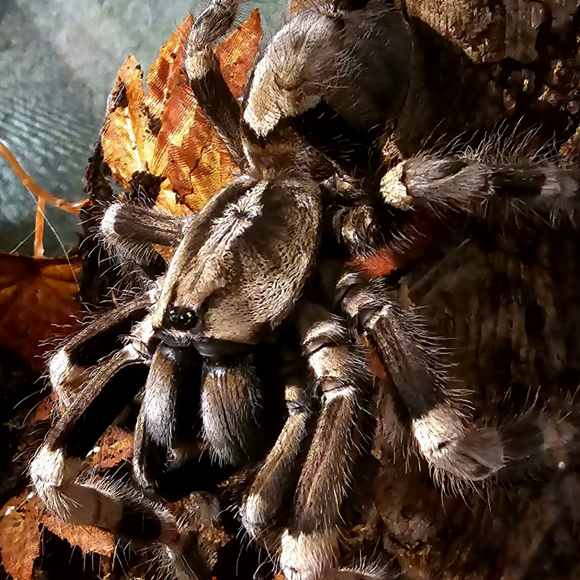
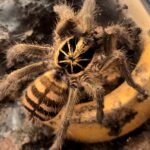
Poecilotheria miranda
Price range: £20.00 through £120.00
Never misses a meal unless plotting a moult, and reliably lurks upside-down just when you’re certain it’s vanished entirely.
Tell me when it is available
Poecilotheria miranda is the sort of spider that makes you rethink how many vertical surfaces your enclosure actually needs. A true arboreal—think “gravity is optional”—this species will make full use of every inch of bark, cork tube, or glass you provide. Originating from northeast India’s forested hills, it’s famed for elegant climbing, occasional acrobatics and the occasional heart-starting sprint when you open the lid a fraction too far.
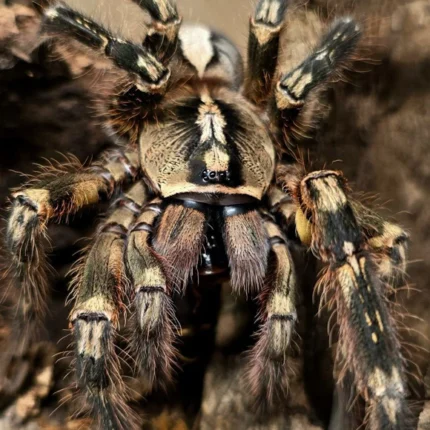
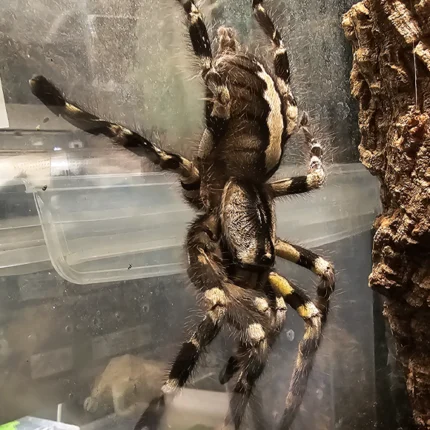
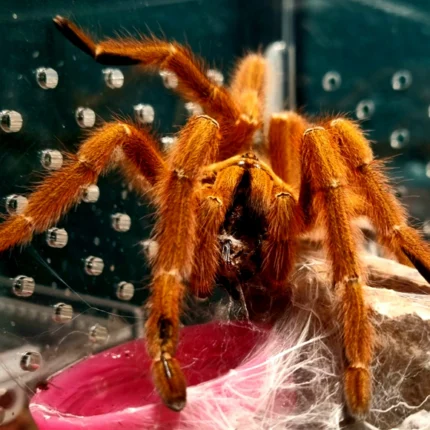
Adult females reach a respectable 16–18cm diagonal leg span, with males slightly more willowy and fleeting. The classic Poecilotheria contrast of black, cream, and subtle purple means they’re a first-rate display animal—if by display you’re happy for your spider to hang upside-down in full view one night, and then vanish Houdini-style for a week. Their lifespan is another classic Poec: females can push 12–15 years if you keep the basics right, while males, well, tend to live fast, moult once, and not stick around.
Temperature-wise, they appreciate a range of 22–26°C, tolerating mild drops overnight but not much enthusiasm for the cold, so a gentle mat or heated room is sometimes in order. Humidity matters—65–75% RH, with a mix of moist and dry substrate, a well-placed water bowl, and very much not a swamp. Good cross-ventilation is essential, as stagnant air and soggy conditions spell trouble.
This isn’t a spider for the impatient or the easily startled; their movement is quick, their defences mostly involve Olympic-calibre escaping, and while not especially aggressive, you’d be wise to let them be come cleaning time. Webbing tends to be on the minimalist side: expect a functional, slightly artistic retreat, not a Halloween window display.
Feeding is straightforward: slings enjoy crickets or roach nymphs two or three times weekly, adults are content with a weekly larger meal. Feeding response is solid, but do watch for fasting before moults (and remove leftovers unless you fancy introducing mould).
A tall and secure enclosure, 30x30x45cm minimum for adults, with vertical retreats and open space, works well. Keep décor functional—enough for climbing, but not a full forest. Lids must stay properly latched: if any spider is going to teach you what “araneid parkour” really means, it’ll be a Poecilotheria.
P. miranda offers a display-worthy, active and sharp-witted presence, but really isn’t one for first-time keepers. If you respect their quirks and demands, you’ll have an eye-catching tree-dweller to keep you on your toes—and make you double-check the lock, just in case.
Only logged in customers who have purchased this product may leave a review.
Species breeding reference
Breeding Notes
Poecilotheria miranda isn’t the easiest spider to breed, mainly because of their speed, strong defensive behaviour, and need for careful climate cues. Matching captive conditions to that first flush of summer humidity seems to help nudge both parties in the right direction. With patience, good prep, and a cautious hand, success is possible, but this species is best left to experienced keepers familiar with advanced arboreal breeding. Expect unpredictable moments and always keep safety and spider welfare first.
Wild Breeding Season
Reliable field data on wild breeding season is thin, but with their home climate swinging from dry to monsoon, breeding likely coincides with the onset or peak of the rainy season, when conditions are nice and humid.
Wild Environmental Triggers
Heavy summer rains and a noticeable boost in humidity mark the breeding period in the wild. The jump from dry to wet season often gets things going for this species, encouraging mating and sac production.
Native Climate Context
Poecilotheria miranda calls the humid, subtropical forests of northeast India home. Temperatures hover between 20–30°C year-round, but the real action happens when the monsoon floods in, raising humidity and soaking the landscape for weeks at a time. There's a dry patch most winters, but nothing truly cold.
Captive Breeding Window
Best chance in captivity is to pair after a cool-to-warm transition, raising humidity to mimic that first burst of the wet season. Late spring into early summer pairs well with the species’ natural climate, so aim to introduce mates before or as you start boosting humidity.
Pre-pairing Conditioning
Feed both spiders up well before attempting introductions and keep environmental stress low. A subtle increase in misting or a heavier water bowl schedule can prep your female for breeding by signalling more humid times ahead.
Male Introduction Guidance
Introduce the male during evening hours when both spiders are active. Give him plenty of web or hiding spots to retreat if things go south. Don't rush—let them take their time approaching each other. Supervise closely as Poecilotheria are quick and can be a bit feisty.
Female Readiness Signs
A well-fed, freshly moulted female who’s webbing more than usual and appears settled is likely to be receptive. Still, Poecs can be unpredictable, so patience and a backup plan for the male are key.
Post-pairing Conditions
Keep humidity up after a successful pairing, with warm stable temps and minimal disturbance. Offer the female good hides and keep her well fed, backing off any major enclosure cleaning or moves. Resist the urge to peek too often; let her settle in peace.
Sac Timeline
There’s not much species-specific data, but across the genus, females may lay a sac 4–8 weeks after mating, depending on season and temperature. Incubation tends to run another 6–8 weeks before spiderlings emerge if conditions are right.
Incubation Notes
Leave the egg sac with the female if you’re confident in her behaviour; Poecilotheria females can be decent mums if undisturbed. If you’re concerned, pulling the sac around day 30–35 for artificial incubation is an option—humidity is your friend, but don’t go overboard. Keep it damp but not dripping, with gentle airflow.
Expected Sling Count
Genus reports are wide; expect anywhere from 80 to over 150 spiderlings per sac in good conditions, though numbers can vary dramatically with Poecs.
Risks and Cautions
Pairing Poecs is always a bit of a rodeo—both speed and aggression are possible on either side. Cannibalism of the male is a real risk. Females stressed by environment or handling may eat the sac. Smooth introductions and low disturbance are vital. Beginners should steer clear unless they’ve already tackled easier arboreal species, as things can turn sharply in a blink.
Evidence confidence: Medium
UK Market Insight
Neutral UK availability and pricing context for this exact Species record.
Species care guide
Poecilotheria miranda
Adult Size
16–18 cm diagonal leg span
Temperature
22–26°C
Humidity
65–75% RH
Temperament
While not the psycho of the Poecilotheria world, P. miranda isn’t exactly Mr Calm either. They’re lightning fast, suspiciously clever, and much prefer flight to fight—usually darting into their hide at the slightest vibration. They rarely display aggression without significant provocation but can get twitchy if hemmed in or disturbed. They’re best admired, not annoyed, and make fantastic pets for those who enjoy watching rather than interacting. Quick on their feet and rarely predictable, they’re the Tarantino of tarantulas: always keeping you on your toes.
Defence
P. miranda relies mainly on speed and intimidation rather than actual aggression. When threatened, their first move is usually to bolt for cover. If pressed, they may display a defensive pose—fangs bared, front legs raised in classic Poecilotheria style. They do not have urticating hairs, so they won’t be flicking itching powder about like their New World cousins. Caution is advised during enclosure maintenance, as a startled specimen can launch itself faster than a startled keeper!
Visibility
Visibility with P. miranda is generally high for an arboreal tarantula. Slings and juveniles might spend a bit more time hidden, but adults are often seen lounging out in the open on bark or glass, especially in the evenings. With their unique habit of chilling upside-down, you’ll often catch a glimpse—or get a heart-stopping surprise—when they decide to cruise around the enclosure. Their dramatic postures and striking colours make them top-tier display spiders, provided you give them a comfortable and secure setup.
Experience Level
Not a beginner’s tarantula, P. miranda requires hobbyists to have some prior experience with speedy, arboreal spiders. Their fast movement, need for precise environmental conditions, and defensive tendencies can challenge newer keepers. Intermediate to advanced hobbyists, especially those with prior Poecilotheria or Old World experience, will appreciate their quirks and beauty. Successful care hinges on steady nerves, patience, and a healthy respect for those long, speedy legs!
Webbing
P. miranda doesn’t web like a GBB having a sticky-themed party, but it certainly uses silk to its advantage. Expect to see a lightly decorated retreat—usually within a cork tube or behind some bark—and a scatter of webbing to shore up chosen hiding spots. Their webbing serves as both a tripwire for prey and a warning system for looming keepers. While not blanket webbers, their judicious use of silk means you’ll always have a bit of artistry on show, just don’t expect a full-blown hammock across the branches.
Feeding
Slings enjoy a diet of appropriately-sized crickets, roach nymphs, or even confused fruit flies if very tiny. Feed slings 2–3 times per week, providing prey no bigger than the spider’s body. Juveniles and adults happily chow down on larger crickets, dubia roaches, locusts, or the occasional mealworm (as a treat, not a staple—no tarantula wants to be a mealworm addict). Adults can be fed once every 7–10 days. Poecilotheria have a solid feeding response, often launching impressive stealth attacks from their hides. Watch for pre-moult fasting and always remove uneaten food after 24 hours to prevent stress or accidental injury. Resist the urge to overfeed; rotund tarantulas may moult poorly or become lazy. Keep it sensible, and your spider will reward you with healthy growth and ninja-like feeding displays.
Enclosure Recommendations
For adults, use a tall, secure terrarium (minimum 30x30x45 cm) to accommodate their arboreal lifestyle. Glass or acrylic enclosures with excellent cross-ventilation are preferred to prevent humidity from reaching rainforest levels. Substrate should be 5–8 cm of coco fibre or similar, kept partially moist. Vertical cork bark, tubes, or branched wood are essential, providing ready-made retreats and climbing space. Offer a mossy area for humidity, plus a sturdy, shallow water dish (yes, even for climbers!). Avoid overcrowding with décor—give your spider some open runway space for those midnight sprints! Keep escape-proof lids firmly latched; Poecilotheria are the Houdinis of the tarantula world.
Final Thoughts
Poecilotheria miranda combines jaw-dropping looks, fascinating behaviour, and enough attitude to keep even seasoned keepers awake at night. Their climbing antics and bold patterns make them a top choice for display, but they are not for the faint-hearted. The species' fast movement and heightened sensitivity mean they are best suited for intermediate or advanced keepers, not those drawn in by pretty pictures alone. With patience, respect, and a bit of healthy fear, you’ll be rewarded with one of the most captivating tree-dwellers in the hobby—a true marvel, and a living reminder of why you double-check every enclosure lid!
Species-specific FAQs are not available yet.
Related products

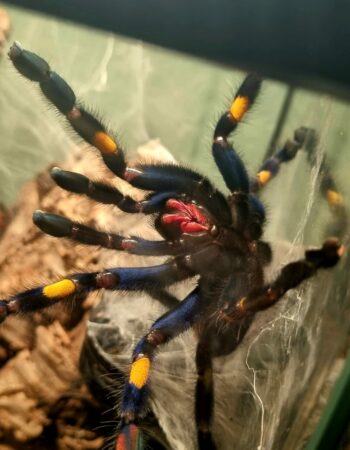
Phormingochilus hatihati
Phormingochilus hatihati is the definition of 'stunning but sassy'. Not only are they visually striking, with metallic sheens and elegant build, but they’re endlessly fascinating to observe—when they grace you with their presence. They’re not the easiest in the hobby, but their bold webbing, feeding…

Reviews
There are no reviews yet.