

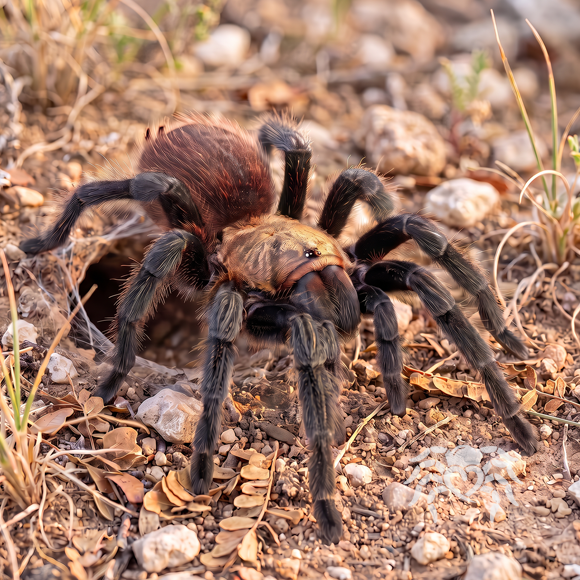
Origin
Aphonopelma anax hails from the dry, warm stretches of southern Texas and parts of northern Mexico. This splendid New World tarantula finds its home in scrublands, grasslands, and semi-desert environments, usually lurking in self-dug burrows or taking over abandoned rodent hideouts. The conditions are often hot and arid, with daytime temperatures over 30°C, but their burrowed life keeps them cool and safe. These cheery chaps have adapted splendidly to the seasonally dry climate; don't be surprised if your spider is happiest with things a bit on the toasty side.
Adult Size
Adult size is nothing to sniff at for an A. anax. Females regularly top out at 12–15 cm in diagonal leg span, while males may run slightly lankier but remain a bit smaller overall. The body shape is chunky, featuring that iconic 'big brown spider' look. Growth can be slow, so don’t be shocked if yours seems to be stuck in 'mini' mode for ages. Patience pays off, especially when those fuzzy kneecaps finally reach their prime.
Lifestyle
Aphonopelma anax is an archetypal terrestrial burrower. In captivity, they do best when offered a good depth of loose substrate, which they’ll gleefully rearrange — bringing a touch of interior design to their home. While not terribly athletic climbers, they’re ground-huggers at heart, preferring to dig, lounge, and occasionally show up to make you wonder if they’re still in there. Don't expect a gymnast, but you'll get a solid, dependable house-spider (in the best possible way).
Lifespan
If you want a long-term companion, female Aphonopelma anax can live 20–25 years, with some hardcore hobbyists reporting even longer. Males, the hapless fellows, tend to bow out after 5–7 years, maturing faster and usually succumbing within a year or so of their ultimate moult. The contrast is stark, so if you’re hoping for a spiderly soulmate, best opt for a lass.
Growth Rate
A. anax is well-known for its slow growth, sometimes testing the patience of even the most dedicated keeper. Slings and juveniles will take years to reach full size, and environmental factors like temperature and feeding schedule can influence the pace. Warmer temps and regular meals can help, but you’ll still be in it for the long haul. It’s all about anticipation!
Temperament
If you want a tarantula with the bedside manners of Mary Poppins, A. anax is your spider. Docile, calm, and famously unfazed, they're not known for speed or defensiveness. Most will freeze or retreat when disturbed, rather than bolt or throw a tantrum. However, each spider is an individual, so don’t poke your luck — and remember, handling is best avoided for their sake and yours.
Temperature
A. anax isn't fussy but prefers a warm environment. Ideal temperatures sit around 21–24°C, though brief fluctuations between 18–27°C are generally tolerated. In the British climate, room temperature is often sufficient — just keep your spider away from cold draughts and damp cellars. If your house turns chilly in winter, a gentle heat mat on the side (never underneath) of the enclosure can help, but always monitor with a reliable thermometer to avoid cooking your spider. No need for the Bahamas, just a comfy, steady climate.
Humidity
Aphonopelma anax enjoys a drier setup, with 50–65% relative humidity being perfect. Overly soggy substrate is a no-no, as this species is accustomed to arid conditions. A well-ventilated enclosure will help prevent stagnant air and mould. Pop in a shallow water dish for hydrating emergencies, and let the rest of the enclosure dry out between light mistings (if any). Sparse, reasonable humidity is key for keeping these Texans happy.
Visibility
This is an ‘occasional cameo’ species for sure. Slings and juveniles will spend plenty of time in their burrows, but adults, especially well-settled ones, might grace the entrance for a bit of people-watching. Activity peaks in the evening and at night. Not the most outgoing of tarantulas, but patience is rewarded with the odd leggy appearance and those satisfying excavation projects.
Webbing
Webbing is present, but usually restrained compared to arboreal or 'fossorial-webber' types. Expect to see a cosy silk mat around the burrow entrance and perhaps some reinforcement along tunnel walls. They won’t cocoon the enclosure, but their modest silkwork is always comforting — think of it as their version of home improvement.
Feeding
Aphonopelma anax isn’t a glutton, but it’s not a fussy eater, either. Slings thrive on pre-killed pinhead crickets or appropriately sized roaches. Juveniles will accept larger prey such as small crickets, mealworms, or dubia roaches. Adults enjoy a hearty medium to large cricket every week or so. Feeding frequency should be higher for slings (2–3 times weekly), moderate for juveniles (once a week), and less frequent for adults (every 7–10 days). Overfeeding can cause plumpness, but they tolerate the odd fasting period, especially before a moult. Avoid leaving uneaten prey in the enclosure for long — it’s not a buffet. Slow growth means slow changes, so don’t panic if they're not looping round the food bowl every night.
Enclosure Recommendations
Provide a secure, well-ventilated enclosure with at least 3–4 times the spider’s leg span in floor space. Height isn’t important; focus on usable land area. Aphonopelma anax appreciates a solid 10–15 cm of loose, diggable substrate (coir or soil are ideal). Add a cork bark or ceramic hide, and always include a shallow water dish. Good cross-ventilation is crucial — avoid stuffy setups. Decorations are optional, but some foliage (fake or real) makes it homier. Ensure any enclosure opens from the side or top to minimise disturbance. As champion excavators, check for substrate collapse regularly, but let your spider play Bob the Builder.
Experience Level
Aphonopelma anax is a textbook beginner species — hardy, slow, and forgiving of newbie missteps. They’re also appreciated by long-term hobbyists who want a low-key, charismatic spider to round out their collection. If you’re after a reliable, low-maintenance tarantula that’ll be with you longer than your average pet, look no further.
Final Thoughts
Aphonopelma anax is an absolute classic for keepers wanting longevity and a laid-back spider with minimal drama. Their slow pace, gentle disposition, and tolerance to minor husbandry errors make them ideal for both newcomers and seasoned enthusiasts. They won’t win any webbing contests or acrobatic awards, but they more than make up for it in stoic charm. Watching them methodically re-design their burrow is half the fun. If you fancy a spider that’ll stick around for decades, possibly even becoming a family heirloom, A. anax deserves a spot on your shelf.
Community Species Gallery
Approved photos submitted by registered Spoodoire users.
No community images have been approved for this species yet.
Submit Your Photo
Log in to submit a photo for this species.