

Species Care Guide
Brachypelma hamorii
Mexican red-knee tarantula
Also known as: Mexican red knee, Mexican redknee
Last updated: June 29, 2026
Buy this species
Origin
Brachypelma hamorii hails from the Pacific coast of western Mexico, particularly in the states of Colima, Jalisco and Michoacán. These spiders inhabit dry, scrubland and semi-arid tropical forests where they make themselves at home in burrows among rocky outcrops or under logs. The local climate is warm most of the year, with a pronounced dry season and a relatively short wet season. Habitat destruction is sadly a threat in the wild, making these beautiful spiders far more common on the enthusiast’s shelves than in their natural digs.
Adult Size
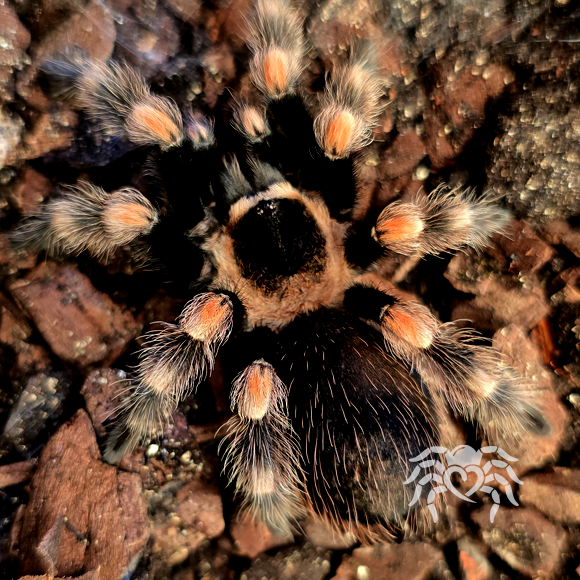
Adult Brachypelma hamorii average 12–15 cm in diagonal leg span, with females typically being bulkier and larger than their more fleeting male counterparts. Males are generally leggier but less robust, and—like a tragic soap opera—rarely live to a ripe old age. If you’re after a display spider with manageable size and striking colour, this species’ pumpkin-and-ebony ensemble never disappoints.
Lifestyle
Firmly terrestrial, B. hamorii spend their days lounging in burrows or underbits of decor rather than scaling glass or spinning grand aerial masterpieces. In captivity, they’re as chill as a spider can get, often seen perched at the entrance of their burrow or slowly plotting their next stroll around the enclosure. They might redecorate with a little earth-moving or occasional webbing, but don’t expect them to build skyscrapers—they’re more bungalow types.
Lifespan
Females are the longevity champs, living an impressive 15 to 25 years in captivity when properly cared for. Males, on the other hand, are the heartbreakers of the tarantula world, typically surviving only 5 to 7 years and usually just a year or so after their mature moult. Regular feeding, good hydration and stable conditions help your girls live long and drama-free, while males are best admired before their inevitable curtain call.
Growth Rate
B. hamorii are slow to mature—think of them as the tortoises of the spider world. It can take anywhere from 5 to 8 years for females to reach adulthood, with males growing up a bit faster (but also bowing out earlier). Temperature, feeding frequency, and overall care will nudge things along a bit, but if patience isn’t your theme, this isn’t the fastest road to spider adulthood!
Temperament
Renowned for being relaxed, B. hamorii isn’t one to bolt around or posture wildly. Although usually docile and slow-moving, every spider is an individual and might occasionally choose drama, especially when disturbed during a moult or a home redecoration. Don’t expect wild dashes—unless you’ve really surprised them—but equally, don’t mistake them for garden statues! They’ll often sit out in the open, perfect for admiring, and make a splendid ambassador for those new to tarantulas.
Temperature
Aim for a comfortable room temperature between 21–24°C, but they’ll tolerate short spells a bit either side as long as you avoid extremes. No need for swanky heat mats or lamps—standard British indoor temperatures suit them perfectly. If your home gets chilly in winter, just keep them away from draughty windows and icy breezes. Sudden temperature swings are far more dramatic than any B. hamorii is equipped to handle. Consistency is key, and with a steady hand, your spider will thrive.
Humidity
Keep humidity around 60–70% RH, echoing the gentle Mexican wet season. Achieve this by regularly moistened substrate in one part of the enclosure, leaving the rest dry for variety—like a spider’s version of picking a side on the sofa. Always provide a clean, shallow water dish; spills are rare but often appreciated for a sneaky drink. Ventilation is crucial, as a stuffy enclosure quickly leads to problems—so aim for cross-ventilation and avoid letting things get swampy.
Visibility
If you prefer a spider that isn’t invisible, B. hamorii delivers. Often seen lounging at the front of their hides or boldly posing on top of décor, they make for excellent display spiders—with all that orange and black, why hide? Nighttime brings a little more action, but they’re not shy about making daytime appearances when they feel safe. There’s a good balance of ‘spot the tarantula’ without needing a magnifying glass every evening.
Webbing
While you won’t be wading through layers of silk, B. hamorii does use webbing to line its burrow entrance or mark a favourite chill-out spot. Think of it as scatter cushions rather than wall-to-wall carpeting. They’ll also lay a thick carpet of web when ready to moult, so spotting that tell-tale white mat is a good clue to leave them be. Don’t expect dramatic hammock constructions, but what webbing they do is always practical.
Feeding
Juveniles and slings appreciate 2–3 appropriately sized meals per week—think pre-killed or small live crickets or roaches (let’s face it, a locust is a Sunday roast for adults). Once mature, adults are happy with a meal every 10–14 days. Avoid overfeeding—watching a spider balloon isn’t as fun as it sounds! Remove uneaten food after 24 hours to discourage pests. Feeding response is usually slow and methodical; don’t expect leaping pounces, but relish the delicate, dignified approach to dinner. Growth is slow, so don’t panic if it feels like nothing’s happening for months. Consistent, varied prey items and patience are the recipe for a thriving B. hamorii.
Enclosure Recommendations
A terrestrial set-up with secure lid and good ventilation is ideal. Aim for an enclosure at least three times the leg span in floor space, with height no greater than twice the spider’s span to prevent climbing wounds. Substrate should be 5–10 cm deep for burrowing (coco fibre, topsoil, or a mix), and a cork bark hide or half-flowerpot offers a welcome retreat. Add a shallow water dish and keep décor simple to avoid unnecessary drama. Cross-ventilation helps keep humidity in check, and a dry-to-damp gradient is just the thing. B. hamorii doesn’t redecorate much, but they do appreciate a choice of hidey-holes and a predictable environment.
Experience Level
Arguably the quintessential beginner tarantula, B. hamorii is ideal for new and seasoned hobbyists alike. Their forgiving nature, dislike of drama, slow speed and gorgeous appearance make them especially suitable for those learning the ropes. They’re also a long-term commitment, so you can watch your spider mature into an impressive display bulb with minimal risk of surprises. Advanced keepers love them for their classic look and bright personality.
Final Thoughts
With their stunning looks, laidback lifestyle and classic pumpkin-y glow, the Brachypelma hamorii has won hearts for decades—and rightly so. Their tolerance makes them fantastic first tarantulas or a classy addition for experienced keepers wanting a reliable display specimen. While they won’t astonish you with acrobatics, their charm is in their steady, visible nature and their status as living legends in the hobby. The only real challenge is resisting the urge to collect more, as one is rarely enough. Get ready for years (and years) of quiet, spiderly companionship.
Community Species Gallery
Approved photos submitted by registered Spoodoire users.
No community images have been approved for this species yet.
Submit Your Photo
Log in to submit a photo for this species.
Available at The Spoodoire
Products linked to this species care guide.