

Species Care Guide
Aphonopelma seemanni
Costa Rican zebra tarantula
Also known as: striped-knee tarantula, Costa Rican striped-knee tarantula
Last updated: June 27, 2026
Buy this species
Origin
Aphonopelma seemanni, or the lovely Costa Rican Zebra Tarantula (as many call it), hails from the rainforests and dry forests of Central America, predominantly found in Costa Rica, Nicaragua and Honduras. In the wild, these stripy-legged beauties are found living in underground burrows or sometimes tucked beneath fallen logs. Their local climate can be rather moody—ranging from humid and rainy to dry and warm, depending on the season. They’ve adapted well to this fickle weather, and as a result, they're hardy and quite forgiving of minor husbandry blunders. Expect a spider that’s used to warm days, occasional showers, and a penchant for digging whenever the mood strikes.
Adult Size
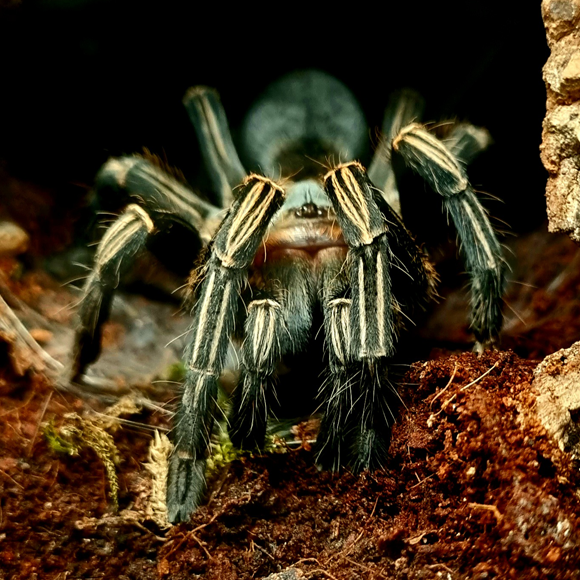
Fully grown, Aphonopelma seemanni typically reaches a diagonal leg span of 12–15 cm, making them a decent-sized but manageable addition to your collection. Females are generally a bit bulkier and stockier, while males tend to be leggier but a tad more fragile, particularly after their ultimate (final) moult. Slings start tiny, growing slow but steady until suddenly you realise you need a larger enclosure. Their striking black bodies and white stripy legs make them a real showpiece when they do grace you with a rare above-ground appearance.
Lifestyle
Aphonopelma seemanni is primarily terrestrial and fossorial, meaning it spends much of its time firmly on (or beneath) the ground. In the hobby, you'll quickly learn that giving it a nice deep substrate is like offering a teenager an all-you-can-eat pizza buffet—absolute joy. They’re avid diggers, and you may be treated to an impressive burrow system if you provide enough depth, especially with slings and juveniles. Even as adults, they’ll happily rework their underground lairs, only emerging for food, a drink, a stretch of those iconic stripy legs, or to taunt you by disappearing for weeks just after you’ve boasted about how often you see them.
Lifespan
Here’s where Aphonopelma seemanni really plays favourites between the sexes! Females can live an impressive 15–20 years in captivity with the proper love and care—you may find yourself introducing her to your grandchildren. Males, on the other hand, tend to bow out much earlier. Typically, they’ll reach sexual maturity between 4 and 6 years old and sadly only last a year or so after their ultimate moult. It’s the classic tarantula story: the boys sprint, but the girls run the marathon.
Growth Rate
Patience is the name of the game with the Zebra. They have a slow to medium growth rate—definitely not in a rush to leave their burrows or hit the awkward teenage phase. Slings can take several years to reach maturity, especially if kept cooler or fed conservatively. If you’re after instant gratification, they’re probably not your best bet. But for those who appreciate the journey (and possibly some suspense), your patience will be handsomely rewarded.
Temperament
Aphonopelma seemanni has a reputation for being generally calm, though individual personalities abound. Some will sit out in the open like the Lords and Ladies of the spider world, while others will be Olympic champions at hide-and-seek. They're more likely to scuttle away than kick up a fuss. Fast when startled, but not aggressive—they’d rather bolt than bite. With patience and respect, you'll find them a pleasure to keep, even if you’re mostly admiring the artfully decorated entrance to their burrow.
Temperature
Aphonopelma seemanni prefers it on the warmer side, with 22–25°C being ideal, though they’ll tolerate 20–28°C if needed. As with most tarantulas, consistency is more important than chasing the perfect number on your thermometer. A well-heated room does the trick for most keepers here in the UK—no need for fancy heat mats unless you’re housing them in a particularly cold spot. Avoid direct heat sources touching the enclosure, as no tarantula ever asked for a sunbed. If temperatures dip at night (but stay above 18°C), they’ll be just fine, provided it’s not for weeks on end.
Humidity
These beauties hail from regions with moderate humidity, so aim for around 60–70% RH. Achieve this with a water dish (always essential), a substrate kept slightly damp (but not soggy), and decent cross-ventilation to avoid a stuffy, mouldy mess. Misting can be done sparingly, especially to keep the webbing fresh for drinking, but don’t turn the enclosure into a rainforest. Overly sodden substrate is a no-no and is more likely to spawn mushrooms than healthy spiders. Ventilation balances humidity nicely—think comfortable, not tropical.
Visibility
Experienced keepers know the A. seemanni lottery: some are surprisingly bold and visible, others are confirmed recluses. They're largely nocturnal, and you’ll often spot a fuzzy set of stripes peeking out of a burrow at sundown. Visibility depends on individual temperament, enclosure setup, and mood. Don’t be discouraged if yours vanishes for weeks on end—burrowing is what they do best! But when they do pop up, their eye-catching stripes make every glimpse feel like a real treat.
Webbing
While not the hobby’s most prolific webbers, Aphonopelma seemanni does produce a fair amount of silk. Expect them to line their burrow entrances with lovely webbing, creating a fortified home worthy of any spider monarch. This silk barrier doubles as a tripwire, so you’ll spot them often at the mouth of their lair, waiting for unsuspecting prey to wander by. Webbing increases when moulting or feeling a tad insecure but don’t expect full-blown hammock architecture like some arboreal species.
Feeding
Aphonopelma seemanni is an enthusiastic—but not greedy—eater. Slings can be fed small prey (like pre-killed pinhead crickets or roach nymphs) twice a week; they’ll feast like tiny monsters and then promptly disappear for days. Juveniles and adults do well on similarly sized crickets, dubia roaches or the occasional mealworm every 7–10 days. They’re not prone to fasting unless in pre-moult, so if your spider unexpectedly snubs a meal, check for upcoming moults or environmental stress. Avoid overfeeding adults—a chunky tarantula is not a healthy tarantula and can even risk injury during falls. Remove uneaten prey after 24 hours to keep the burrow-mould brigade at bay, and you’ll have a content (albeit secretive) spider on your hands.
Enclosure Recommendations
Give your A. seemanni plenty of substrate depth—at least 15–20 cm is ideal, as they love a dig. A sturdy terrestrial enclosure (plastic or glass) with good cross-ventilation is ideal. Include a water dish (changed regularly), a hide or cork bark for initial privacy, and keep clutter minimal so they can engineer their own masterpiece. Substrate can be a mix of coco fibre and topsoil, slightly damp but not wet. Enclosures should have a secure lid, as they can be surprisingly powerful diggers and movers of décor. Avoid sharp or heavy decorations that might tumble into their burrow and cause damage. No fancy lighting or heating necessary beyond what keeps your house comfortable. If you want your spider to show off its legendary stripy legs, keep some open space near the burrow entrance—you just might catch them on patrol.
Experience Level
Aphonopelma seemanni is a solid choice for beginner and intermediate keepers alike. Their hardiness, relatively calm nature, and straightforward husbandry needs make them forgiving for those still learning the ropes. The main challenge comes from their love of burrowing, which can be a bit frustrating if you want a spider always on display. Still, their striking appearance and legendary burrow engineering provide great rewards for the patiently curious hobbyist.
Final Thoughts
Aphonopelma seemanni is a keeper’s delight—striking, hardy, and genuinely rewarding for those patient enough to appreciate the art of burrowing. While not the most visible pet, their antics (when seen) and beautiful markings make every glimpse special. They’re excellent for beginners and intermediates, requiring minimal fuss and forgiving of the odd husbandry hiccup. Their underground engineering prowess is half the fun, so provide deep substrate and watch (or imagine!) the burrow magic happen. If you’re after a bling-laden tarantula with a penchant for peeking rather than posing, this gent is a real winner. Just don’t expect them to help with your arachnophobia therapy—unless it’s a fear of seeing spiders at all!
Community Species Gallery
Approved photos submitted by registered Spoodoire users.
No community images have been approved for this species yet.
Submit Your Photo
Log in to submit a photo for this species.
Available at The Spoodoire
Products linked to this species care guide.