

Species Care Guide
Poecilotheria regalis
Indian ornamental tarantula
Also known as: Indian ornamental tree spider, Indian ornamental, regal parachute spider
Last updated: July 3, 2026
Buy this species
Origin
Poecilotheria regalis, affectionately known as the Indian Ornamental, hails from the lush forests of southern India and Sri Lanka. They’re true denizens of thick, humid woodlands where they tuck themselves away among tree bark and crevices high above the leaf litter. In the wild, they experience a hot and humid climate with regular monsoon seasons, and they’ve adapted to life where they’re not often disturbed by humans—unless said human is wielding a camera or chasing them off the curtains. Their natural homes are threatened by habitat loss, which makes their preservation in collections all the more important.
Adult Size
An adult Poecilotheria regalis is a stunner, easily reaching 15–18 cm diagonal leg span at full stretch, with some females pushing the upper end of that range. Males tend to be smaller, leggier, and slim—think marathon runner to the female’s power-lifter build. Growth can outpace your expectations (and your wallet’s), especially whilst young, so don’t be surprised if your little sling becomes an impressive display spider in just a few short years.
Lifestyle
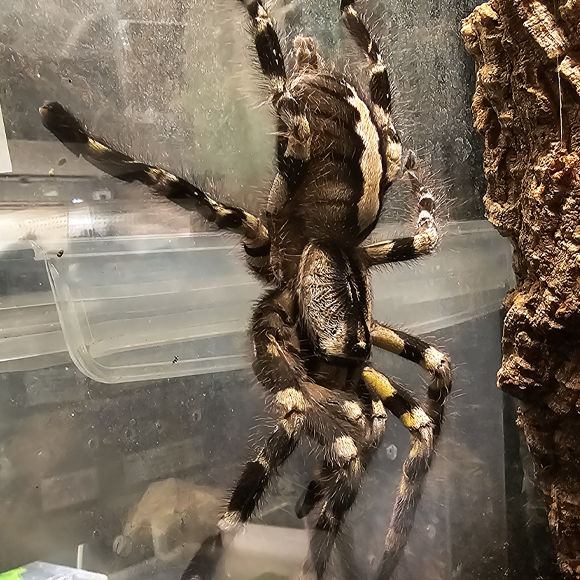
Completely arboreal, Poecilotheria regalis spends its time perched vertically on tree trunks or inside hollowed spaces in bark. In captivity, you’ll find them scaling enclosure walls like a champion rock-climber, only faster. They’ll often web up the corners and create elegant silken retreats amongst cork bark, with just their toes peeking out. Expect light-speed dashes to safety and the odd acrobatic leap if disturbed. They’re not big burrowers, but love height and vertical surfaces.
Lifespan
Females are the marathon runners of the species, sometimes hitting 12–15 years in captivity with proper care—which is a solid commitment! Males, however, pull the short straw and rarely live beyond 3 or 4 years, maturing quickly and fading after their last moult. As with many tarantulas, those who reach adulthood unscathed tend to stick around for a good while, especially if you provide stable conditions and keep them stress-free (which mostly means not poking around their web retreats).
Growth Rate
This species is known for a medium-to-fast growth rate, so don’t blink or you’ll miss that adorable sling turning into a lanky juvenile. Warmth and regular high-protein meals will kick their growth up a notch—within a couple of years, they’ll look like mini adults. Colouration and pattern become vivid early on, which is always a treat. Keepers should note that fast growers also moult frequently as youngsters, so sling care can be a bit more involved.
Temperament
Deceptively shy but quite capable of giving you a scare! Poecilotheria regalis prefers fleeing to fighting, vanishing into its web retreat at the first sign of movement. But if cornered or startled it’s blindingly quick—think Formula 1 spider with an attitude. Defensive displays aren’t common, but can happen when their patience (or tolerance of humans) runs out. This is not a spider for frequent disruptions or a heavy-handed approach. Enjoy from a distance!
Temperature
Poecilotheria regalis thrives at household temperatures, ideally between 22–25°C, with a small tolerance for dips at night so long as it doesn’t get chilly. If your home drops below 19°C in winter, consider a small heat mat attached to the side of the enclosure—not the bottom, to avoid scorched toes. Always use a thermostat and check temps with a digital thermometer to avoid roasting your regal friend. Keep things comfortably warm, but not tropical sauna.
Humidity
Aim for humidity levels around 65–75%. Achieve this by using slightly moist substrate and offering a decent-sized water dish—smaller slings will appreciate daily misting, but avoid swampy conditions. Adequate cross-ventilation is key to preventing stagnant air and mould, so go for mesh or drilled-air holes. Let the top layer of substrate dry between mistings to avoid musty mishaps. If in doubt, a dry spell is safer than a bog.
Visibility
Most often you’ll spy just stripey legs hanging out from behind cork bark, but they do come out in the evening (when your torch batteries are dying) for a stretch or a snack. If their set-up allows, you’ll be treated to some spectacular climbing and webbing. Expect long periods of ‘Where is it?’ followed by unexpected photo opportunities when it’s parading up the glass. Not exactly a tarantula for round-the-clock display, but when you see them—they are breathtaking.
Webbing
Not quite the silk factories of Avicularia or the carpet weavers of Chromatopelma, but they do produce a fair amount of web—especially in the corners of their arboreal mansions. They line their retreats with silk, sometimes building elaborate tunnels between bark slabs. This serves as both home and quick escape route. Webbing is a good sign your P. regalis feels safe; lack of web sometimes suggests it’s not happy with its décor—time to feng shui your spider’s pad!
Feeding
Slings thrive on pre-killed or tiny live crickets, flightless fruit flies, or even recently moulted roaches. As they grow, upgrade the menu to bigger crickets, Dubia roaches, or locusts—just stick to prey no larger than the spider’s abdomen for safety. Slings and juveniles should be fed twice a week, while adults do nicely on one or two good feeds per week. Poecilotheria regalis is a ferocious eater, sometimes tackling prey with dramatic aerial pounces. Don’t overfeed; a plump abdomen is normal but ballooning is bad. Always remove uneaten prey, especially before moulting, as these spiders loathe uninvited dinner guests during vulnerable moults. Bonus tip: feeding at dusk seems to match their natural hunting instincts and makes for more exciting feeding responses.
Enclosure Recommendations
Go tall rather than wide! Arboreal enclosures (30 x 30 x 45 cm minimum for adults) work well. Cork bark slabs leaned vertically, with anchor points for webbing, are a must. Add a solid water dish and about 5 cm of slightly moist substrate—coco fibre or a peat-based mix works well. Good cross-ventilation top and sides prevents condensation and mould, especially at higher humidity. Avoid cluttering the floor; provide open climbing space. For juveniles and slings, smaller vertically-oriented tanks or deli cups are perfect. Always secure the lid—P. regalis are Olympic escape artists! Grooming their home occasionally and giving them stable microclimates makes for a happy, visible spider.
Experience Level
Due to their speed, occasional defensiveness and need for careful enclosure management, Poecilotheria regalis is best suited to keepers with intermediate to advanced experience. They’re certainly not for the faint of heart or someone new to tarantulas, but with a bit of respect and proper set-up, they’re manageable. The real joy comes from observing their behaviour and appreciating their dramatic patterns—no handling required (or recommended!).
Final Thoughts
Poecilotheria regalis is an unforgettable centrepiece for any seasoned keeper’s collection: stunning patterns, impressive size, and a display of natural arboreal behaviour rarely matched. They’re not ideal for those seeking a handleable pet or a spider that’ll mug for the camera, but if you love to watch natural behaviour and appreciate grace under silk, this is your species. The main challenge is managing their speed and enclosure tweaks—get that right, and they’re a pure joy (with a dash of adrenaline). Their conservation value only adds to their appeal, making every well-cared-for specimen a small win for the species. If you want beauty, drama and a touch of the wild in your home—look no further.
Community Species Gallery
Approved photos submitted by registered Spoodoire users.
No community images have been approved for this species yet.
Submit Your Photo
Log in to submit a photo for this species.
Available at The Spoodoire
Products linked to this species care guide.