

Species Care Guide
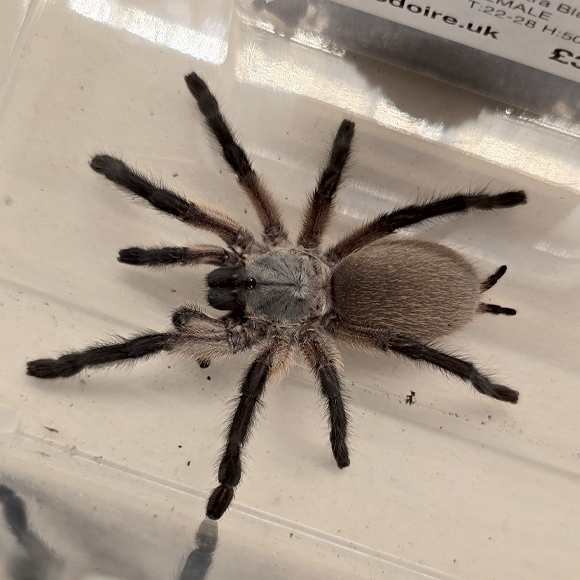
Monocentropus balfouri
Socotra island blue baboon tarantula
Also known as: Socotra blue baboon, Socotra island blue tarantula
Last updated: June 25, 2026
Buy this species
Origin
Monocentropus balfouri, fondly nicknamed the 'Socotra Blue Baboon,' hails from the mysterious and beautiful Socotra Island off the coast of Yemen. This unique paradise is famous for its alien-like landscape and bizarre flora, and it’s where M. balfouri makes itself at home among rocky outcrops and dry scrublands. The local climate is hot and arid for most of the year, with some humidity lingering after the brief rainy seasons. In the wild, this species favours crevices, abandoned burrows and rocky shelters, forming elaborate webbed retreats for protection from predators and the relentless sun. Their habitat is a challenging, windswept terrain—not exactly the sort of place you’d choose for a summer holiday, unless you’re a tarantula with exquisite blue legs!
Adult Size
An adult Monocentropus balfouri typically spans 12–15cm diagonally from back toe to toe, making them impressively chunky but not overwhelmingly gigantic. Females tend to be larger, bulkier and, unsurprisingly, live much longer than the males (sorry lads). Males are usually slimmer and, much like awkward teenagers, might wander off when mature in search of a mate. Growth is steady, so don’t expect your spiderling to hit dinner-plate size overnight, but once mature, they’re real show-stoppers with their rich blue hues and shaggy legs.
Lifestyle
Despite being famous for their semi-arboreal antics, Monocentropus balfouri are truly masters of multitasking. In captivity, they’ll often combine fossorial (burrowing) tendencies with arboreal-inspired webbing, creating silk-lined tunnels and hammocks across every available nook and cranny. While they certainly like to dig, they’re equally enamoured with scaling up decor and clutching onto the glass just out of spite—or so it seems! Communal setups can work for advanced keepers, as they are famous for surprisingly peaceful cohabitation, but keep in mind this is never guaranteed. Expect to see webs everywhere, and don’t be shocked when your balfouri decides to rearrange the interior to suit their own artistic tastes.
Lifespan
Females can be long-term companions, often living 10–15 years or even more with proper care. Males, on the other hand, tend to mature quickly and don’t stick around as long—typically only 3–5 years, and they tend to fade fast once they’ve hit maturity (a bit like a fireworks finale). The difference in lifespan between the sexes is dramatic, so if you’re hoping for a decade-long friendship, aim for a female.
Growth Rate
Monocentropus balfouri are neither the Usain Bolts nor the tortoises of the tarantula world—expect a medium growth rate. Warmth, regular feeding, and the occasional (but not excessive!) humidity boost can hurry things along. As spiderlings, they usually show steady progress, so you won’t be stunned by sudden growth spurts, but neither will you wonder if you accidentally bought a plastic model. Growth can vary based on temperature, feeding, and the individual spider’s own life agenda.
Temperament
M. balfouri are known for their independence and strong personalities. While not the angriest tarantula you’ll meet, they are fast, feisty and possess a stubborn streak that would make your nan proud. They’d much rather bolt into a tunnel or vanish into their fortress of silk than stand and fight, but don’t mistake their shyness for docility—these spiders will defend themselves if provoked and are quick on their feet. For all their beautiful appearance, handling is not recommended for obvious reasons: they simply don’t appreciate it (and you might lose them up your sleeve).
Temperature
Keep your M. balfouri comfortable at temperatures between 22–26°C, matching their native Socotran warmth. A few degrees either side won’t bother them too much, but try to avoid extremes—no one likes to be kept in a fridge or a sauna! If your home tends to be chilly in the winter, a heat mat attached to the side of the enclosure (never underneath) or a room heater can help maintain a toasty environment, but always use a thermostat to avoid accidental saucepan spider syndrome. Good airflow is essential, so don’t go overboard trying to seal in heat—balance is key.
Humidity
Aim for 50–65% relative humidity, with some drier spells in between just like their native habitat. Overly soggy conditions are a definite no-go and can encourage mould or mites. A large water dish should always be present—these spiders will sometimes drink enthusiastically. Slightly overflow the dish every once in a while to offer a mild humidity bump, but excellent ventilation is crucial; stuffy, stagnant air is their worst enemy. Light misting is rarely necessary, just keep an eye on things and only add moisture if your substrate’s as dry as the Sahara for weeks.
Visibility
These spiders are notorious for their secretive habits—think of them as the introverts of the hobby. Expect to see flashes of blue legs weaving webs or ambushing prey, especially around dusk, but they’ll happily vanish into their silk tunnels for days at a time. However, with a well-set enclosure, you’ll often catch glimpses of their artistry and tidying as they rearrange everything to their liking. While not out in the open 24/7, the web architecture and occasional leg-waggling make up for their sometimes bashful nature.
Webbing
If you love the look of artistically webbed enclosures, M. balfouri will not disappoint! They’re prolific silk producers—think of them as the Banksys of the spider world—spinning thick, luminous webs that snake across every corner, tunnel and hide. Webs serve multiple purposes: camouflage, protection, communication in communal groups, and even the odd kitchen for catching dinner. Don’t tidy up too often; their webs are essential to their sense of security and well-being.
Feeding
Monocentropus balfouri aren’t especially fussy eaters, so crickets, locusts, dubia roaches, and mealworms all make tasty menu options. Spiderlings love pre-killed or very small prey twice a week, while juveniles and adults can be offered live feeders once a week (or more if you’re keen on seeing some food aggression!). Don’t let leftover prey wander for days, as stress and risk of injury aren’t on the menu. Adults, especially females, have impressive feeding responses—watch those lightning-fast pounces! Overfeeding can cause obesity (and shorten lifespan), so keep meals in balance and allow them to 'fast' occasionally if their abdomens seem chunky. As with all tarantulas, clean water in a dish is a must—and watching a balfouri sip water is oddly adorable!
Enclosure Recommendations
A sturdy and escape-proof enclosure is essential, as M. balfouri are expert explorers—lid clips recommended! For a single adult, a 30 x 30 x 30cm glass or acrylic enclosure works well; for communal attempts, size up significantly and add multiple hides with many escape routes. Provide 10–15cm of dry, compacted substrate for burrowing (coco fibre, sandy soil mixes) and plenty of anchor points like cork bark, rocks and fake plants for webbing. A large, shallow water dish is a must, even in low humidity. Ventilation should be excellent, with cross and top airflow to prevent the enclosure from becoming stuffy. Don't forget a snug hide, or your balfouri may silk up the corners in protest! Resist the urge to clean webs unless absolutely needed—they are prized real estate for your spider.
Experience Level
Monocentropus balfouri are best left to intermediate or advanced hobbyists, mostly due to their speed, defensive behaviour, and higher maintenance demands for perfecting humidity and ventilation. Beginners with their hearts set on this species should invest plenty of time in research (and perhaps some running shoes). Their communal potential is a draw for brave keepers, but solo specimens are more forgiving. If you’re looking to level up from your first tarantula, this is a fantastic next step—with a dash of respect and caution mixed in.
Final Thoughts
The Monocentropus balfouri is a true showpiece species—equal parts beauty, mystery, and drama. Their shimmering blue legs and communal possibilities have made them a fan-favourite, and their webbing antics turn any enclosure into a living piece of art. Don’t be fooled by their standoffish demeanour; their antics are endlessly watchable for the patient hobbyist. Challenges include their speed, potential for defensive behaviour, and higher enclosure requirements, but the rewards are utterly worth it. Watching a balfouri colony work together or even just a lone adult remodel their silk palace is a pleasure few spiders match. If you fancy something truly unique and don’t mind the odd game of hide and seek, you’ll love this charismatic species.
Community Species Gallery
Approved photos submitted by registered Spoodoire users.
No community images have been approved for this species yet.
Submit Your Photo
Log in to submit a photo for this species.
Available at The Spoodoire
Products linked to this species care guide.