

Species Care Guide
Chromatopelma cyaneopubescens
Greenbottle blue tarantula
Also known as: green bottle blue, GBB
Last updated: June 25, 2026
Buy this species
Origin
Chromatopelma cyaneopubescens, affectionately known in the hobby as the Greenbottle Blue, originates from the arid scrublands of northern Venezuela, particularly around the Paraguana Peninsula. This landscape may look rather barren, but it’s full of life (and cheeky spiders). The region experiences warm temperatures, low rainfall, and plenty of dry, sandy soil dotted with tough little bushes. Rain is rare, and the climate is reliably dry, so these spiders are well accustomed to toughing it out with minimal moisture. This habitat encourages their legendary webbing skills, as there aren’t many burrows or hiding places about—so why not make your own silk palace, right?
Adult Size
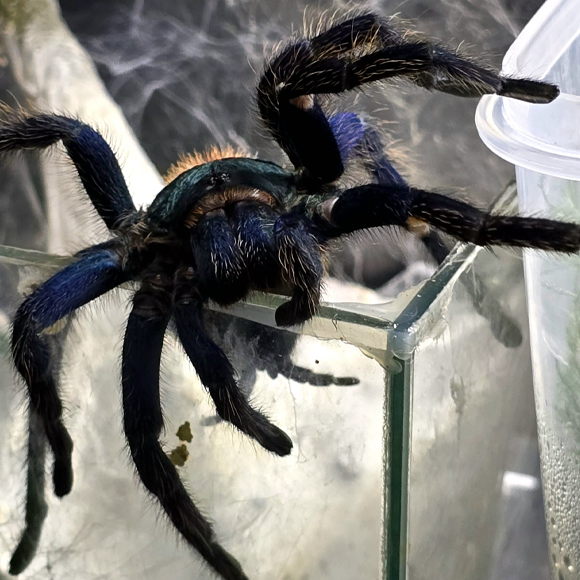
Adult Greenbottle Blues typically reach a leg span of 12–15 cm. Females, as usual in the tarantula world, are bulkier and a tad bigger than their male counterparts, who are a bit leggier and leaner. Males mature faster and don’t pack on quite as much size before their inevitable quest to write love letters (with their legs) across the enclosure. Provided with proper care, females can develop lovely long legs and a vibrant blue, orange, and green coat that makes them the supermodels of the tarantula scene.
Lifestyle
C. cyaneopubescens is primarily terrestrial in the wild but isn't shy about venturing up into low branches and shrubs—so in captivity, they’re straight-up semi-arboreal. They love converting their enclosures into dense webs, covering everything in sight like overzealous interior decorators. You’ll often spot them perched on their webs, watching the world go by or pouncing on passing crickets like they're starring in their own nature documentary. They're not burrowers, so expect a showy display more than a hidden pet rock.
Lifespan
Female C. cyaneopubescens are in it for the long haul, living up to 12–15 years in comfortable captivity—meaning they might outlast some of your houseplants. Males, as is tragically typical for tarantulas, live fast and die young. Once mature, a male usually wraps things up within 2–4 years, often focusing solely on finding a mate. If you’re after a long-term eight-legged flatmate, the females are the way to go.
Growth Rate
Greenbottle Blues are known for their moderate to fast growth rates, especially compared to many other tarantula species. With good feeding and proper temps, a spiderling can go from a tiny blue dot to a leggy juvenile surprisingly quickly—sometimes reaching adulthood in just 2–4 years. Keepers will see moult after moult as slings, especially with regular, healthy feedings. Growth can slow down a tad as they age, but you won’t be waiting an eternity for that stunning adult colouration to appear.
Temperament
Despite those vibrant colours, C. cyaneopubescens is generally a chill customer. They’re not prone to attacking shadows or plotting revenge if you rearrange their décor, but they can be skittish, and youngsters especially can dash about at surprising speeds. They’d rather sprint for cover or barricade themselves in with webbing than go on the offensive. Handling isn’t recommended for this species—less for your safety, more so you don’t ruffle their hair or stress them out. Best enjoyed behind (or on top of) glass.
Temperature
Keep your Greenbottle Blue at a comfortable 22–26°C (room temperature for most UK homes, unless you live in a fridge). They tolerate the classic British living room, but if things get chilly in winter, a gentle heat mat on the side of the enclosure—never underneath—is a good shout. Avoid roasting or freezing your spider; steady, moderate warmth is best. Monitor with a thermometer if you’re unsure. As with many New World tarantulas, big temperature swings are best avoided. The odd cool spell won’t cause havoc, but keep things steady for their best performance.
Humidity
Samplings from the dry savannah teach us one thing: these beauties don’t like getting soggy. Aim for around 55–65% relative humidity—fairly low compared to many rainforest species—using a dry substrate. Provide a water dish at all times, even if they treat it with utter disdain. Excellent ventilation is vital to prevent stuffiness and mould. A very lightly moistened corner during moults is enough for spiderlings, but adults prefer things kept dry most of the time. Overly damp conditions make for a grumpy spider (and sometimes, mouldy enclosures).
Visibility
Visibility is one of the Greenbottle Blue’s top perks. They’re notorious for being out in the open, especially as adults—posing on top of their intricate web works like they know you bought them for their looks. Day or night, they make regular appearances, often sitting proudly in full view. Their habit of plonking down right in the centre of their web means you’ll enjoy their dazzling colours and see plenty of activity, especially during feeding or evening hours. For a tarantula, they’ve got a real flair for drama.
Webbing
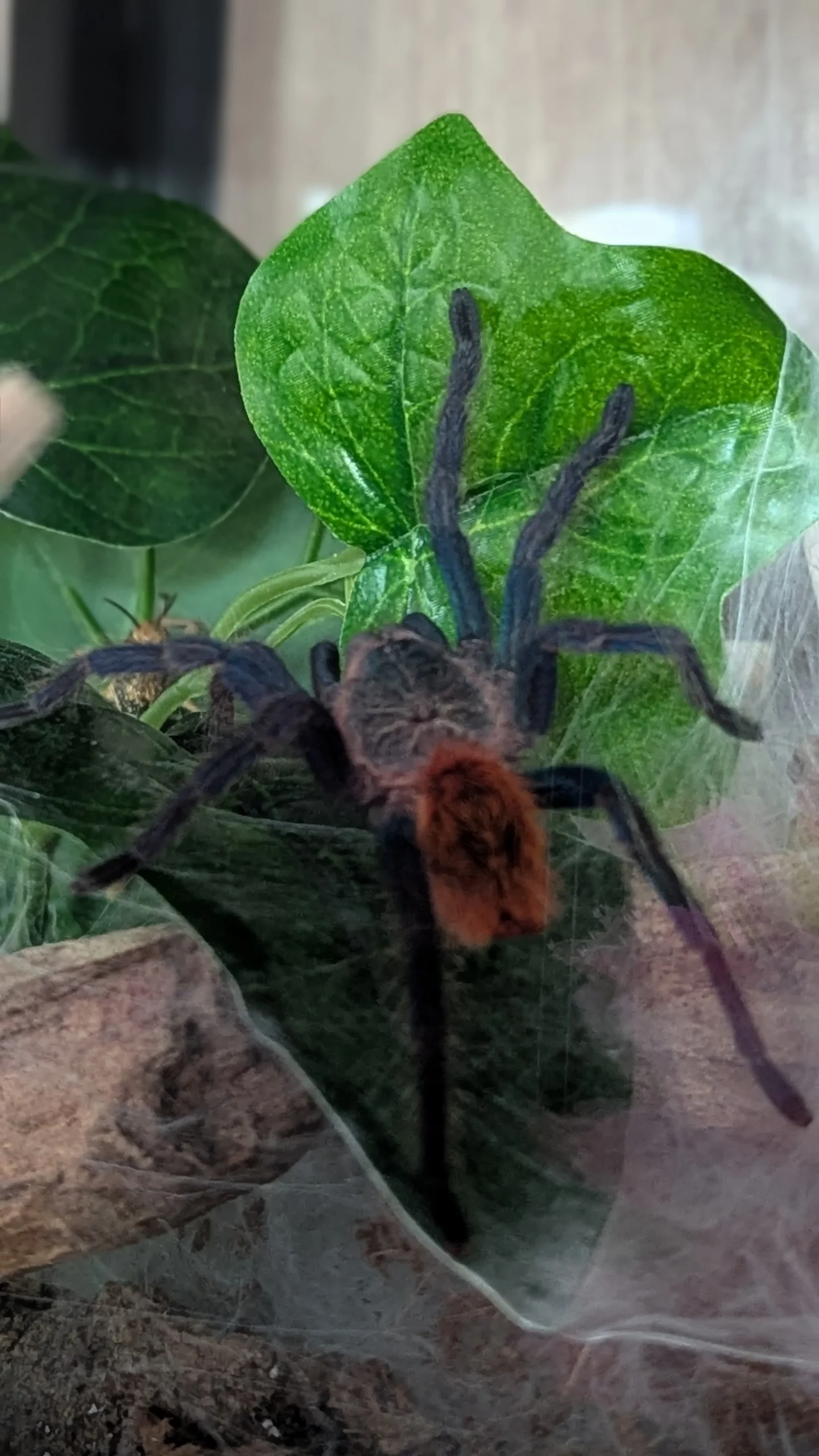
Get ready for a masterpiece! Greenbottle Blues are world-class web architects. Given any hard surface (and sometimes just the air), they’ll spin tunnels, hammocks, and curtains of silk until hardly an inch of enclosure is bare. Their webbing habits make each setup unique—no two spiders spin the same home décor. This web palace isn't just for show: it gives your spider safety, hunting platforms, and a spot to moult in peace. Their web display is truly part of the appeal and a proud badge of a happy tarantula.
Feeding
These spiders have a healthy appetite to match their zippy lifestyle. Spiderlings thrive on pre-killed or tiny live prey like pinhead crickets or fruit flies, offered 2–3 times a week. Juveniles and adults do well on a larger selection—small-to-medium crickets, dubia roaches, locusts, and an occasional waxworm or mealworm for a treat (but don’t let them go on a junk food binge). Feed juveniles 1–2 times a week, and adults once weekly. Adjust the size of prey to about the spider’s abdomen size—no need to offer it a banquet larger than itself. Their feeding response is usually enthusiastic: expect lunging and dramatic takedowns! Remove uneaten prey after a day or so to prevent stressed moults or a pest problem. Overfeeding can lead to overly chunky spiders and fussy moults, so aim for steady, healthy growth—not a tarantula sumo champion.
Enclosure Recommendations
A faunarium or clear acrylic enclosure with generous cross ventilation is perfect for both juveniles and adults. Size-wise, think ample floor space—something like 30x30x30 cm for adults, but not so vast that your spider gets lost in all that real estate. Use a couple of inches (5–7 cm) of dry coco fibre or similar substrate; moisture isn’t the aim here, just somewhere for web anchors. Add some cork bark pieces, dry twigs, or silk plants to entice serious webbing and provide hiding spots. A shallow water dish is a must for hydration, though they may web right over it. Don’t forget plenty of anchor points—more twigs or décor equals more intricate webs and happy spiders! Avoid deep substrate or heavy lid weights, as they’re not burrowers and don’t need excessive security.
Experience Level
Greenbottle Blues are a superb choice for beginners with a bit of research under their belt and make seasoned keepers smile too. They have simple requirements compared to more moisture-loving or secretive species, with none of the stubborn humidity battles, and their skittishness is manageable if you respect their space. Absolute first-timers may find their speed a challenge, but for anyone with basic tarantula know-how, they’re one of the hobby’s most rewarding and forgiving species.
Final Thoughts
If you’re searching for a vibrant centrepiece, the Greenbottle Blue can’t be beat. Their traffic-stopping colours, relentless webbing, and active personalities make them one of the hobby’s all-time favourites, whether you’re a newly-minted keeper or a weathered arachnophile. They’re forgiving when it comes to husbandry, as long as you avoid making things too damp or cold. Their main challenges? Respecting their speed and giving them loads of webbing opportunities. Their web displays add a living work of art to any collection and ensure you actually see your pet—novel for a tarantula! Treat them right and you’ll have a truly spectacular little showoff that makes even the most spider-averse visitor say, 'Blimey, what a beauty!'
Community Species Gallery
Approved photos submitted by registered Spoodoire users.
Submit Your Photo
Log in to submit a photo for this species.
Available at The Spoodoire
Products linked to this species care guide.