

Species Care Guide
Tliltocatl albopilosus
Curly Hair tarantula
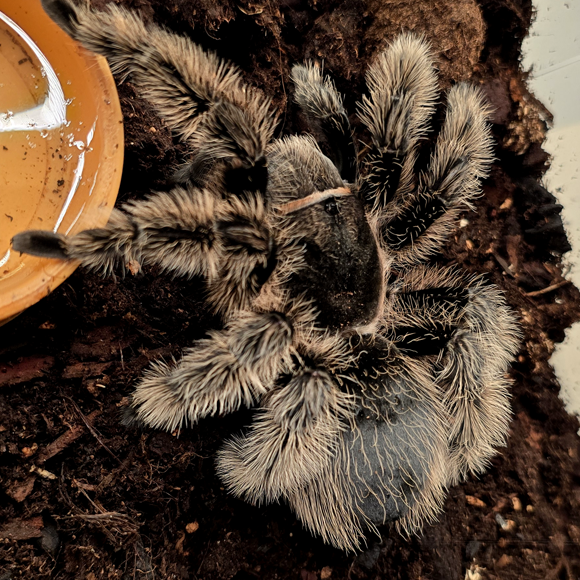
Also known as: Honduran curlyhair, woolly tarantula
Last updated: July 23, 2026
Buy this species
Origin
Tlitocatl albopilosus, affectionately known as the Honduran Curly Hair, hails from the lush forests and open grasslands of Honduras, Nicaragua, and Costa Rica. In their native habitat, these tarantulas enjoy a warm, humid climate punctuated by occasional tropical downpours and periods of dry heat—think jungle weather with a dash of unpredictability! They frequent the forest floor, where they seek out comfy burrows under logs, rocks, or leaf litter. As adaptable as they come, they can handle a fair bit of environmental flexibility. If your British weather seems bleak, remember—your tarantula’s ancestors are true survivors where the sun sometimes shines and sometimes doesn’t.
Adult Size
Once fully grown, the Curly Hair sports a diagonal leg span of 12–15 cm (that’s a respectable handful of tarantula, but not your wrist-thick goliath). Females tend to be chubbier and heavier built, while males are leggier and more streamlined. Don’t be surprised if a mature female looks ready to challenge your roast dinner in sheer presence! Reaching this size takes a few years, with males generally maturing faster and departing this world sooner, as is tragically customary in the tarantula universe.
Lifestyle
Curly Hairs are classic terrestrial tarantulas with a fondness for a bit of digging and redecorating. Given enough substrate in captivity, they’re more than happy to create a shallow burrow or sprawl artistically behind their favourite cork bark. They're neither Olympic climbers nor die-hard burrowers but strike a nice balance, often visible if given a hide and freedom to choose their own spa day activity. Watching one bulldoze substrate is a treat, and with their fuzzy charm, they quickly become the centrepiece of any collection.
Lifespan
Females of this species are the true marathon runners—often achieving 15 years or more, with some pampered ladies reaching the grand old age of 20. Males, not so lucky, tap out after 4 to 5 years, especially after hitting maturity, when their only life goal becomes ‘find a date, pronto’. If longevity appeals to you, pick a female, sit back, and enjoy a decade (or two) of gentle, hairy companionship.
Growth Rate
Curly Hairs are neither sprinters nor slouches; they grow at a pleasant medium pace. Slings will molt fairly often in their first year or two, keeping you entertained with their occasional wardrobe changes. Good temps, regular meals, and appropriate humidity will keep things ticking along. They may not be racing their Brachypelma cousins, but your patience will pay off with a robust adult in a few years.
Temperament
With a charmingly placid reputation, Curly Hairs are one of the hobby’s true sweethearts. They rarely bolt, deliver the hairy stare when annoyed, and are more likely to turn their back on drama than make a scene. Slings and juveniles can be a tad skittish but soon grow out of it. Occasional flinging of hairs happens if you push your luck—but overall, this species is a pleasure to keep and watch, provided you let them rule their domain in peace.
Temperature
Aim for an ambient temperature in the 21–24°C range, which rather conveniently matches that comfy room temperature most of us prefer! They can tolerate the odd chilly night or warm day, but keep them away from frost and avoid turning their enclosure into a sauna. If your house does a passable impression of a British autumn most of the year, a modest heat mat on the side of their enclosure (not underneath) will do, but only if your room dips below 18°C and never with the risk of overheating. Good old-fashioned insulation and a spot away from draughts work wonders.
Humidity
Curly Hairs like it a bit humid, but not swampy—think tropical drizzle, not monsoon. Aim for 50–65% relative humidity. Achieve this with a substrate (like coco fibre or topsoil) that's slightly damp on one half and dry on the other, so your spider can pick their preferred microclimate. Always provide a clean, shallow water dish (no excuses!), as these tarantulas are not above stopping for a sip. Good cross-ventilation keeps things fresh and prevents mould—no one wants a mushroom farm in their vivarium.
Visibility
Curly Hairs are wonderfully visible for a terrestrial tarantula. Given a secure hide, they’ll often lounge in plain sight, surveying their realm or chin-deep in substrate redecorating efforts. They’re active mostly at night or during quiet hours, but don’t be surprised to find yours front and centre even when the lights are on. In short: a display species that actually shows up for its own show.
Webbing
While not industrial webbers like Avicularia or OBTs, Curly Hairs do put down enough web to claim their territory and line their burrows or hides. Expect a bit of web matting across their substrate, around entrances, and sometimes artistically draped over their water dish (for reasons known only to tarantulas). Watch for increased webbing before a moult—it’s usually a sign of an imminent costume change.
Feeding
Young slings do well on pre-killed or tiny live prey—think pinhead crickets, fruit flies, or baby roaches. Feed every 4–7 days, increasing prey size as the tarantula grows. Juveniles move up to small crickets or dubia roaches, taking meals every 7–10 days. Adults thrive on a steady diet of adult crickets, locusts, or dubia roaches, offered every 10–14 days (they’re not gluttons, after all). Curly Hairs have a healthy appetite, but don’t overfeed—an overly round abdomen is charming but unhealthy. Remove uneaten prey after 24 hours and never feed during or just after a moult, as their new skin is tender. Mistakes to avoid: feeding wild-caught insects and unnecessary fattening—this tarantula is more tortoise than hare when it comes to metabolism.
Enclosure Recommendations
A 30x30x30cm enclosure suits an adult nicely—think sturdy glass, secure plastic, or a well-ventilated acrylic tank. Ventilation is key: cross-vent holes high and low prevent a stagnant, stuffy home. Use 10–15cm of loose substrate (coco fibre, topsoil or a mix), which is deep enough for a shallow burrow. Add a hide (cork bark or half flowerpot—nothing fancy) and a shallow water dish. Avoid high drops and sharp decor—Curly Hairs are not known for graceful landings. Keep clutter to a minimum and make maintenance easy. For slings, smaller containers with suitable hides work best until they earn their big-girl (or boy) enclosure.
Experience Level
Few tarantulas are kinder to new keepers than the Curly Hair. Their forgiving temperament, straightforward care needs, and robust health make them an ideal starter species. However, seasoned keepers enjoy their personality just as much. As long as you’re not aiming for a high-maintenance diva, this species will fit beautifully into most collections.
Final Thoughts
The Curly Hair is the tarantula world’s equivalent of a reliable hatchback with fluffy seat covers—robust, low-maintenance, and surprisingly loveable! Their gentle nature, frequent visibility, and gorgeous looks (those curly hairs really are something) make them a fantastic choice for keepers of all levels. Their ‘beginner-friendly’ reputation is hard-earned, but don’t underestimate their charm—they’ve hooked many a seasoned collector. If you fancy a tarantula with personality, forgivable quirks, and a high cuddle-factor (visually, not physically), this species will quickly become one of your favourites. The only real challenge? Not adopting a half dozen more.
Community Species Gallery
Approved photos submitted by registered Spoodoire users.
No community images have been approved for this species yet.
Submit Your Photo
Log in to submit a photo for this species.
Available at The Spoodoire
Products linked to this species care guide.