

Species Care Guide
Psalmopeus irminia
Venezuelan suntiger tarantula
Also known as: Venezuelan sun tiger, suntiger tarantula
Last updated: June 28, 2026
Buy this species
Origin
Psalmopeus irminia, famously known as the 'Venezuelan Sun Tiger', hails from the lush and humid forests of Venezuela, with occasional appearances in neighbouring Guyana and northern Brazil. These spiders thrive in tropical habitats, often making homes in tree hollows and under dense bark. Their environment is typically warm and, true to form, rather muggy — so expect lots of greenery, rain, and the odd frog chorus. This natural setting has shaped the Sun Tiger’s climbing habits and love of a well-placed nook. Understanding their wild home will help you keep your spider relaxed and behaving more like a jungle ninja, less like a disgruntled houseguest.
Adult Size
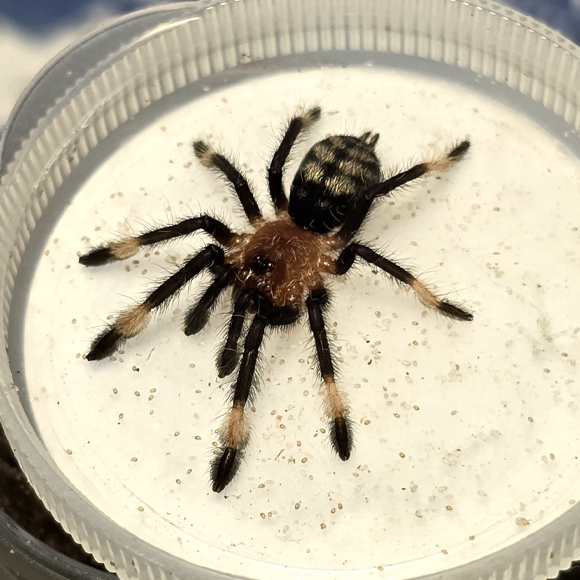
Adults sport an impressive leg span of 13 to 15 centimetres, so they’re definitely on the showy side, especially when fully stretched across the glass at cleaning time. Females generally boast a bulkier build and fuller abdomens, making them a little more visually robust than their male counterparts. Males have longer legs and often mature smaller and more slender. Give them a few moults, and you’ll see those gorgeous orange chevrons become more pronounced, making them impossible to mistake for any other species.
Lifestyle
Firmly in the arboreal camp, Psalmopeus irminia is an enthusiastic climber and highly adept at navigating vertical spaces. In captivity, they make the most of cork bark tubes or upright branches, often constructing silken retreats above the ground. You’ll spot them at all levels in their enclosure but they're happiest with height. During the day, these spiders tend to stay tucked away in elaborate webbed hideouts, but at dusk and dawn, they may emerge for a spot of exercise or a cheeky cricket. Their acrobatics can be impressive, so get ready to glimpse flashes of their striking orange markings.
Lifespan
Females of this species can live up to 10–12 years in good captivity, making them long-term companions for those building a collection. Males, on the other hand, usually have a rather tragic storyline and mature sooner, rarely making it past 3–4 years. As with many tarantulas, proper care, feeding, and minimal stress lengthen their lifespan, so no sudden death shenanigans, please! If you're hoping for a pet that sticks around, keeping a female is generally the ticket.
Growth Rate
Psalmopeus irminia are known for their fast growth, racing from tiny spiderlings to adult stunners in just 2–3 years under ideal conditions. Feeding well and keeping conditions stable will speed up their development even more. Beware – they love a pre-moult drama, refusing food and barricading themselves in for a week or two before emerging larger and smugger than ever. If you want quick results, these are for you!
Temperament
Elegant yet feisty, the Venezuelan Sun Tiger is lightning-fast and known for its skittish temperament. While they're not naturally aggressive, if startled or cramped, they’ll make a dash rather than dive into battle. If cornered, expect a defensive threat pose that says ‘back off!’ far more politely than some Old Worlds. Their athleticism is entertaining to watch, but make sure your enclosure is escape-proof, or risk telling guests there’s a jogging Sun Tiger loose in the house.
Temperature
Aim for a cosy 22–26°C (about 72–79°F). They can take it a bit warmer on occasion, though anything persistently above 28°C could fray their nerves (and yours). Overnight drops to 19–20°C are tolerated if brief. A warm room is usually sufficient, but if your house is more British winter than Venezuelan forest, a gentle heat mat on the side of the enclosure can work wonders — just don’t go frying your spider. Avoid placing the mat underneath, as they rarely leave their webby skyscraper to check for toasty toes.
Humidity
Keep humidity around 70–80% RH to match their rainforest roots. Lightly misting one side of the enclosure a couple of times per week works well, especially if there’s decent airflow. Letting the substrate top dry out while keeping the bottom moist helps prevent mould. Always include a small water dish, however posh or basic your decor. Good ventilation is vital — too damp and you’ll be growing mushrooms rather than a tarantula.
Visibility
A pleasure and a tease, Sun Tigers spend daylight hours tucked away, plotting their next web extension project. You’ll get the best looks at dawn, dusk, or after a midnight snack run. While not as reclusive as some, they’re more night-owl than exhibitionist, making the random daytime appearance an exciting treat. Their web architecture and orange-striped legs gleaming in torchlight offer real visual interest for the patient keeper.
Webbing
These guys work hard on their silk décor, weaving thick, impressive webs that double as climbing nets and private suites. They often create tube-like retreats high in the enclosure, filled with layers of slings and moulting mats. P. irminia’s webbing is less about trapping food, more about fortifying home and keeping you guessing as to which end is the front door. Expect regular upgrades and, sometimes, a complete architectural re-think seemingly overnight.
Feeding
P. irminia boasts a ravenous appetite, especially when young. Slings (baby spiders, for those new to the game) will take down pre-killed or appropriately sized live crickets, roaches, or even mealworms twice weekly. Juveniles and adults enjoy larger crickets, dubia roaches, or the occasional locust once every week. Watch for periods of food refusal — usually a sure sign a moult is coming. Never leave uneaten food in the enclosure during pre-moult, as nobody likes company when they’re feeling fragile. Avoid overfeeding adults; chubby spiders are more at risk of injury. As always, stick to prey no larger than the spider’s abdomen and maintain variety to encourage healthy growth. Feeding time is a spectacle, so only feed what your Sun Tiger can tackle confidently.
Enclosure Recommendations
Tall, secure, and well-ventilated is the mantra for this species. Use an arboreal enclosure with plenty of vertical space (30cm+ for adults) so they can show off their climbing prowess. Include cork bark tubes, upright sticks, and robust fake or live plants to make things interesting. Substrate should be moist but not swampy — 5 to 8cm of coco fibre or similar works well. Ensure excellent cross-ventilation to prevent stagnant air and unwanted mould. Every enclosure should boast a water dish, and consider positioning a hide high up for that penthouse feel. Seal all gaps, as Sun Tigers are Olympic-calibre escapologists.
Experience Level
With their rapid movements and tendency to teleport when disturbed, P. irminia is best left to intermediate or advanced keepers who have a steady hand and healthy respect for spider aerobatics. They’re not ideal for beginners, but if you’re comfortable with quick species and want a visually stunning tarantula, you’re in for a treat. Handle only with your eyes — both for your sake and theirs.
Final Thoughts
P. irminia is a true hobbyist’s spider: fast, strikingly beautiful, and always up to something behind its silken curtains. They’re a little bit hands-off and a whole lot of show when out and about, rewarding patient keepers with glimpses of their bright, tiger-striped legs. Their speed and defensiveness make them less suited to beginners, but for those with a bit of experience and a good set of tweezers, they’re a nearly unbeatable display species. If you love web architecture, nocturnal drama, and the odd challenge, this is a tarantula you simply can’t ignore.
Community Species Gallery
Approved photos submitted by registered Spoodoire users.
No community images have been approved for this species yet.
Submit Your Photo
Log in to submit a photo for this species.
Available at The Spoodoire
Products linked to this species care guide.