

Species Care Guide
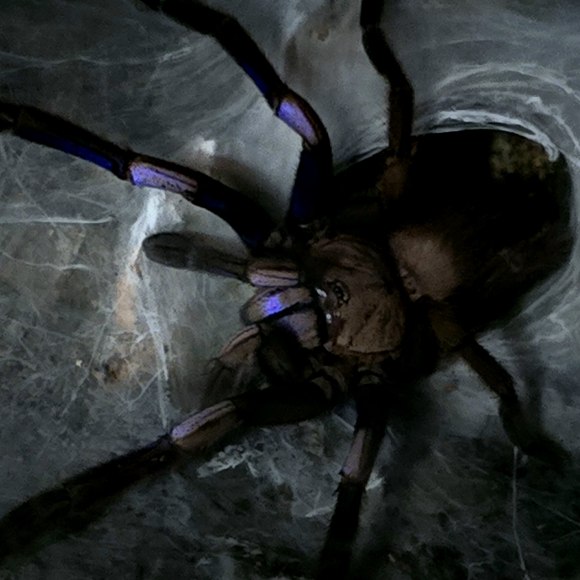
Chilobrachys natanicharum
Electric blue tarantula
Also known as: electric blue earth tiger, Thai electric blue tarantula, Chilobrachys sp. Electric Blue
Last updated: July 21, 2026
Buy this species
Origin
Chilobrachys natanicharum hails from the dense, humid forests of Southeast Asia, particularly Thailand. Out in the wild, they thrive in regions where the ground is damp, covered in leaf litter, and packed with plenty of spots to disappear into the undergrowth. The local climate does them proud—expect monsoons, warm temperatures most of the year (think British summer, without the drizzle), and humidity levels to make your glasses fog up. It’s a world built for burrowing and web spinning, which explains their love of a snug, ground-level retreat.
Adult Size
Adults reach a diagonal leg span of around 15–18cm, with females typically being a tad more robust and heavier bodied than their male counterparts. Males can be slightly leggier, but don’t count on them for longevity (more on that later). As slings, they can be quite dainty, but they soon fill out with proper care. Impressive as they are, be warned: they’ll use every millimetre of their size to zip back to their burrow if startled.
Lifestyle
This magnificent tarantula is the very blueprint of a fossorial lifestyle. In captivity, you’ll see them excavate impressively deep burrows and construct a network of silken tunnels. Don’t expect them to hang about in the open like a showy pink toe—these spiders prefer the subterranean life, emerging only when necessary (or when they’ve decided to rearrange the entire enclosure at 3am). If you enjoy watching a spider quietly master the art of home renovation, the Chilobrachys natanicharum is an unrivalled architect.
Lifespan
Females of the species can easily live 12–15 years given proper care in captivity, a real long-term partner if you’re looking for one. Males get the short straw, as usual, generally maturing by 4–6 years and then making a fairly swift exit a year or so after their ultimate moult. Investing in a female means you’ve got a pet for the long haul, but males have their own dashing charm during their flash-in-the-pan adulthood.
Growth Rate
Chilobrachys natanicharum is known for a fairly brisk growth rate—certainly not the slowest in the tarantula world! With warmth, regular feeding, and good humidity, you’ll watch them go from sling to hairy beast in just a few years. Growth slows post-maturity, but regular meals and ideal conditions help them along. Frequent moulting in juveniles is to be expected, so keep an eye out for pre-moult signs (and those inevitable 'do not disturb' moods).
Temperament
Let’s be frank—Chilobrachys natanicharum is not anyone’s candidate for the tarantula Miss Congeniality crown. They’re fast, easily startled, and will quickly show off their defensive postures if annoyed. While not outwardly aggressive, they won’t hesitate to defend their territory, especially when you’re poking about during maintenance. Many keepers find their personalities fascinating: you quickly learn to respect their boundaries! In summary, handling is not recommended (unless you fancy chasing a turbo-charged spider around your living room).
Temperature
Aim for a cosy 23–27°C in the enclosure, replicating their natural warmth without making them feel like they’ve been left in the oven. Night-time dips down to around 21°C are fine and actually mimic their local environment. Heating mats can help in the colder months, but they should always be attached to the side (not underneath, to avoid accidental desiccation). Always use a thermostat—spiders have little tolerance for dramatic temperature swings, and spontaneous spider-roast isn’t in anyone’s interest.
Humidity
Aim for 70–80% relative humidity—think tropical greenhouse without actual houseplants. Achieve this with deep, moisture-retaining substrate (like coco coir), occasional gentle overflow of the water dish, and regular misting as needed. Still, don’t create a bog: allow for part of the enclosure to remain drier, and ensure plenty of ventilation to prevent stagnant air. A large shallow water dish should be a permanent fixture; they won’t go swimming, but they’ll appreciate the option for a drink during their rare forays above ground.
Visibility
These spiders have perfected the art of being seen only on their own terms. Most of the time, you’ll spot just a leg or two poking out from a webbed-over burrow entrance. Occasionally, you’ll be rewarded with an impressive show as they patrol their kingdom at dusk or after a good meal. Their webbing, however, is an ever-present spectacle—complex sheets and tunnels that turn a plain enclosure into something out of a Halloween décor shop. Patience pays off for those who enjoy rare but spectacular sightings.
Webbing
Chilobrachys natanicharum is a webbing machine, rivalled only by some of the famous Avicularia or GBBs. Give them depth and they’ll create an intricate lattice of silk both above and below ground. Their web tunnels become highways for nightly patrols and exits for food delivery. This species will reward the patient keeper with a structural web display that never stays the same for long. It’s like watching a tiny, hairy architect at work (who never submits planning permission).
Feeding
Young slings will happily tuck into appropriately sized pinhead crickets, pre-killed roaches, or fruit flies a couple of times a week. Juveniles and adults can take larger meals—dubia roaches, mealworms, or standard crickets—every 7–10 days. For adults, once every week or two is plenty unless they’re prepping for a moult. Overfeeding is a common mistake: a round abdomen is healthy, but a tarantula shaped like a fuzzy football is not. Always remove uneaten prey within 24 hours to avoid stress or unwanted ‘cohabitation’. Their feeding response is generally enthusiastic; expect classic ‘ambush predator’ strikes and the occasional wild chase. Growth is rapid with frequent meals, but don’t be tempted to feed just for a spectacle.
Enclosure Recommendations
Start slings in small, escape-proof containers with around 7–10cm of moist substrate—think starter flats or deli pots with secure lids and good cross-ventilation. For adults, a 30x30x30cm enclosure works splendidly, but most important is depth: 20–30cm of substrate allows proper burrowing. Use coco fibre, peat, or a mix, kept moist (never soggy). Provide multiple starter burrow holes with a cork bark or flat slate ‘roof’ to encourage tunnelling. A spacious water dish is essential, and clutter the surface with dried leaf litter for web anchoring. Ventilation is critical—stagnant air is a recipe for disaster—so ensure there’s plenty without drying things out. Skip elaborate decorations; the spider will bulldoze its way to perfection no matter what you put in.
Experience Level
This isn’t your first tarantula—or at least, it probably shouldn’t be! Due to their speed, defensiveness, and moisture requirements, Chilobrachys natanicharum is best for intermediate to advanced keepers who are confident in their abilities and ready for a bit of a challenge. Beginners might want to start with something a touch slower and a lot less keen to show off their fangs (for educational purposes, of course).
Final Thoughts
Chilobrachys natanicharum is a top choice for hobbyists who like a spider with personality (and a busy construction schedule). They combine impressive size, rapid growth, and mind-boggling web structures with a touch of diva attitude in the temperament department. Not one for handling, but a real joy to observe when they’re active—and even more so when they transform your enclosure into their own silk-strewn fortress. The key challenges are humidity maintenance and safe rehousing, but that’s a small price for a species that never stops surprising you. Give them depth, respect their space, and you’ll have a truly unique member of your tarantula family.
Community Species Gallery
Approved photos submitted by registered Spoodoire users.
No community images have been approved for this species yet.
Submit Your Photo
Log in to submit a photo for this species.
Available at The Spoodoire
Products linked to this species care guide.