

Species Care Guide
Brachypelma Albiceps
Mexican golden red rump tarantula
Also known as: Mexican golden red-rump, golden red rump tarantula
Last updated: June 25, 2026
Buy this species
Origin
Brachypelma albiceps hails from the central highlands of Mexico, particularly around Hidalgo and Guerrero. In the wild, these spiders are used to semi-arid, scrubby habitats with a surprising amount of grass and scattered rocks – a landscape that provides both cover and burrowing opportunities. Daytime temperatures can be warm, but nights cool down comfortably, which is good to bear in mind in captivity. Rains do come, but mostly in summer, so things can dry out quickly. All in all, Brachypelma albiceps is adapted to a somewhat forgiving but not overly humid climate – think ‘British summer that remembers it’s not in the tropics’.
Adult Size
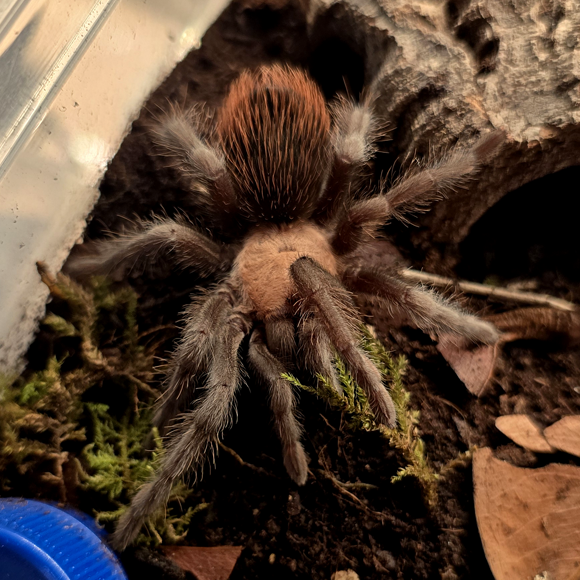
This species is a lovely medium-size tarantula, reaching around 13–15 cm diagonal leg span at full maturity. Females tend to have stockier bodies and outlive their leggier male counterparts, who are usually a tad slimmer and speedier when the time comes. While they’ll never outgrow their tank (thankfully), these spiders make an impressive sight with their striking golden carapace and contrasting black legs. Youngsters may emerge rapidly from juvenile to adult with some regularity, but this species doesn’t go from tiny tot to behemoth overnight.
Lifestyle
A true terrestrial with a fondness for a good burrow, Brachypelma albiceps spends much of its time close to – or in – the ground. In captivity, they’re keen diggers, often disappearing into a self-made tunnel or claiming a well-placed hide. While not a tree-climber, they’ll sometimes web across their burrow entrance, giving you a peek if you’re lucky. Mostly, they’re content to laze about in the open when feeling confident and will retreat when the mood strikes. Ground-dwelling luxury at its finest!
Lifespan
Brachypelma albiceps, like many from its genus, offers a wide range when it comes to lifespan. Females can live upwards of 20 years in captivity with the right care and a bit of luck (and barring any surprise adventures outside the enclosure). Males, however, tend to lead much shorter lives, usually living just 4 to 6 years and often only a year or so post-maturity. If you’re after a tarantula you could pass on to the next generation, a female albiceps is your gal.
Growth Rate
Growth is decidedly on the slow to moderate side. Don’t expect a baby to be an adult in under 3 years, unless it’s on a high-protein cricket smoothie diet (not recommended!). Regular, appropriate feeding, warmth and humidity will help things along, but part of the fun with Brachypelma is their slow, steady transformation. Slings grow incrementally with each moult, giving you plenty of time to appreciate every fluffy new instar. Patience is a keeper’s biggest virtue here.
Temperament
Brachypelma albiceps is considered one of the more chilled-out members of the tarantula world. They’re not likely to dash about or throw a tantrum if you poke a finger at the enclosure (though I’d recommend not testing this theory for fun). Expect a generally docile attitude, but always remember that personalities can vary – one may saunter around like a fuzzy housecat, another might be a bit more reserved. Quick to bolt for cover if startled, these spiders rarely show aggression and instead give you the classic ‘I’ll just go hide now’ move.
Temperature
You’ll want to keep Brachypelma albiceps at comfortable ‘room temperature’ – we’re talking an ideal range of 22–25°C. They’ll tolerate occasional dips to 18°C and heat up to 28°C, but consistency sits best with them. Invest in a good thermometer and avoid direct heating mats under the enclosure to prevent accidental ‘tarantula roast’. If your home regularly dips below 18°C, a thermostatically controlled heat mat on the side (not underneath!) or a small heat panel might be wise. Never blast them with tropical heat – they’re not holidaying in the Canaries.
Humidity
Aim for 50–65% relative humidity – similar to a British greenhouse on an optimistic day. Let the top layer of substrate dry between light waterings; a weekly misting or pouring water down one side is usually sufficient. Always provide a shallow water dish; tarantulas drink more than you might think (they’re not as tea-dependent as we are, but still). Good airflow is important to avoid stagnant, muggy conditions – cross-ventilation in the enclosure is your friend. Avoid sopping wet substrate, unless you fancy growing fungus rather than spiders.
Visibility
If you like to actually see your tarantula, albiceps won’t disappoint – at least most of the time. Mature adults often sit out in the open, especially when they know the coast is clear. Juveniles may be shyer and love a good burrow, showing up mostly at night or when they sense feeding time. With patience, you’ll regularly catch them lounging atop their substrate like a tiny, hairy sultan. Their golden caps make them a proper show-off compared to some of their undercover cousins.
Webbing
Albiceps is not your typical silk-slinger, but neither are they entirely shy about using their spinnerets. You’ll often find a light dusting of silk around hides, burrow entrances or anywhere they’ve decided is ‘home base’. Slings will sometimes decorate their patch more than adults, which can be fun to observe. Don’t expect heavy, arboreal-style curtains, but rather a neat touch-up as part of their interior design efforts. Silk is mainly used for footing and structural support, not for wrapping up the entire enclosure.
Feeding
Brachypelma albiceps enjoys a standard tarantula fare: crickets, locusts, dubia roaches, mealworms, and the odd waxworm for treats – as long as the prey is no larger than the spider’s abdomen. Slings should have access to pre-killed or small live prey every 4–5 days, while juveniles can be fed every 7–10 days. Adults do well with a meal every 10–14 days. Always remove uneaten prey after 24 hours to avoid stress (nobody likes dinner guests that overstay their welcome). Avoid power feeding; overstuffed tarantulas can end up with ruptured abdomens or moult issues. A plump tarantula is happy, but not obese! Adjust feeding frequency after moults, and never disturb during pre-moult.
Enclosure Recommendations
A clear, secure terrestrial enclosure is ideal – think 3–4 times the spider’s leg span in length and twice in width. Provide at least 10–15 cm of loose, diggable substrate (coco fibre or topsoil, please!) to allow natural burrowing behaviour, especially for youngsters. Add a sturdy hide (a chunk of cork bark or half a flower pot does nicely) and a shallow water dish. Cross-ventilation is important: stuffy homes make for grumpy tarantulas. Avoid excessive moisture; let the top dry out but keep the lower layers damp. Decorate as you like, but make sure there’s nothing sharp or topple-prone inside. Lids should be escape-proof – nobody wants a late-night ‘spider surprise’.
Experience Level
Brachypelma albiceps is a poster child for beginner-friendly tarantulas. Hardy, forgiving, and blessed with a pleasant temperament, they’re a great introduction to New World species for keepers of any experience level. That said, no tarantula is plug-and-play – slings are smaller and more delicate, and best practice says even the calmest spider deserves respect and caution. New keepers will appreciate their resilience to small husbandry errors and captivating looks, while seasoned hobbyists will enjoy their relaxed vibe and longevity.
Final Thoughts
Brachypelma albiceps is a crowd-pleaser: long-lived, gentle, easy-going and truly beautiful with their shimmering golden caps and chilled attitude. Beginners and veterans alike appreciate their manageable nature and reliable appetite. They’re not the world’s most active spider, but when they’re out, you’ll be treated to some stunning display time. The sloooow grow-up phase is a lesson in keeper patience (and an excuse to acquire more tarantulas, naturally). If you’re after a hardy, forgiving, gorgeous species that’ll keep you entertained for years, albiceps ticks nearly every box. Just don’t expect circus tricks or cuddles – they’re spiders, not Labradors.
Community Species Gallery
Approved photos submitted by registered Spoodoire users.
No community images have been approved for this species yet.
Submit Your Photo
Log in to submit a photo for this species.
Available at The Spoodoire
Products linked to this species care guide.