

Breeding Notes
Harpactira marksi
Species-specific breeding guidance, seasonal context and practical caveats for experienced keepers.
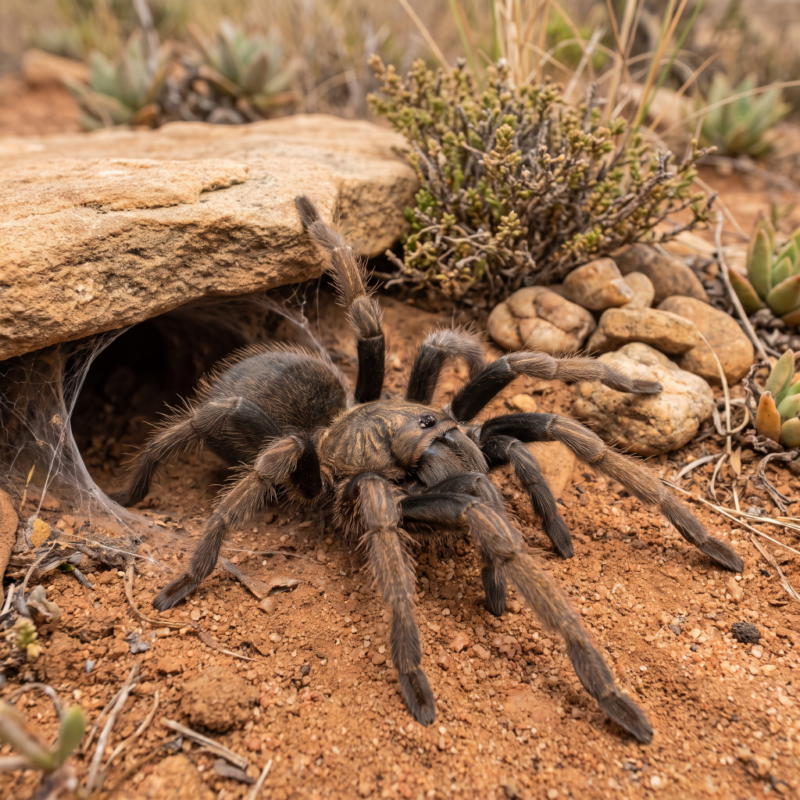
Species breeding reference
Breeding Notes
Breeding H. marksi is definitely not a walk in the park, with genuine hands-on experience thin on the ground. Stick close to what works for their close South African cousins—timing introductions after the cooler, dry spell with a gentle increase in warmth and humidity sets the stage for success. If you’re trying your luck, do so with patience, caution, and more faith in your climate controls than in gospel breeding timelines.
Breeding information for this species is a bit thin on the ground, so this guidance is based on the best available reports, native climate clues, and sensible keeper caution.
Wild Breeding Season
There isn’t a firm calendar to hand for wild breeding, but given their Western Cape roots, H. marksi likely plans its romantic outings around the end of the dry season and start of the rainier weather—think late South African winter into early spring.
Wild Environmental Triggers
Slight boosts in humidity after the dry stretch, along with steadily rising temperatures, appear to nudge mature females into readiness. These gentle changes mimic that lovely fresh feeling when spring rain finally touches the dust.
Native Climate Context
Straight from the Western Cape’s warm, semi-arid scrublands, this species is used to a fair bit of sunshine, with cooler nights and a spot of rain now and then. Their patch of the world gets its main rainfall in winter, settling into drier, warmer summers.
Captive Breeding Window
Based on climate clues, your best bet for a pairing attempt is just after a slight increase in enclosure humidity and gentle bump in temperature, mimicking the late winter into spring shift (August to October UK time). Treat this as careful guidance, not a confirmed window.
Pre-pairing Conditioning
Both spiders should have full bellies and be given a few weeks of slightly increased humidity and a touch more warmth leading up to pairing. A well-fed, hydrated pair is far less likely to turn a date into a dinner.
Male Introduction Guidance
Introduce the male in the evening, after dark, when both spiders are calm and less likely to be startled by movement. Keep a close watch and have separation tools ready—females can be unpredictable with visitors. A few trial runs in adjacent enclosures to get them used to each other's scent can help if either is particularly shy.
Female Readiness Signs
Watch for a plumper, freshly moulted female hanging about near the entrance of her hide, especially if she’s webbing more than usual or being less fussy about who’s knocking at her door.
Post-pairing Conditions
Boost humidity just a touch, and keep feeding steady but not excessive. Let her rest in peace without too much fuss—now’s not the moment to be peeking inside or rearranging things.
Sac Timeline
There aren’t any definitive numbers for H. marksi, but for close relatives in the genus, sacks can appear anywhere from four to ten weeks after pairing, so patience is key.
Incubation Notes
Females take care of their sacs underground, and it’s best not to disturb unless absolutely necessary. If you must pull the sac—usually around four weeks after being laid—keep it at a steady 24°C with moderate humidity, matching typical room conditions for the species.
Expected Sling Count
Clutch sizes are not well documented for this tarantula—expect a moderate sac compared to giants or dwarf species. Most in the Harpactira clan throw out somewhere between 50–120 slings, but this is a rough ballpark for cautious planning.
Risks and Cautions
Females can be defensive, especially post-moult or if conditions aren’t quite right, so always be ready to separate. Cannibalism is a risk if spiders aren’t well fed or if the male overstays his welcome. Sexing can be tricky—double check before putting anyone at risk. As with many African terrestrials, sudden bolts are more likely than dramatic fights, so never drop your guard.
Evidence confidence: Low