

Species Care Guide
Avicularia variegata
Manaus Brick-red Pinktoe
Also known as: Brick-red Pinktoe
Last updated: July 23, 2026
Origin
Avicularia variegata calls the lush rainforests of northern South America home, particularly regions within Brazil and Venezuela. These spiders are typically found high up in the forest canopy, basking in the humid, warm air and enjoying the safety of tree hollows, rolled leaves, and other nooks. The natural climate is consistently warm with plenty of rainfall and high humidity—think steamy rather than soggy. This environment gives Avicularia variegata plenty of room to roam upward and weave their intricate web hammocks, far away from the forest floor dwellers and nosy predators.
Adult Size
An adult Avicularia variegata typically sports a diagonal leg span of 10–13 centimetres, making them a lovely mid-sized arboreal option. Females tend to be more robust and slightly larger than their male counterparts, who are leggier and, let’s be honest, sometimes a bit more gangly. Males mature a bit faster but, as is tarantula tradition, don’t stick around for as many birthdays. Expect a visually impressive spider without requiring a showcase-sized tank.
Lifestyle
This is a classic arboreal tarantula, spending the majority of its life off the ground in elevated retreats. They use their webbing skills to construct elaborate tube webs in vertical spaces—tree bark, crevices, or even a suitably upright plastic plant if you’re a modern UK keeper. In captivity, they'll happily scale the enclosure walls, often displaying an acrobatic flair that would make a gymnast jealous. These tarantulas are masters of vertical living and rarely show interest in the ground unless searching for food or redecoration opportunities.
Lifespan
Female Avicularia variegata can delight their keepers for up to 12 years or so, particularly with attentive care. Males, however, are not in it for the long haul—most mature around 3–5 years and don’t typically make it much farther. This is pretty standard in the tarantula world, so don’t be alarmed if the boys don’t stick around for a pension plan. Consistent care and proper environment can help them reach their full potential in terms of longevity.
Growth Rate
Avicularia variegata enjoys a moderate growth rate—neither glacially slow nor spidery-speedy. With the right temperatures and a nutritious diet, slings can show noticeable progress, moving from specks to spectacles at a steady, satisfying clip. Growth tends to be a little quicker in males, but both sexes benefit from frequent, well-sized meals and low-stress conditions. Keep an eye on humidity and warmth if you want to see proper progress.
Temperament
Avicularia variegata is known for its generally mild and docile nature. Most are more interested in pretending you don’t exist than throwing a tantrum. They’ll choose a quick dash or a slow retreat over a threat display. While not aggressive, they can be a touch skittish and fast when startled—think startled cat levels of sudden movement. They rarely flick hairs and will only bite if seriously provoked. In short: a pleasure to watch, easy to care for, and unlikely to redecorate your skin with urticating hairs.
Temperature
Give your Avicularia variegata a comfortable spot at 22–26°C—very much in line with an average British home (on a good day, when the central heating’s not playing up). They tolerate brief dips to around 20°C and can handle up to 28°C, but wild swings should be avoided. Unless your house turns into the Arctic overnight, supplementary heating is usually unnecessary. If you do need to add heat, a thermostat-controlled mat or radiator (placed outside the enclosure!) is the safest bet. Always avoid direct overhead bulbs, as crispy spiders are not the aim.
Humidity
Aim for a humidity range of 65–75% RH for this rainforest resident. You don’t need to soak their world—just keep one side of the enclosure’s substrate slightly moist and always provide a water dish big enough for a tiny spider spa day. Excellent cross-ventilation is essential for keeping respiratory issues at bay; Avics, in particular, are prone to trouble if things get stuffy. Mist one corner lightly if needed, but let the enclosure breathe—damp and stagnant is a recipe for disaster, not spider bliss!
Visibility
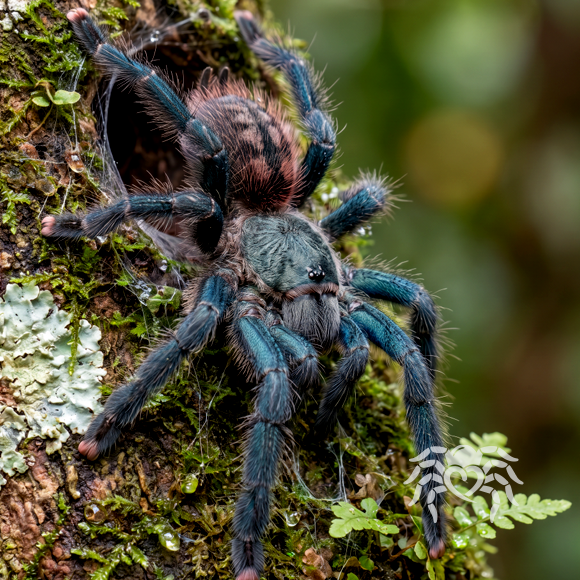
Avicularia variegata is a pretty bold display spider by Avic standards. They like to lounge in their web hammocks or sprawl against the glass, especially at dusk when the mood lighting is right. Slings can be a little more bashful but tend to come out more once settled. Daytime sightings are common if you provide lots of vertical decor—plus, those pops of green and pink are easy to spot! Not quite a living statue, but you won’t be playing spider hide-and-seek every day.
Webbing
Avicularia variegata is a prolific web artist, spinning thick, silken tubes wherever they feel safe. Don’t be alarmed if your enclosure is soon swaddled in sticky tunnels and airy hammocks—this is their natural way to feel at home. They use webbing for hiding, sleeping, and as lookout points for an unsuspecting cricket. Watching them weave is a joy for keepers and a sign you’ve got conditions just right. Give them vertical branches and fake plants to unleash their inner decorator.
Feeding
Juveniles and adults munch happily on appropriately-sized crickets, dubia roaches, locusts, or even the occasional waxworm for dessert. Slings can start with fruit flies or pinhead crickets, moving up as they moult and grow. Feed slings every 5–7 days, juveniles every 7–10 days, and adults every 10–14 days, but always remove uneaten prey within 24 hours—no one needs a cricket intruder during a delicate moult. Avics are famously keen eaters, but overfeeding leads to obesity and sluggishness, so resist the urge to spoil them. If their abdomen is plump and food is routinely ignored, hold off until after the next moult. Beware of feeding only one type of prey; variety is the spice of spider life!
Enclosure Recommendations
Opt for a tall, well-ventilated enclosure—think 30cm height for adults, with a secure, front-opening door (for the sake of your nerves). Cross-ventilation is an absolute must, as Avics detest stale air. Provide at least 5–8cm of moisture-retaining substrate like coco fibre, but don’t swamp it; the top should stay mostly dry. Add plenty of vertical cork bark, fake foliage, or sturdy branches to encourage webbing and climbing. A water dish is non-negotiable, and while a hide isn’t absolutely necessary, they’ll appreciate any leafy privacy screens you provide. Don’t forget: secure all decor so it doesn’t squash a curious spider on a midnight ramble.
Experience Level
This species is a great option for both careful beginners with research under their belt and seasoned keepers looking for a reliable, colourful arboreal. They’re reasonably forgiving of minor husbandry errors and generally not at all aggressive, though their need for consistent humidity, good ventilation, and vertical setups requires a bit more attention than your average terrestrial tarantula. If you’re moving up from a ground-dweller or just keen on a challenge beyond ‘pet hole’, Avicularia variegata will tick your boxes.
Final Thoughts
Avicularia variegata stands out with its stunning green hues and gentle temperament—an arboreal gem for any collection. They’re forgiving enough for newer keepers but interesting enough for veterans, and their acrobatic web-building guarantees hours of entertainment (or at least frequent ‘oohs’ and ‘aahs’ from your mates). The only real challenges: maintaining that perfect humidity balance and resisting the urge to handle your spider’s lovely legs. If you fancy a vibrant display tarantula that’s outgoing, beautifully coloured, and not out to get you, A. variegata is hard to beat. Just remember, patience is rewarded in spidery circles, and a little attention goes a long way for these tree-dwelling wonders.
Community Species Gallery
Approved photos submitted by registered Spoodoire users.
No community images have been approved for this species yet.
Submit Your Photo
Log in to submit a photo for this species.