

Origin
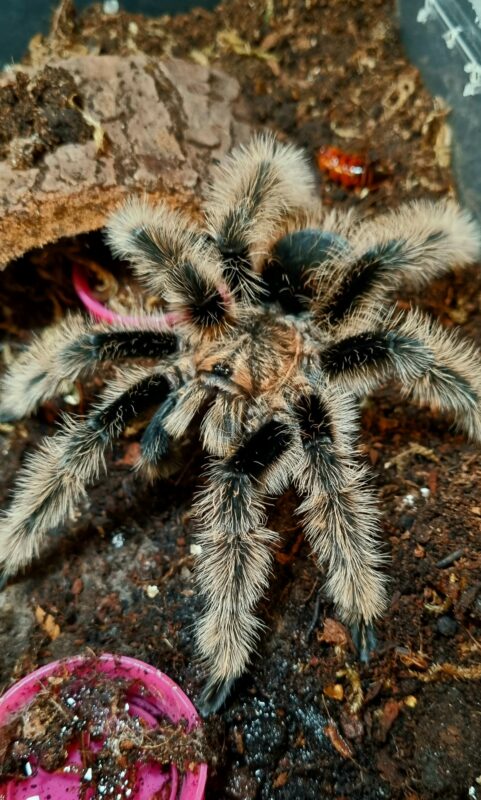
Tliltocatl albopilosus, more affectionately known as the curly hair tarantula, hails from the lush rainforests and grasslands of Central America, with populations mainly thriving in Honduras and Nicaragua. Here, the climate is warm and humid, with the ground often littered with fallen leaves and decaying wood—perfect for a reclusive spider looking to dig in and stay hidden. In the wild, these spiders burrow or find refuge under stones, logs or thick vegetation, making the most of the forest floor’s nooks and crannies. Their natural habitat experiences a steady temperature with a distinct rainy season, so they’re rather forgiving when it comes to the odd humidity fluctuation in captivity.
Adult Size
Adult females typically reach a diagonal leg span of 13–15 cm, making them one of the chunkier species available to hobbyists. Males are usually a tad smaller and leggier, maxing out around 11–13 cm, but both genders make impressive display specimens when fully grown. Males have longer legs and narrower abdomens, with their mature moult gripping the passport to the next (and final) chapter of their adventurous lives. You’ll see the bulk of growth in the first few years, and it’s not uncommon for a well-fed curly hair to look like it’s been at the gym after just a couple of years!
Lifestyle
Curly hair tarantulas are terrestrial to their fuzzy little core, spending most of their lives hugging the earth, occasionally popping out for an evening stroll. In captivity, they’re content with terra firma, often rearranging décor to their liking and occasionally attempting minor excavations—think of them as the interior designers of the spider world. They might dig a shallow burrow under their hide or at the edge of the enclosure, especially as youngsters. While not averse to lounging in the open, they’re generally happiest when they’ve got a nice, cosy hideaway to retreat to.
Lifespan
Females of Tliltocatl albopilosus are marathon runners in spider terms, often reaching 15 years and in many cases surpassing even that when pampered in captivity. Males, ever the romantics, put all their energy into growing up and finding love, which leaves them with a much shorter shelf life of about 4 to 5 years—sometimes a bit longer if they’re slow to mature, but don’t count on it. Good husbandry, stress-free surroundings, and consistent feeding can help both sexes live their best (and longest) spider lives.
Growth Rate
Tliltocatl albopilosus is known for a steady, moderate growth rate—not quite a “blink and you’ll miss it,” but they won’t keep you waiting forever either. Juveniles make noticeable progress year by year, especially if kept warm and given regular meals. Think gentle progression rather than an overnight boom. Growth can be slower at cooler temperatures or with sparse feeding, but offer ample food and optimal warmth, and your curly hair will reward you by making regular appearances in their 'fancy moult outfit.'
Temperament
Tliltocatl albopilosus is widely regarded as a classic gentle giant. They’re usually slow-moving, rarely defensive, and often described as perfect pets for newbies with a healthy sense of boundaries. Though generally calm, they may briefly bolt or flick some hairs if startled but tend to settle back down and resume their sedentary routines shortly after. These tarantulas often tolerate gentle enclosure maintenance well but remember, every spider has its own personality—expect the odd diva moment when least convenient.
Temperature
Aim for enclosure temperatures between 21–24°C (70–75°F)—perfectly matching a comfortable British living room. This hardy species can tolerate a mild dip below if your central heating takes a holiday, but try not to let things stray below 18°C for long periods. Excessive heat should also be avoided, as tarantulas can struggle when things get too toasty. Supplemental heating isn’t usually necessary unless your home is uncommonly chilly. If you must use heat, opt for indirect methods like a heat mat attached to the enclosure’s side—but never underneath, as you don’t want to cook your spider or dry out the substrate.
Humidity
Curly hair tarantulas appreciate moderate humidity, ideally around 60–70% RH. Too dry and moulting can become tricky; too damp and you’ll risk attracting mould or inviting unwanted pests. Gently misting one side of the enclosure or occasionally moistening part of the substrate (with the other side kept dry) gives your spider options—a spa and a sun lounger in one. A sturdy, shallow water dish is essential, both for drinking and maintaining ambient humidity. Just keep an eye on ventilation: good airflow reduces stuffiness and helps keep the spider healthy.
Visibility
Unlike some of their more elusive cousins, curly hairs are wonderfully visible much of the time, especially once they’re past the skittish sling stage. While juveniles may be more reclusive, adults are often found lounging out in the open, showing off their impressive curls and giving you plenty of opportunity for admiring glances (and the odd Insta snap). They’re mostly nocturnal but don’t be surprised to see yours out and about during the day, occasionally moving décor or contemplating the mysteries of life from their hide entrance.
Webbing
Tliltocatl albopilosus isn’t known for building elaborate web castles—think throw pillows rather than luxury penthouses. They do lay down sheets of webbing around their favourite hangouts, particularly at burrow entrances or hides, but it’s far from the 'cobweb city' of some arboreal or fossorial species. Slings may web a bit more if kept on moist substrate, which can act like a security blanket. Adults sometimes use webbing for prepping a moult mat or lining a retreat, which is fascinating to watch if you like tiny, silent home renovations.
Feeding
Feed curly hair slings appropriately sized invertebrates—mini crickets, fruit flies, or pre-killed micro mealworms—twice weekly for optimal growth. Juveniles can handle small crickets or dubia roaches every 5–7 days, while adults prefer a decent-sized cricket, locust, or dubia once a week, or even every other week if feeling plush. They’ll usually pounce on prey with surprising gusto, but don’t worry if food is stubbornly ignored during pre-moult—they’re just dieting. Remove uneaten prey after 24 hours to avoid stress or accidental injury. Remember: it’s better to underfeed than overfeed—a chunky spider is a happy spider, but not an obese one. Watch their abdomen size and adjust feeding frequency accordingly.
Enclosure Recommendations
For slings and juveniles, a secure deli cup or small terrarium with good ventilation and at least 5–7 cm of substrate (coco fibre, topsoil or a mix—no fancy brands needed) will serve perfectly. Adults appreciate more leg room; a 30 x 30 x 20 cm enclosure is ideal. Provide a hide—half a flowerpot or cork bark tunnel is an old favourite—and enough substrate (8–10 cm) for light digging. Avoid cluttering the enclosure with décor that impedes movement. A shallow water dish is non-negotiable, topped up with fresh water. The enclosure should be escape-proof, ideally with a lockable lid, and never, ever exposed to direct sunlight or draughts. Regularly check for mould or pests and keep things clean but not clinical.
Experience Level
With their sturdy build, calm disposition, and forgiving attitudes toward humidity and temperature fluctuations, curly hair tarantulas are one of the best species for those just dipping their toes (figuratively speaking) into the tarantula hobby. Their predictable temperament and lower maintenance needs make them equally attractive to experienced keepers after a low-fuss addition to their menagerie. Just provide respect, a cosy enclosure, and regular feeding, and you’ll have a willing companion—at least, as willing as spiders get!
Final Thoughts
Tliltocatl albopilosus is a true hobby classic for good reason—calm, attractive, and ridiculously easy to care for, they strike a perfect balance between display and low drama. The fluffy, curled setae give them a unique, almost endearing look—even non-keepers have been known to coo over a curly hair! Their forgiving nature makes them perfect for both those just starting out and seasoned spider fanciers after a reliable addition to their collection. The main challenge? Resisting the temptation to adopt more than one. Whether as a single stunner or part of a larger collection, this species will charm you with its good looks and gentle, laid-back behaviour.
Community Species Gallery
Approved photos submitted by registered Spoodoire users.
No community images have been approved for this species yet.
Submit Your Photo
Log in to submit a photo for this species.