

Species Care Guide
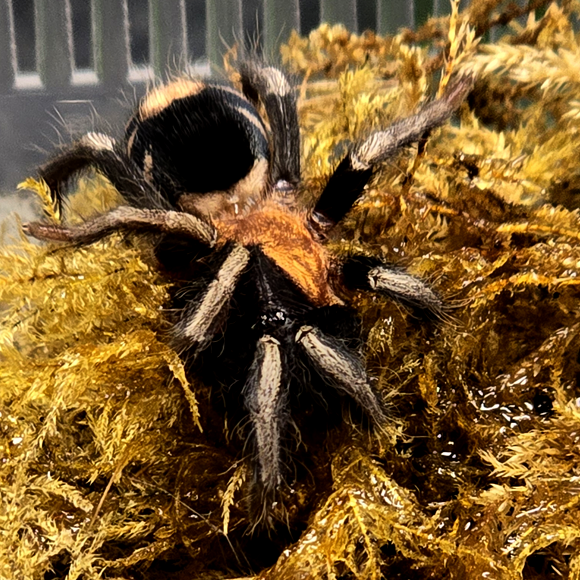
Cyriocosmus elegans
Trinidad dwarf tiger tarantula
Also known as: Trinidad dwarf tiger rump, dwarf tiger tarantula
Last updated: June 27, 2026
Buy this species
Origin
Cyriocosmus elegans hails from the lush lowland forests of Venezuela, as well as the islands of Trinidad and Tobago. In the wild, these diminutive beauties are found in humid tropical regions, living amongst leaf litter, decaying wood, and loose soil. Temperatures are warm year-round, thanks to their equatorial home, with consistent highs during both day and night. Expect regular rainfall and a naturally high humidity in their native environment—which explains their affinity for a moist substate and the odd webbing marathon. It’s truly the sort of locale where a spider might want to pop on some tiny sunglasses and kick back with a micro-coconut.
Adult Size
If you’re after a gentle giant, look elsewhere—C. elegans is truly a pint-sized stunner. Adults reach an impressive-for-them 2.5–3 cm leg span (about the size of a 10p coin). Females are generally a smidge bulkier and longer-lived, while males are more streamline, reaching maturity faster and burning out bright but brief. Don’t blink! Their small size means enclosure upgrades are easy, and they’ll remain tiny delights their entire life, never outgrowing a desk-top habitat.
Lifestyle
C. elegans is predominantly fossorial, meaning it loves to burrow and spend much of its time underground. In captivity, slings and juveniles in particular will excavate tunnels, create hidden chambers, and web to their little hearts’ content under the substrate’s surface. Adults may occasionally venture topside, but they retain a strong preference for lurking where the sun doesn’t shine. You might not see them out on the catwalk (or should that be spiderwalk?) every day, but the thrill is in spotting their delicate handiwork and watching them dash for their burrow at mealtime.
Lifespan
Like many tarantulas, the ladies win the longevity contest here. Female Cyriocosmus elegans can live 7–10 years, provided with thoughtful captive care. Males, meanwhile, are on a much shorter clock—often maturing in just 12–18 months and living for another year or so after that. It’s a life measured in bold dashes, not gentle strolls. Still, even the males give you a good run for your money, considering their Lilliputian stature.
Growth Rate
C. elegans is famous (or infamous) for its speedy growth. Slings can run from egg to mature male in as little as a year, especially with regular meals and slightly warmer conditions. Females are a bit more leisurely, but not by much. Good feeding and warm temps speed things up, while colder, dry conditions make them slow the pace. You may be surprised just how quickly you have an adult if you’re not paying attention—so keep those moult records at the ready!
Temperament
Holding the title of 'Least Likely to Throw a Tantrum' in the tarantula world, C. elegans is skittish, shy, and prone to burrowing rather than brawling. They’re extremely unlikely to display defensive postures or hissy fits—when startled, their first instinct is to bolt down their bolt-holes and disappear from view faster than Houdini. They rarely flick hairs and almost never show aggression. While that means you won't get epic stand-offs, it makes for peaceful cohabitation (with you, not another spider, of course). Handle only with your eyes—handling is not recommended, as their tiny size and nippy movements make them prone to injuries.
Temperature
C. elegans likes things on the warm side, echoing the tropical forests of its home. Your typical British household temperatures (19–22°C) are usually fine, but these spiders thrive best at a cosy 22–24°C. If your spider room gets chilly in winter, consider a thermostat-controlled heat mat on the side of the enclosure (never underneath), but avoid roasting them alive! Too much heat dries them out faster than a biscuit in a breeze. If your room fluctuates a bit, don’t panic—they’ll cope with 20–26°C, so long as the lower temps are temporary and not paired with damp. Always keep the enclosure out of direct sunlight or draughts.
Humidity
True to their rainforest upbringing, C. elegans appreciates humidity in the 70–80% range. This doesn’t mean creating a swamp or foggy terrarium—just keep a portion of the substrate lightly moist, especially for babies, and let the rest dry out a bit between waterings. Use a small water dish for juveniles and adults—it’ll provide drinking water and help maintain humidity. Good cross-ventilation is crucial: stagnant, soggy air is worse than being a little too dry. Slings are more sensitive to drying out, so aim to mist the sides lightly or overflow the water dish to keep things Goldilocks-perfect: not too damp, not too dry.
Visibility
This species is the James Bond of the tarantula world: always dressed to impress, but not always easy to spot. Slings and juveniles might be glimpsed at night or during feeding times, dashing out to grab prey before zipping back underground. Adults are even more elusive, mostly popping out after dark or when hunger strikes. Don’t be discouraged by a missing spider—they’re likely watching you through a tiny webbed peephole. Still, with patience, you’ll catch flashes of their beautiful heart-shaped patterns and neat web carpets. If you love burrowers and enjoy the element of surprise, C. elegans will delight you.
Webbing
C. elegans may not give you classic tarantula hammock constructions, but they do love webbing in, around, and over their burrow entrances. Slings and juveniles, especially, are prolific with silk, lining their lairs and occasionally laying down a silken carpet over the substrate surface. This webbing acts as both alarm system and welcome mat—watch your spider zip across it when prey lands nearby! Adults can be less dramatic, but still use webbing to reinforce tunnels and block off chambers during moults. Their web creations add a real decorative touch for observant keepers.
Feeding
Raise your prey tongs: C. elegans isn’t a fussy eater, but it does require thoughtful feeding. Live prey that won’t outgrow your spider, such as pinhead crickets, pre-killed roach nymphs, and flightless fruit flies, are ideal for slings. Slings should eat twice a week, as they grow faster with regular, small meals. Juveniles and adults can be fed weekly, graduating to larger microcrickets or small roaches. Remove uneaten food promptly, especially before moulting, as these spiders are swift molters and may refuse meals before shedding. Avoid overfeeding—obese tarantulas moult poorly and suffer related health woes. Never offer prey that’s too large; the golden rule is nothing longer than the spider’s body. Water, as always, is essential, so keep their dish topped up (even if it’s often filled with substrate). Enjoy their lightning feeding response and the occasional epic takedown—tiny size, big appetite!
Enclosure Recommendations
Start your C. elegans sling in a small, secure container with good ventilation holes near the top—think deli cup or similar. Provide at least 5 cm of compact, moist but not wet coco fibre or topsoil (avoid fertilisers and pesticides!), as deep substrate is key for happy burrowing. No need for elaborate décor: a small piece of cork bark or bark shard as a starter hide works wonders. As they grow, upgrade to a larger acrylic or glass box, but keep the footprint modest—the ‘palace’ phase is best reserved for cats. Always provide a bottlecap-sized water dish for juveniles and adults, and remember that humidity comes from moist substrate, not from drenching the enclosure. Avoid excessive misting. Cross-ventilation is a must—holes on opposite sides prevent stagnant air. Don’t forget to secure the lid: these spiders are tiny, quick, and able to squeeze through the smallest of gaps. Simplicity means easy cleaning, too: ideal for the secretive lifestyle of C. elegans.
Experience Level
While their secretive nature stumps some beginners, most hobbyists find C. elegans straightforward to maintain with a little research. They’re hardy, not overly fussy about parameters (within reason), and rarely show strong defensive behaviour, making them suitable for beginners ready to try their hand at fossorial species. Just don’t expect a display animal—if you value frequent sightings, perhaps start with something less bashful. For those who appreciate subtler joys (like watching a sling excavate a tunnel), C. elegans is a gem.
Final Thoughts
If you like your spiders small, fast-growing, and full of clandestine mystery, Cyriocosmus elegans is your dream come true. They offer all the charm of bigger tarantulas in a desktop-friendly package, with stunning heart-shaped markings that occasionally reward patient keepers peering under the right light. Their neurotic burrowing and webbing habits make them a fascinating species to watch, albeit through rare cameos. They're forgiving on care requirements, suitable for cautious beginners, and a delight for seasoned keepers looking to round out their collection with something a little more secretive. The main challenge? Not seeing them every day! But therein lies the appeal: each sighting feels like stumbling onto hidden treasure. All in all, C. elegans delivers miniature tarantula magic, perfect for fans of webbed underground wonders.
Community Species Gallery
Approved photos submitted by registered Spoodoire users.
No community images have been approved for this species yet.
Submit Your Photo
Log in to submit a photo for this species.
Available at The Spoodoire
Products linked to this species care guide.