

Species Care Guide
Harpactira pulchripes
Golden blue-legged baboon tarantula
Also known as: golden blue leg baboon, golden blue-legged baboon
Last updated: June 27, 2026
Buy this species
Origin
Harpactira pulchripes hails from the Eastern Cape of South Africa, where the landscapes are a charming blend of dry grasslands and semi-arid scrub. The climate is warm for much of the year, with mild winters and rather patchy rainfall. In the wild, these tarantulas are found in burrows dug into sandy soil, often sheltered by rocks or tufts of grass. The natural environment is not overly humid, and it gets a good bit of sun, so if your spider could wear sunglasses, we’d recommend a decent pair! Creating an enclosure that mimics this habitat will keep your pulchripes feeling right at home.
Adult Size
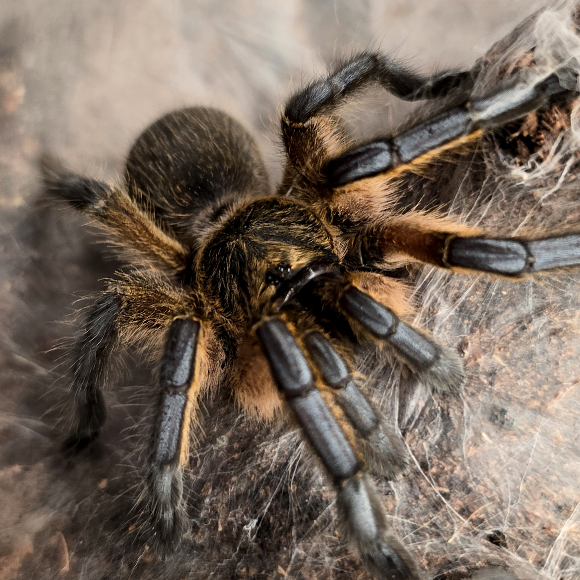
Expect an adult Harpactira pulchripes to reach a diagonal leg span of 12–15 cm, with females leaning toward the larger end and males usually being slimmer and a tad smaller. These stunners have a robust, chunky build—especially the ladies. Males, while still striking, tend to have leggier proportions and may appear a bit less flashy compared to the females’ golden hues. Growth rate is reasonable for an Old World species, so prepare to be surprised how quickly those tiny spiderlings get their golden trousers.
Lifestyle
This species is a champion digger, happiest when it can burrow down and redecorate its home with some artistic webbing and, occasionally, an unintentional landslide. While it’s technically terrestrial, Harpactira pulchripes is best classed as fossorial due to its love for going underground. In captivity, they’ll often set up shop with an extensive burrow, but they’re not total recluses—they sometimes hang out at the entrance like tiny, hairy sentinels, waiting for dinner or just checking out the nightlife.
Lifespan
Females are definitely in it for the long run, often living 12–15 years in captivity if well cared for. Males, sadly, are more like fireworks—brilliant but brief—often maturing in 3–5 years and rarely living much longer after their final moult. If you want a gold beauty to keep you company for a good while, aim for a female if possible. Either way, both genders provide years of fascination and a healthy dose of ‘wow’ factor in your collection.
Growth Rate
Harpactira pulchripes boasts a medium growth rate—not lightning-fast but not frustratingly slow either. With regular feeding and good conditions, slings will shed often and grow noticeably after every moult. Cooler temperatures and less frequent meals can slow things down, but if you keep them cosy and well-fed, they’ll reach adult size in roughly 2–4 years. Bonus: Watching their colours emerge as they grow is genuinely one of life’s small pleasures!
Temperament
While not aggressive, Harpactira pulchripes is all about boundaries—cross them, and it’s gone quicker than you can say ‘where did it go?’ They’re generally shy and prefer retreat over confrontation, but being an Old World species, they can put on a defensive display if truly pestered. Fast and skittish rather than bitey, they’re more likely to vanish down their burrow than stand and fight. In short: admire, don’t poke, and everyone will get along swimmingly.
Temperature
Aim to keep your enclosure between 21–24°C, with occasional warmer spells (up to 26°C) tolerated. These spiders can handle a mild dip at night, but consistency is key. In most UK homes, room temperature is bang on, but a thermostatically controlled heat mat on the side (never underneath a deep enclosure!) can help in colder weather. Always monitor with a digital thermometer and avoid direct heat sources that could dry out the substrate or roast your golden-legged friend. Remember, extremes are best left to human cooking shows.
Humidity
A moderate humidity of 50–65% works a treat for H. pulchripes. Achieve this with a couple of light waterings a week, moistening part of the substrate while leaving the rest dry. Ventilation is crucial—well-placed cross-vent holes fend off stale air and dreaded mould. Always provide a water dish, ideally one with a broad base to thwart overzealous burrowing. Avoid soggy conditions; these spiders like it on the drier side, with just enough moisture to moult comfortably and stay hydrated.
Visibility
Despite their fossorial nature, pulchripes are surprisingly visible when settled in. They regularly guard the mouth of their burrow or lounge under webbing, particularly in the evening. Feeding time is prime-time viewing, as they’ll often pounce out for prey in spectacular fashion. While you won’t see them bouldering about during the day, you’re not likely to forget they live there—their gorgeous gold legs stand out even in the dimmest light.
Webbing
Harpactira pulchripes is a creative webber, using silk to reinforce its burrow, line tunnels, and occasionally to drape over surface décor like a tiny, golden-legged decorator. You won’t see the epic, thick webbing of some arboreals, but over time a neat network appears—practically a spidery welcome mat for prey (or for the unimpressed postman). Webbing activity ramps up after rehomes, moults, or any attempted enclosure remodelling by their keeper.
Feeding
Slings enjoy frequent meals of appropriately sized pinhead crickets, pre-killed mini mealworms, or confused micro-roaches. Feed every 3–4 days, being careful not to overfeed or leave uneaten prey, as slings will burrow for weeks after moulting and don’t need an accidental snack-induced injury. Juveniles and adults thrive on a diet of crickets, dubia roaches, or locusts—one or two a week is plenty. Pulchripes are keen eaters with a fast, athletic feeding response, but don’t be tempted to force-feed if they’re in pre-moult; just remove uneaten prey after 24 hours and try again in a few days. As always, variety is the spice of (spider) life. A water dish is a must for all sizes.
Enclosure Recommendations
A secure, horizontally oriented enclosure with plenty of depth for digging is ideal. For slings, tubs with at least 7–10 cm of substrate work well, moving up to 20–25 cm for juveniles and adults; coco fibre or a soil/loam mix is perfect. Provide a starter burrow (poke a hole or angle a hide) to encourage settlement, but expect them to quickly improve on your interior design! Good ventilation is critical—side vents help prevent stuffy, damp conditions. Add a water dish and a cork bark hide, even if it soon vanishes under webs. Avoid sharp décor, as these are master diggers and sometimes disturb their own landscaping. Ensure the lid is secure—these spiders are quick when they want to be!
Experience Level
This species is best suited to keepers with some prior tarantula experience—not because it’s an unholy terror, but due to its speed and Old World attitude. Beginners can succeed if they’re confident, cautious, and committed to not handling. A great choice for those wanting to step up from beginner species and enjoy a striking display tarantula without taking on a total challenge. Respectful, hands-off care is the name of the game!
Final Thoughts
Harpactira pulchripes enjoys a near-mythical status for its dazzling looks (those legs!) and fascinating habits. It’s an ideal choice for the aspiring keeper ready to step beyond the basic New World species, offering just the right balance of ‘watch me vanish at lights-out’ and ‘check out my golden knees on display’. Their fossorial tendencies mean you’ll have fun watching them redecorate, and their feeding response can be dramatic. Drawbacks? They’re not the best for handling (hands off, always), and their speed demands respect. Otherwise, you’re left with a truly rewarding species that turns even simple maintenance into a show. Highly recommended for the tarantula enthusiast looking for something with character—and major glitz.
Community Species Gallery
Approved photos submitted by registered Spoodoire users.
No community images have been approved for this species yet.
Submit Your Photo
Log in to submit a photo for this species.
Available at The Spoodoire
Products linked to this species care guide.