

Species Care Guide
Neoholothele fasciaaurinigra
Bumblebee tarantula
Last updated: June 25, 2026
Buy this species
Origin
Neoholothele fasciaaurinigra hails from the tropical lowlands of Venezuela and Colombia, where damp undergrowth meets tangled branches and leaf litter. In the wild, this charismatic tarantula is found in humid forests with plenty of detritus and natural hidey-holes, making the most of rotting logs, tangled roots and occasionally even constructing their homes up the sides of mossy trees. The climate in their native range remains warm and muggy year-round, with temperatures typically hovering between 22–28°C and regular tropical downpours keeping things nice and steamy. It’s a far cry from the British drizzle! Their environment offers plenty of cover and opportunity for both digging and constructing web retreats.
Adult Size
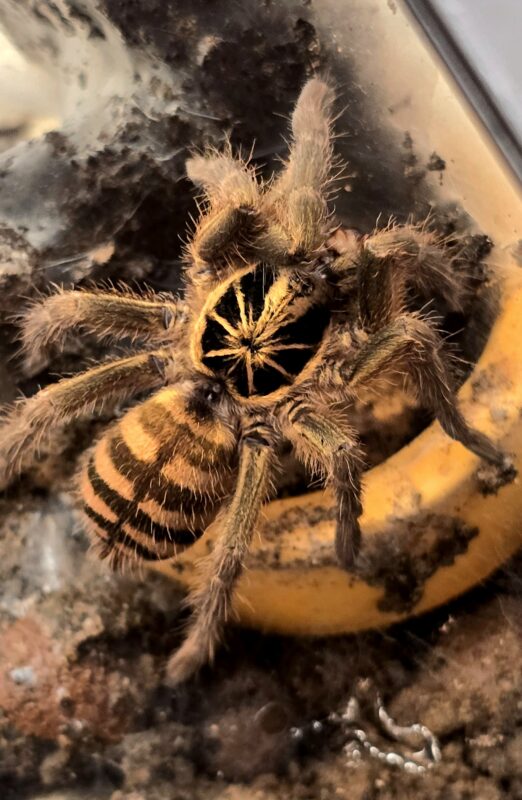
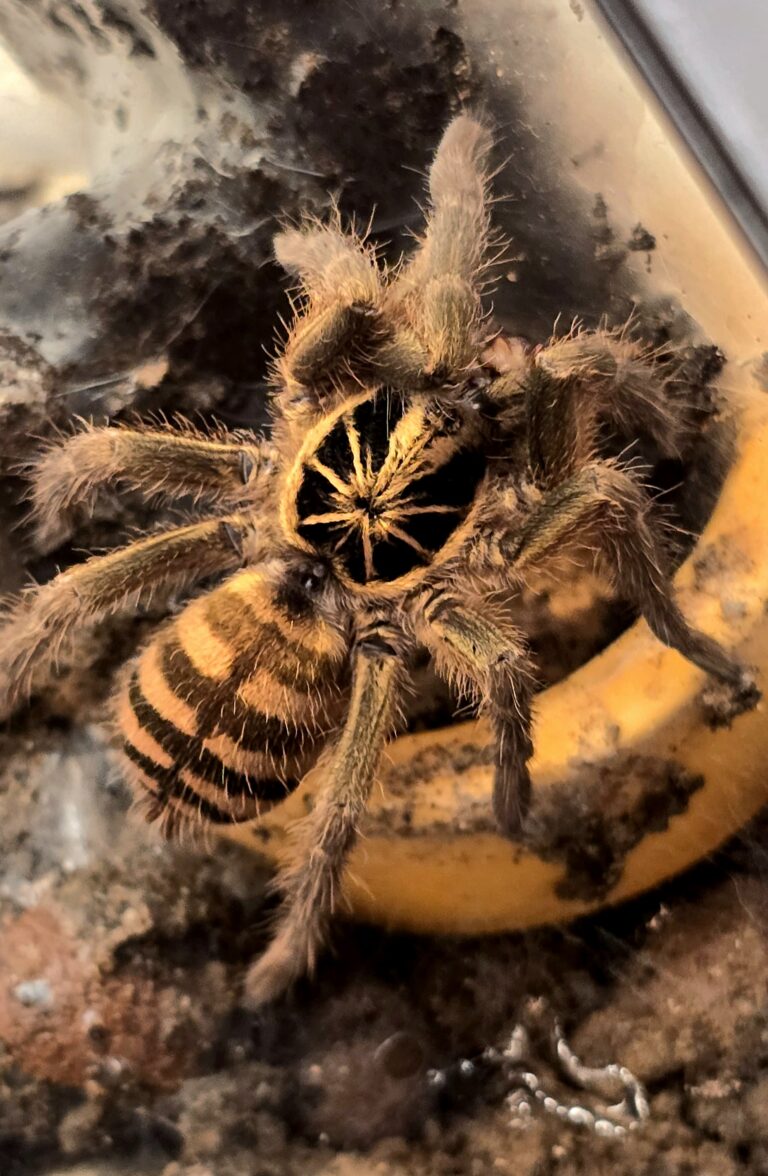
Don’t expect a dinner plate—adults reach a charmingly modest 7–8cm diagonal leg span, making them just right for smaller set-ups or those after something petite and manageable. Females are a tad larger, chunkier and boast a far longer lifespan, while males, though equally dapper, remain a bit more gangly and mature more quickly. Their compact size paired with stunning gold and black markings ensures they’re a conversation starter even without supermodel proportions.
Lifestyle
This species can’t quite decide if it prefers to dig burrows or climb, so it does a bit of both—a perfect all-rounder for those torn between the arboreal or fossilorial path. In captivity, Neoholothele fasciaaurinigra will frequently web up both the ground and vertical surfaces provided, especially if there’s a nice bit of bark or cork to lean against. They’ll often establish intricate tunnels with an entry ‘curtain’ of silk, sometimes even expanding upwards into any décor you kindly offer. If you enjoy watching builder spiders, this species is a joy—they are busy, industrious and very inventive with their space.
Lifespan
Females are the marathon runners of the species, with lifespans typically clocking in at 8–10 years (plenty of time to make an impression!). Males, on the other hand, rarely get to enjoy their golden years, often living only 2–3 years once mature. Like many tarantulas, they race towards maturity before bowing out, leaving the females to enjoy peace and web castles for many years to come.
Growth Rate
Growth for Neoholothele fasciaaurinigra is best described as medium. Slings can double in size within a year with regular meals and a warm, moist set-up—perfect for those impatient to see some action but not wanting to blink and miss it all. Ultimate size and speed of development can vary with food, temperature and a pinch of spider stubbornness, but you won’t be left twiddling your thumbs either.
Temperament
With blazing gold stripes and a cheeky attitude, Neoholothele fasciaaurinigra is more likely to leg it than to square up. Quick-footed and prone to fancy web retreats, they are rarely defensive, preferring to disappear into their silken fortifications at the first sign of disturbance. While their speed might surprise the uninitiated, aggression is rare. They’re happiest when left to plot their latest web improvements, and will only bolt if truly startled.
Temperature
Aim to keep your enclosure between 22–26°C. This mirrors their tropical roots and keeps them active, webbing and feeding like little golden machines. If your home occasionally dips below 20°C in the winter months (curse you, British weather), a heat mat attached to the side of the enclosure and controlled with a thermostat can help. Never position heating underneath—spiders don't like to bake their bottoms! Always monitor temperatures with a thermometer and avoid wild swings. As ever, stable conditions are the key to a happy, healthy Neoholothele.
Humidity
Keep humidity in the 70–80% RH range, with good cross-ventilation to prevent overly damp conditions and mould. An easy method is to moisten one side of the substrate and allow the other to dry, letting your spider choose its preferred spot. A shallow water dish is a must, even if your spider acts like it’s auditioning for a web artist. Fine misting of the enclosure walls every few days helps, but don’t soak the place—think ‘humid jungle’ rather than ‘local swimming pool’. Good ventilation works wonders in preventing stuffiness and keeps both spider and keeper smiling.
Visibility
Although not the most brazen spider on the block, Neoholothele fasciaaurinigra is much more visible than many fossorial species. You’ll often spot them tending their webs or peeking out from their lair, especially at dusk or after the lights go out (night-owl behaviour is their jam). If you arrange décor with a viewing window in mind, you’ll be rewarded with some wonderful natural behaviour and plenty of photo ops.
Webbing
Prepare to be impressed—these spiders are avid web architects! Their enclosures often become thick with silk ‘tunnels’, curtains, and even suspended platforms, making them a treat for those who love visually interesting set-ups. Webbing is their preferred tool for both predator evasion and prey capture, and you’ll regularly see new additions, renovations, and occasional demolitions. Be careful not to destroy their masterpieces during maintenance, or you might get the full ‘eight-legged stink eye’.
Feeding
Young slings will devour pre-killed pinhead crickets, fruit flies or chopped mealworms with gusto, and should be fed twice a week, removing any leftovers to avoid attracting pests. Juveniles and adults enjoy a varied diet of appropriately sized crickets, small roaches, or larvae every 7–10 days, adjusting frequency if you notice a chunky abdomen (they do appreciate a diet, unlike some of us). This species is usually an enthusiastic eater—the classic ‘web and wait’ tactic in action—so don’t be surprised to see lightning-fast pounces. Molt cycles may lead to fasting, so don’t panic if they turn up their noses at dinner now and then. The big mistake? Overfeeding or offering prey that’s too large. Keep it sensible and your spider will display all the feeding antics you could wish for!
Enclosure Recommendations
A well-ventilated plastic or glass enclosure around 20x20x25cm does nicely for adults—tall enough for some semi-arboreal climbing but not too huge to make finding your spider a Sherlockian task. Provide 5–8cm of moisture-retentive substrate such as fine topsoil or coco fibre, with a cork bark slab or upright piece to anchor webbing. Add some leaf litter and artificial plants for aesthetics and additional climbing or hiding options. Never skip the water dish. Lid ventilation and some side holes keep things fresh. Dazzling web structures are most impressive when there’s vertical décor, so pop in a branch or two. Keep any hides partly exposed if you want to see your resident web artist in action!
Experience Level
Solid choice for intermediate keepers wanting to graduate from true beginner spiders—fast bolters can spook the unprepared, but their care needs aren’t fussy. Patience and respect go a long way, and attentive hobbyists will quickly learn this spider’s rhythms and quirks. Not quite a ‘set and forget’ species, but not a nightmare either—ideal for anyone after something unusual without veering into the seriously spicy.
Final Thoughts
Neoholothele fasciaaurinigra is the spider equivalent of a hidden treasure—with vibrant stripes, dynamic webbing skills and endearing shyness, it’s a highlight for anyone after something more than a pet hole. The manageable size, moderate care requirements and fascinating behaviours make them a delight for any keeper ready for a faster-moving species. Their impressive webwork ensures there’s always something to admire, and those who take the time to mimic their wild home are rewarded with natural, captivating behaviour. A perfect choice for those looking to expand their collection with a species that’s out of the ordinary but not outrageously high-maintenance. Watch out, though—collecting these beauties can be just as addictive as biscuits with your tea!
Gallery
Community Species Gallery
Approved photos submitted by registered Spoodoire users.
No community images have been approved for this species yet.
Submit Your Photo
Log in to submit a photo for this species.
Available at The Spoodoire
Products linked to this species care guide.