

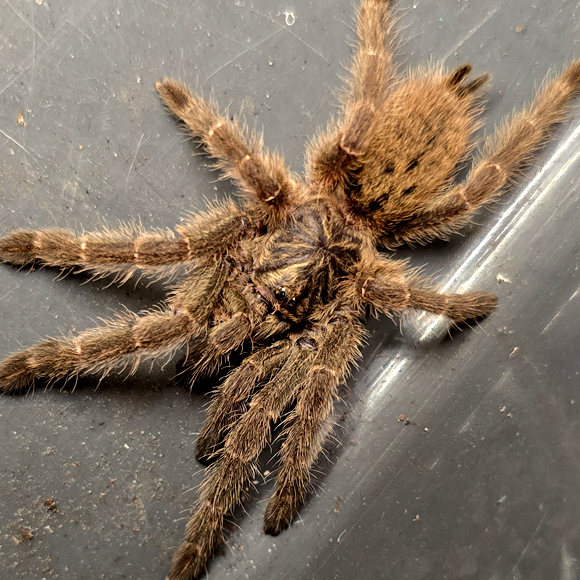
Species Care Guide
Pterinochilus murinus TCF
Orange baboon tarantula
Also known as: OBT, Mombasa golden starburst, typical colour form
Last updated: June 25, 2026
Buy this species
Origin
Pterinochilus murinus TCF hails from the sun-baked lands of East Africa—think Tanzania, Kenya, and their neighbours. These spiders make their homes in dry scrublands, savannahs, and arid forests, where temperatures fluctuate nicely and rainfall is a bit on the shy side. They typically seek solace beneath stones, within abandoned burrows, or under fallen logs, and they've become true survivalists, braving droughts and seasonal changes with equal flair. At home in such a rugged, open environment, it’s no wonder they’re as hardy as they are feisty.
Adult Size
Fully grown, P. murinus TCFs sport a diagonal leg span of around 12 to 15 cm—plenty of spider for your display shelf! Females tend to be more solid and robust than the wiry males. The boys may leg it in style, but don’t usually match their sisters in bulk or longevity. It’s not a giant by any means, but thanks to its fiery orange dress and big presence, it certainly commands attention. Growth is typically steady, with some variance between individuals and depending on feeding frequency.
Lifestyle
Pterinochilus murinus are both terrestrial and fossorial, which means they like to keep their options open! In captivity, most will dig intricate burrows and tunnel systems, but don’t be surprised if yours decides to live a bit closer to the surface, weaving thick web curtains around its chosen hide. They are master architects, constantly redecorating with tunnels and webs. Give them a deep substrate and watch the magic—they’ll transform their enclosure into an underground palace connected by moats of webbing. And when it comes to moving quickly, let’s just say they don’t do anything by halves!
Lifespan
Females can live 10 to 15 years in captivity if well cared for—a good long stint for any eight-legged companion. Males, true to tarantula form, have far shorter careers, usually only making it to 3 or 4 years before checking out after their ultimate moult. If you’re hoping for a long-term relationship, a female is your best bet. Either way, their feisty personalities make every year with them a memorable one.
Growth Rate
P. murinus TCF has a reasonably quick growth rate, especially compared with some of the slower-growing tarantulas out there. With regular feeding and optimal temperatures, slings can reach juvenile size in a year or two. Males tend to grow faster and mature earlier—often racing through their lifecycle—while females take a more leisurely approach. Growth will slow if temperatures dip or food is scarce, but generally, you’ll have a decent-sized spider on your hands in no time.
Temperament
Let’s not sugar-coat it: Pterinochilus murinus are notorious for their fiery personalities. They’re not the tarantula you’d want to introduce to Granny’s lap—quick to show off their legendary threat pose and absolutely not shy about making a dash for freedom if annoyed. While beautiful and endlessly fascinating, they are best admired from a safe distance. Some individuals seem to be on a mission to redefine ‘defensive’, while others are content to hide or vanish into their tunnel network. Respect their space, move slowly, and enjoy the drama—just keep those lids on tight!
Temperature
Aim for enclosure temperatures between 22°C and 26°C—classic 'room temperature' is usually fine for these sun-loving spiders. If your British winter gets a bit nippy, a heat mat attached to the side of the enclosure can help, but always avoid heating from below as it can dry out the substrate and jeopardise those tidy burrows. Use a thermometer to keep things steady and never overheat. Pterinochilus murinus are tough cookies, tolerating occasional drops or spikes, but a consistent, moderate warmth will keep them happiest and most active.
Humidity
Pterinochilus murinus prefer it on the dry side! Humidity around 50–65% is just right—don’t go soggy. This species truly hates being waterlogged, so good ventilation is a must, and the substrate should never be permanently damp. A small water dish should always be provided and kept clean, as even drylanders like to sip now and then. Let the top layer of substrate dry out between light mistings if you must, but never swamp the enclosure. Mould or stagnant conditions are their only real enemies—apart from a careless keeper’s fingers!
Visibility
P. murinus are a bit of a wild card. Some individuals spend weeks in their fortress of webs and tunnels, popping out only at mealtime or when the mood strikes (think: ninja tarantula). Others boldly web across every visible surface and will strut around their domain, especially at dusk or during rainy weather. Once settled, their magnificent webbing offers plenty of display value, even if the spider itself is playing hard to get. Keep your camera ready, because when they appear, it’s always a spectacle.
Webbing
Pterinochilus murinus are among the most impressive webbers in the hobby. Give them an inch and they’ll spin you a three-storey mansion complete with tunnels, curtains, and the occasional bit of abstract art. They use webbing to line their burrows, construct retreats, anchor moulting mats, and as alarm systems to detect vibrations from prey (or nosey keepers). Watching an OBT at work is like having a tiny, irritable architect on your shelf—a joy for anyone who appreciates grand designs in miniature.
Feeding
Pterinochilus murinus are voracious eaters with the appetite to match their attitude. Slings thrive on pinhead crickets, fruit flies, or pre-killed mini mealworms—a couple of meals per week helps spur growth. Juveniles graduate to small locusts or larger crickets, fed once or twice weekly. Adults will demolish full-sized locusts, roaches, or a handful of crickets every week or ten days—don’t overdo it, as a chunky OBT can go off food before a moult. Their feeding response is lightning fast! Remove uneaten food within 24 hours to prevent stress or injury, especially during moulting. Common mistakes include overfeeding, leaving prey running loose for days, or letting humidity spike from uneaten live food. For best colour and condition, offer a varied diet while keeping water available at all times.
Enclosure Recommendations
Your Pterinochilus murinus will thrive in a secure, escape-proof enclosure with excellent ventilation. Plastic or glass tubs with tight-fitting lids are ideal—just add plenty of holes for airflow. Substrate should be 10-15cm deep (think topsoil mixed with a bit of sand or coco fibre, kept mostly dry). Add a chunk of cork bark or ceramic hide on one end, and let your OBT decide whether to dig or web. A shallow water dish is essential, even if it fills with silk daily. Don’t forget to anchor décor, as OBTs are powerful tunnelers. Avoid using sponges or moss, and don’t overcrowd the enclosure with clutter—leave space to observe the beast in action. For juveniles, smaller tubs keep feeding easy and stress low, but always upsize as they grow. Check for potential escape routes, and expect frequent redecorating. They like to keep us on our toes!
Experience Level
This species is best suited for intermediate to advanced keepers. Their speed, defensiveness, and determination to redecorate with silk make them thrilling but challenging pets. Pterinochilus murinus are definitely not recommended as a first tarantula, but they are a mainstay of any serious collection and brilliant for keepers who want to see what a truly high-energy African species can do. If you’re looking for something to handle or cuddle, look elsewhere—but for pure character and web-artistry, you can’t go wrong.
Final Thoughts
Pterinochilus murinus TCF is a hobby legend for a reason: stunning colours, outrageous webbing, and more personality than some people. They’re an absolute treat for those ready to respect their boundaries and enjoy tarantula keeping from behind glass. The challenges—mainly speed, defensiveness, and escape artistry—are balanced by their hardiness, low moisture needs, and the sheer spectacle of their silk masterpieces. If you want to see what tarantula keeping is all about, few species offer as much drama and beauty in one bright-orange package. Just remember: this is a spider for watching, not handling, and makes for a brilliant centrepiece in any intermediate or advanced keeper’s collection. Come for the looks, stay for the antics!
Community Species Gallery
Approved photos submitted by registered Spoodoire users.
No community images have been approved for this species yet.
Submit Your Photo
Log in to submit a photo for this species.
Available at The Spoodoire
Products linked to this species care guide.