

Species Care Guide
Pterinochilus murinus RCF
Orange baboon tarantula
Also known as: OBT, Mombasa golden starburst, red colour form
Last updated: June 20, 2026
Buy this species
Origin
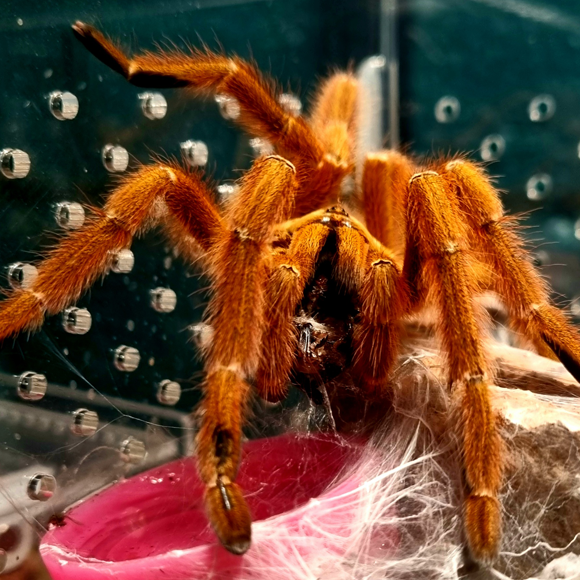
Pterinochilus murinus RCF, fondly known as the ‘Orange Baboon Tarantula’ or OBT, hails from the sun-baked grasslands and scrublands of East Africa, notably Tanzania and Kenya. The region features a warm, dry climate with seasonal rains and a surprising diversity of microhabitats. These spiders are found in burrows or under stones, where the soil is sandy or slightly loamy – perfect for web-based fortresses. Their wild world is one of high temperatures, moderate to low humidity, and plenty of open ground—conditions which shape their bold, sometimes cantankerous personalities.
Adult Size
An impressive specimen when fully grown, adult females typically reach 12–15 cm diagonal leg span, while males may be a tad smaller and considerably leggier. Females are famously robust, often possessing more heft and vibrancy than their male counterparts, who – though just as orange – usually appear in that lean, marathon-runner build just before wandering off for their final walkabout. Don't blink: they go from gangly juvenile to majestic orange engine of chaos before you know it!
Lifestyle
While they’re strictly terrestrial in nature, these tarantulas are notorious burrowers and prolific webbers. In captivity, P. murinus RCF often excavates a splendid, silk-laden hideaway, complete with elaborate tunnels and barricades built from substrate, web and (if you’re lucky) the odd decorative plant you intended to keep ornamental. They rarely climb—preferring to stick close to their silk-lined homes—but their webbing can make the enclosure feel almost arboreal. Expect your OBT to rearrange its terrarium more often than you rearrange your living room.
Lifespan
A commitment-phobe this is not: females can live up to 12–15 years in captivity if well kept, bringing a decade or more of unsparing web architecture and attitude. Males, as is the way of the hobby, have a far shorter run—usually only 3–4 years, ceasing their vivid orange rampage after maturity. With a little luck (and no dramatic escapes), a female P. murinus will be with you for the long haul.
Growth Rate
Prepare to not-so-patiently watch your OBT sling shoot up with a decent pace. Growth rates are medium to fast, especially when kept warm and well-fed. Give a bit of heat (within reason) and regular cricket snacks, and they’ll mature in a few short years. Diet, temperature and stress all play their part: a chilly or underfed spider might take its sweet time, while optimal conditions encourage a brisk march toward full jaw-dropping orangeness.
Temperament
If you like your spiders opinionated, OBTs are the pick for you! Notoriously defensive, they’ll readily show off a threat pose or dart for cover at the first sign of disturbance. They're quick – we're talking ‘across the enclosure before you’ve blinked’ quick – and will happily burrow or barricade themselves in elaborate webs. They’re not aggressive for no reason, just firmly not in the market for friends. Hobbyists enjoy watching their bossy personality and industrious home improvements from a safe distance.
Temperature
The Orange Baboon prefers it on the warmer side, feeling most at home in temperatures ranging from 22–27°C. Your room temperature is likely suitable; supplemental heating isn't needed unless your home resembles a walk-in fridge. Avoid letting things drop below 19°C for extended periods, as colder temps slow growth and can increase health risks. Good airflow is a must—aim for steady, stable temperatures, and resist any urge for toasty heat mats stuck to the side of the tank (the substrate should stay cool at depth). Safety first: always monitor temperatures with a reliable thermometer.
Humidity
These webby wonders appreciate a moderately dry environment with 50–60% relative humidity. Overly soggy substrate will only be met with disdain (and possibly a mould bloom), so focus on good ventilation—airy enclosures work best. A small, shallow water dish is all that’s needed; keep it topped up for those rare quick sips (or for drowning crickets to be found later). Allow the substrate to dry out nearly (but not completely) between modest mistings or waterings. A good cross-ventilated setup helps maintain dryness and keeps fungal guests at bay.
Visibility
For a notorious recluse, OBTs are surprisingly good at popping out at the most inconvenient times. You may go days without seeing more than a flash of orange, but come mealtime (or at night), they’re often right out on show, inspecting their domain or fixing the thread count on their web. Their elaborate webbing adds year-round visual interest, and the bold colouration is always a delight when they do emerge for the odd sprint or dramatic pose.
Webbing
P. murinus is a master weaver. Expect a swirling labyrinth of silk tunnels, curtains, hammocks, and the odd sandcastle made of substrate and web. Their enclosures become interactive art pieces, continuously altered to suit the spider’s current whim. Webbing is both a defence mechanism and a highway system; they’ll strengthen walls, booby-trap entrances, and occasionally suspend prey from silk like a DIY horror movie scene. Providing plenty of anchor points makes for more dramatic displays.
Feeding
Juvenile and adult P. murinus RCF are not picky eaters and will snatch up most appropriately sized live prey – crickets, locusts, dubia roaches or mealworms are all on the menu. Slings do well on appropriately tiny crickets or fruit flies. Feeding slings 2–3 times a week and juveniles twice a week is a safe bet; adults need only once every 7–14 days. Obesity isn’t a worry for this species, but overfeeding can spoil substrate and attract pests. Always remove uneaten prey after 24 hours (especially if your spider’s feeling antisocial and hidden away). With a legendary feeding response, expect lightning-fast pounces and the odd magic trick as food vanishes into the web.
Enclosure Recommendations
A secure, escape-proof enclosure is non-negotiable—a 30x30x30cm terrarium works well for most adults, giving space for deep substrate (8–12cm), a starter burrow or cork bark hide, and ample room to web. Plastic or glass is fine so long as ventilation is excellent; cross and top vents keep things fresh. Keep furnishings minimal to avoid tripping hazards during feeding or cleaning (OBTs are not sentimental). Use a sandy, well-draining substrate and anchor points like twigs or cork bark for webbing. Always include a sturdy water dish, checked regularly. Consider a catch cup ready for maintenance—they can be unpredictable!
Experience Level
If you’re a newer keeper who loves the look but wobbles at the thought of speed and attitude, best wait until you’re more comfortable with rehouses and speedy spiders. For intermediate to advanced hobbyists who respect boundaries and love watching bold behaviours, they’re perfect. Not recommended for beginners, as their temperament, speed, and venom can quickly overwhelm novices.
Final Thoughts
Pterinochilus murinus RCF is not just a tarantula; it’s a lifestyle. Their vibrant colour, architectural webbing and larger-than-life personalities make them a centrepiece for any collection—just don’t expect them to ever want a cuddle. Despite their attitude, they’re hardy, fascinating, and low-maintenance if you know what you’re doing. They thrive with minimal fuss but absolute respect for their space. Come for the colour, stay for the spectacle, but make sure you’ve got your wits (and your catch cup) about you. A ‘hands-off’ showstopper that’s not for the faint-hearted, but endlessly rewarding for those up to the challenge.
Community Species Gallery
Approved photos submitted by registered Spoodoire users.
No community images have been approved for this species yet.
Submit Your Photo
Log in to submit a photo for this species.
Available at The Spoodoire
Products linked to this species care guide.